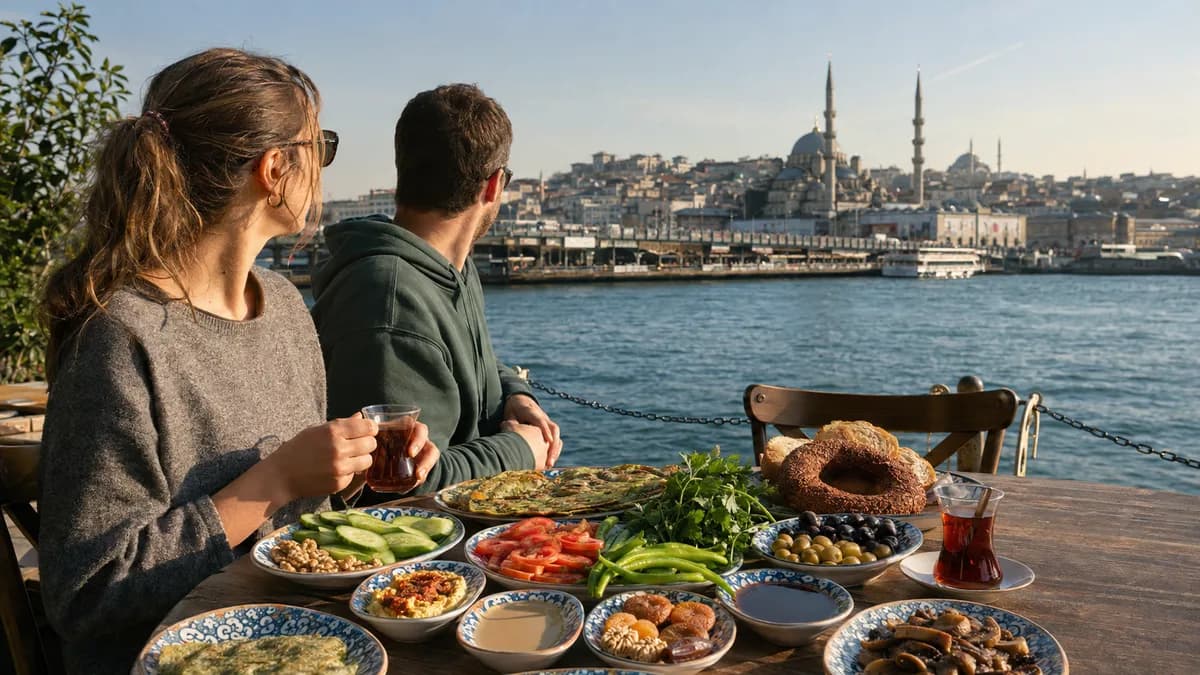
Turkish breakfast can look wonderfully plant-friendly: olives, tomatoes, cucumbers, bread, jam and endless glasses of tea. But the biggest challenge is rarely the obvious cheese or eggs. It is the butter in a pan, milk in a dough, egg brushed over a pastry or honey hidden among the sweet spreads.
Here is how to enjoy a Turkish breakfast without turning the meal into an interrogation. 🌿
First, know what you are ordering 🍽️
A serpme kahvaltı is a large shared breakfast made up of many small plates. A standard spread usually includes several cheeses, eggs, butter, honey, kaymak (clotted cream) and sometimes sucuk (spiced beef sausage). Removing the visibly non-vegan plates does not make the rest of the breakfast vegan: breads, pastries, dips and cooked vegetables may still contain animal ingredients.
The clearest approach is often to skip the fixed breakfast set and order individual items à la carte. You can ask about each dish, avoid unnecessary food waste and build a better breakfast from foods you actually want.
✅ The easiest plant-based choices
These are usually the least complicated options, although recipes and packaged products can vary:
- Olives, tomatoes, cucumbers, peppers, fresh herbs, seasonal fruit, walnuts and other nuts
- Tahin–pekmez: sesame paste mixed with grape or mulberry molasses. Ask for the two separately if you want to check what is being served.
- Plain fruit jam: traditionally made with fruit and sugar, but check packaged or house varieties for honey or other additions.
- Turkish tea and plain Turkish coffee: order coffee sade (without sugar) if that is your preference. Neither normally contains milk unless you request it.
- Simit: the traditional recipe is based on flour, water, yeast, salt, sesame and grape molasses. Bakery and café recipes are not identical, however, so confirm that yours contains no milk, butter, margarine or egg.
⚠️ The foods that only look vegan
1. The bread basket
Ordinary bread is often vegan, but a mixed breakfast basket may also contain açma, poğaça, bazlama, börek or other enriched breads. These may be made with milk, yogurt, butter, margarine or egg.
Do not assume that “made with margarine” means vegan. Some margarines contain milk-derived ingredients. Ask about the exact product or choose a confirmed plain bread.
2. Vegetable börek and gözleme
A spinach, potato or herb filling is not enough. Börek may contain butter between its pastry layers, egg on top, or a sauce made with milk or yogurt. Gözleme dough is often simple, but it may be cooked with butter or filled with cheese even when vegetables are the main ingredient.
Ask about the dough, filling, sauce and cooking fat separately. If possible, request a vegetable gözleme cooked only with liquid vegetable oil.
3. Pişi and fried potatoes
Pişi, small pieces of fried dough can be made from a basic vegan dough, but some recipes include milk, yogurt or egg. Potatoes may be cooked in butter or in oil also used for cheese, egg or meat products.
Shared oil is a personal cross-contact issue for many vegans; for anyone with a genuine milk or egg allergy, it can be a safety issue and must be discussed explicitly.
4. “Cooked in oil”
The Turkish word yağ can refer to vegetable oil, butter or another fat. A waiter saying that mushrooms, potatoes or vegetables are “yağda” does not necessarily mean they are cooked in vegetable oil.
Ask for sıvı yağ (liquid vegetable oil) or zeytinyağı (olive oil), and say tereyağı olmasın (no butter). This small distinction prevents many misunderstandings.
5. Acuka, muhammara and breakfast dips
Pepper and walnut-based spreads can be vegan, but there is no single recipe. Some versions contain cheese, butter or breadcrumbs made from enriched bread. Hummus is generally a safer candidate, although garnishes and preparation still deserve a quick check.
6. Sweet spreads
Bal is honey and kaymak is dairy. Chocolate and hazelnut spreads commonly contain milk powder or whey, while some helva varieties contain milk or honey. Plain tahini and plain pekmez are usually clearer choices, but packaged labels remain the best evidence.
🌱 Three simple ways to build a vegan breakfast
The classic no-cook plate
Confirmed vegan simit or plain bread, olives, tomatoes, cucumbers, peppers, herbs, walnuts, tahini, pekmez, fruit jam and tea.
The warm breakfast
A potato or spinach-filled gözleme after checking the dough and filling cooked with vegetable oil and no butter, served with a fresh vegetable plate and olives.
The cooked-to-order plate
Mushrooms, peppers, tomatoes and potatoes prepared in a clean pan with olive oil or liquid vegetable oil, with no butter, cheese or egg. Add a confirmed-vegan dip if available.
If you want vegan versions of cheese, sucuk, börek or egg dishes without checking every component, a fully vegan venue is the simplest option. A restaurant described as vegan-friendly may still use shared pans, grills and fryers.
🗣️ Useful Turkish phrases
Do not rely on the word vegan alone; it may sometimes be understood simply as “no meat.” State the exclusions clearly:
Veganım. Et, tavuk, balık, süt ve süt ürünleri, yumurta ve bal tüketmiyorum. I’m vegan. I don’t consume meat, chicken, fish, milk or dairy products, eggs or honey.
Bunun hamurunda, sosunda veya içinde süt, yoğurt, tereyağı ya da yumurta var mı? Does its dough, sauce or filling contain milk, yogurt, butter or egg?
Yağ derken sıvı yağ mı, tereyağı mı? When you say oil/fat, do you mean vegetable oil or butter?
Bunu tereyağı olmadan, sadece zeytinyağı veya sıvı yağ ile hazırlayabilir misiniz? Can you prepare this without butter, using only olive oil or vegetable oil?
Ayrı ve temiz bir tavada hazırlayabilir misiniz? Can you prepare it in a separate, clean pan?
The short version 📌
At a Turkish breakfast, the visible cheese and eggs are the easy part. The real questions concern dough, pastry sauce, cooking fat, sweet spreads and shared equipment. Order individual dishes, ask what “oil” means, and confirm every prepared item rather than judging it by its vegetable filling.
With a few precise questions, breakfast can still be one of the most enjoyable and genuinely vegan meals of your Istanbul trip. ☕🫒🌿
📌 Save this for your Istanbul trip. Tag a celiac or a gluten-free traveler who needs it.
Last reviewed: August 21, 2026