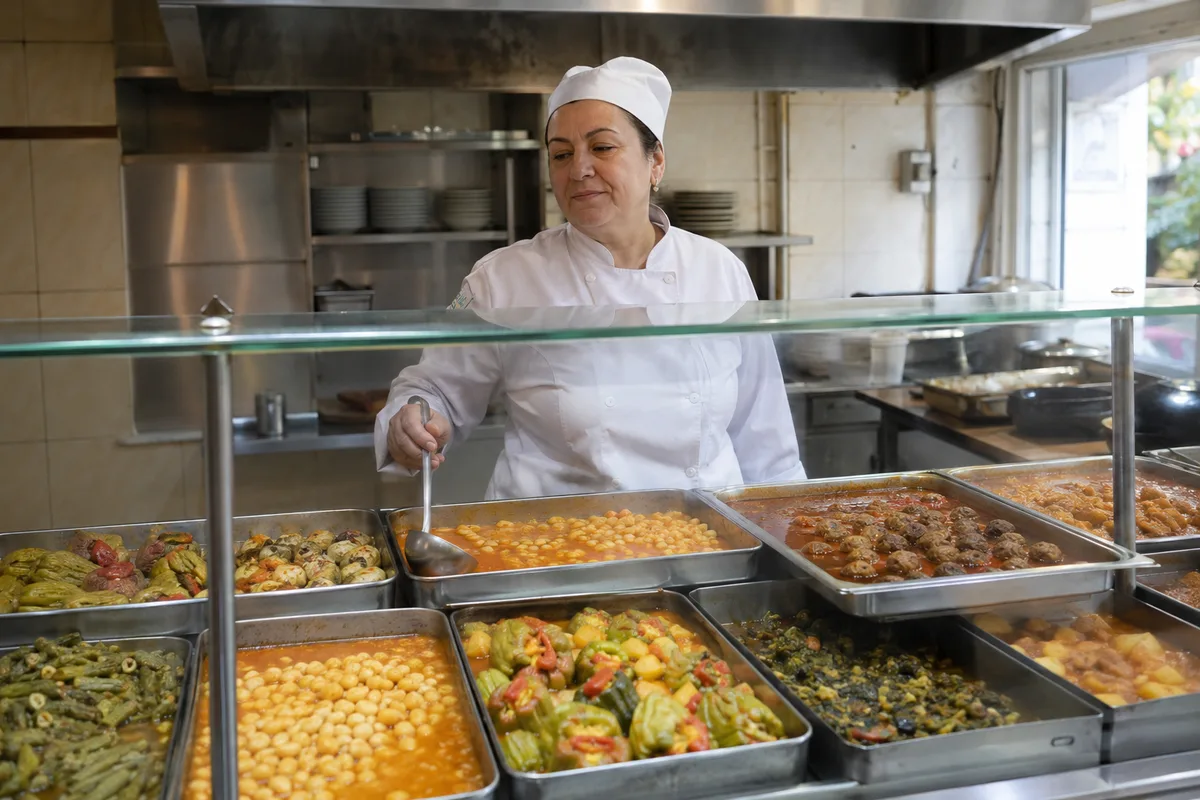
Istanbul may be associated with kebabs, köfte, and yogurt, but that is only part of the story. Turkish cooking also has a long tradition built around olive oil, vegetables, grains, and legumes. 🌿
The difficulty is that these dishes were not created under a modern “vegan” label. A meal that is plant-based in one kitchen may contain butter, yogurt, or meat stock in another. Treat the dish name as a useful clue, not a guarantee.
🚦 First rule: “Meat-free” does not mean vegan
In Turkish, etsiz means “without meat.” It does not automatically exclude chicken stock, butter, yogurt, cheese, eggs, or honey.
📌 Save this sentence or show it to the server:
“Bu yemek tamamen vegan mı? İçinde et, tavuk, balık, et suyu, tavuk suyu, tereyağı, süt, yoğurt, peynir, yumurta ya da bal var mı?”
“Is this dish completely vegan? Does it contain meat, chicken, fish, meat or chicken stock, butter, milk, yogurt, cheese, eggs or honey?”
For savory food, the three most common hidden ingredients are tereyağı (butter), et/tavuk suyu (meat or chicken stock), and yoğurt (yogurt).
🫒 Go beyond green beans and imam bayıldı
The word zeytinyağlı indicates a dish prepared in the Turkish olive-oil tradition. This remains one of the best sections of the menu for vegan travelers.
Instead of ordering the same familiar dishes again, look for:
- Barbunya pilaki Borlotti beans with carrots, onions and olive oil
- Portakallı kereviz Celeriac cooked with orange and olive oil
- Zeytinyağlı yerelması Jerusalem artichokes cooked with olive oil
- Koruklu bamya Okra flavored with sour, unripe grapes
- Zeytinyağlı iç bakla Fresh broad beans, often served with dill
- Kabak çiçeği dolması Seasonal zucchini blossoms filled with rice and herbs
- Vişneli yaprak sarma Vine leaves filled with rice and sour cherries
- Zeytinyağlı ıspanak kökü Spinach roots slowly cooked with onions
Availability changes with the season, so check the food display at a traditional lokanta rather than relying only on the printed menu.
Ask: “Sadece zeytinyağıyla mı yapıldı?” “Was it made only with olive oil?”
🍽️ Less-obvious meze worth trying
Many meze are based on vegetables or legumes, but yogurt-based versions are also common. These alternatives offer more variety than the usual hummus-and-eggplant combination:
- Topik An Istanbul Armenian specialty generally made with chickpeas or potatoes, tahini, onions, currants, and nuts
- Deniz börülcesi Samphire dressed with olive oil, lemon, and garlic; despite its name, it is a coastal plant, not seafood
- Kısır Fine bulgur mixed with tomato or pepper paste, herbs, and pomegranate molasses
- Mercimek köftesi Lentil-and-bulgur patties; often plant-based, but some regional recipes use butter
- Şakşuka Fried eggplant, peppers, and potatoes with tomato sauce; request it without yogurt
- Piyaz White bean salad, sometimes topped or mixed with boiled egg
At a meyhane, ask whether yogurt has already been mixed into an eggplant, carrot, purslane, or zucchini meze. Removing a garnish is possible; removing yogurt already mixed into the dish is not.
🍲 When you need a fuller meal
At a lokanta, look for etsiz kuru fasulye (meatless white bean stew), nohut yemeği (chickpea stew), or türlü (mixed vegetable stew). All can be filling, but ask whether meat stock, butter, meat, or pastırma was used.
Rice and bulgur also need checking. Pilav is frequently cooked with butter or chicken stock, even when no meat is visible.
Dedicated vegan restaurants offer plant-based versions of mantı, lahmacun, pide, döner, and İskender-style dishes. These are good alternatives when you want to try familiar Turkish formats without negotiating changes to a conventional recipe.
🥨 Street food and bakery warnings
- Simit is often made with flour, water, yeast, grape molasses, and sesame, but bakery recipes can vary. Ask rather than treating every simit as guaranteed vegan.
- Gözleme with potato or spinach may look suitable, but the dough or griddle can involve butter, yogurt, or eggs. Also say peynirsiz—without cheese.
- Börek is rarely a safe assumption. Its pastry commonly contains or is brushed with butter, milk, yogurt, or egg.
- Midye dolma means stuffed mussels. It contains shellfish and is neither vegan nor vegetarian, despite sharing the word dolma with stuffed vegetables.
Soups deserve the same caution. Official Turkish recipes for mercimek çorbası themselves vary between water and meat stock and may use butter. Ask before ordering; ingredients cooked into the soup cannot simply be left off afterward.
🍮 Better dessert possibilities
Turkish desserts are not all limited to baklava and milk pudding. Look for:
- Aşure A seasonal pudding of grains, legumes, dried fruit, nuts, and sugar; verify that the particular recipe contains no milk or honey
- Zerde A less-common, water-based rice dessert flavored with saffron or turmeric and rose water
- Kabak tatlısı Candied pumpkin, often served with walnuts or tahini; request it kaymaksız (without clotted cream)
- Ayva tatlısı Poached quince; also order it without kaymak
- Tahin helvası Sesame-based halva; check packaged varieties for milk, honey, or chocolate ingredients
- Sade or nut-filled lokum Plain Turkish delight is traditionally based on sugar and starch, but cream-filled, kaymaklı, and chocolate varieties may contain dairy
Standard baklava should be treated as nonvegan. The registered specification for Antep baklava includes butter and eggs, while the fresh version also contains a milk-based semolina cream. Its syrup is sugar-based—not necessarily honey.
🗣️ A short ordering phrasebook
- “Vegan seçeneğiniz var mı?” “Do you have a vegan option?”
- “Hayvansal hiçbir ürün yemiyorum.” “I don’t eat any animal-derived products.”
- “Et suyu veya tavuk suyu kullanıldı mı?” “Was meat or chicken stock used?”
- “Tereyağı yerine sıvı yağ kullanabilir misiniz?” “Can you use vegetable oil instead of butter?”
- “Üzerine yoğurt, tereyağı veya kaymak eklemeyin, lütfen.” “Please don’t add yogurt, butter or clotted cream.”
- “Yumurtasız ve peynirsiz olsun, lütfen.” “No egg or cheese, please.”
🌱 The bottom line
Istanbul offers much more than the same few “safe” vegan dishes. Explore seasonal zeytinyağlı dishes, Armenian meze such as topik, regional bean salads, olive-oil stews, and overlooked desserts such as zerde.
Just remember: the dish name tells you where to start; the ingredient question tells you whether to eat it.
📌 Save this guide and phrases for your Istanbul trip and share it with a vegan or vegetarian travel companion.
Last reviewed: August 18, 2026