Discover Vegan and Vegetarian Heritage of Istanbul’s Arab and Hatay Cuisine 🌿
Discover traditional vegan and vegetarian dishes from Istanbul's Arab communities and Hatay cuisine
Discover traditional vegan and vegetarian dishes from Istanbul's Arab communities and Hatay cuisine. Explore hummus, muhammara, abugannuş, zahter salad, Sheikh Mualla, bulgur dumplings and more. Learn what these dishes contain, where to find them in Istanbul and what to check before ordering. A practical food guide for vegan and vegetarian tourists visiting Istanbul.
Visiting Istanbul for the first time? Some of the city's most interesting plant-based dishes come from the culinary traditions of Türkiye's Arab communities, particularly those of Hatay, a province in southern Türkiye bordering Syria.
From smoky eggplant dips and walnut-rich pepper spreads to lentil stews, stuffed vegetables and aromatic flatbreads, this cuisine offers much more than the familiar hummus.
You don't need to travel to Hatay to discover these flavours. Istanbul has restaurants specialising in Antakya, Hatay, Syrian and broader Levantine cuisine. Knowing what to look for on their menus can open up an entirely different side of the city's food culture.
But there's a catch: Not every vegetable dish is vegan, and not every traditional Arab dish is meat-free. Here's what to order, what to ask and what to avoid.
🌱 1. Naturally Vegan Dishes Worth Discovering
These dishes are traditionally plant-based in many preparations, although ingredients can vary between restaurants.
🫘 Hummus
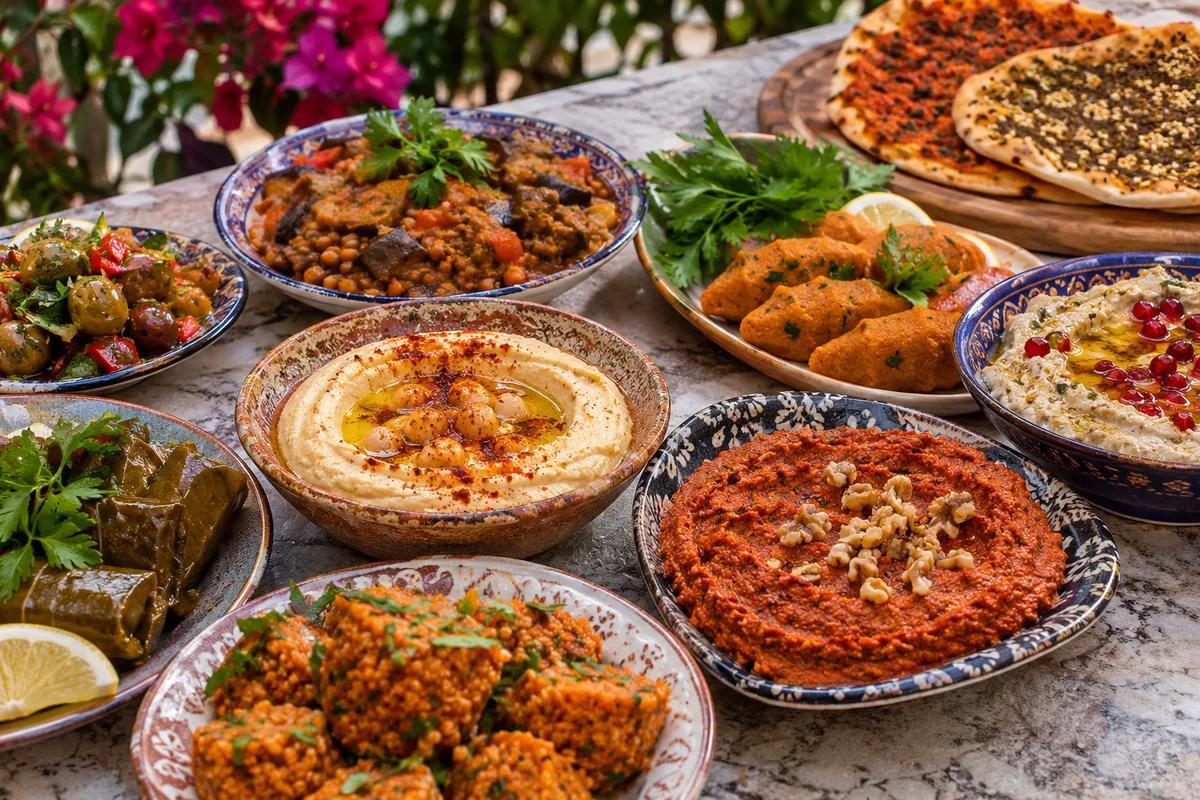
One of the most recognisable dishes of the eastern Mediterranean. Made with chickpeas, tahini, lemon juice and garlic, hummus is a creamy, protein-rich dip. In Hatay, it is sometimes served warm.
⚠️ Watch out for versions topped with butter, meat or pastrami.
🍆 Abugannuş (Abugannüç)
A smoky salad made with fire-roasted eggplant, peppers and tomatoes, usually dressed with olive oil, garlic and lemon or pomegranate molasses.
It is particularly associated with southeastern Türkiye and Hatay.
🍆 Mütebbel (Moutabal)
Another roasted eggplant specialty, but different from abugannuş. The eggplant is mashed with tahini, lemon and garlic to create a smooth, creamy dip.
Unlike yogurt-based eggplant salads, traditional tahini-based moutabal is generally vegan.
🌶️ Muhammara
A rich, slightly spicy spread made with walnuts, red pepper paste, olive oil and pomegranate molasses.
Originally associated with the Aleppo region and widely enjoyed in Hatay, muhammara is one of the most distinctive flavours of the region.
⚠️ Some recipes contain breadcrumbs or cheese, making them unsuitable for people who need gluten-free food.
🌿 Zahter Salatası (Fresh Wild Thyme Salad)
Fresh zahter, an aromatic herb related to thyme, is mixed with onions, parsley, olive oil and pomegranate molasses.
Its intense, slightly bitter and tangy flavour makes it very different from ordinary green salads.
🥔 Patatesli Köfte (Potato and Bulgur Patties)
Mashed potatoes are mixed with fine bulgur, pepper paste and spices, then shaped into small patties.
Usually served cold or at room temperature with fresh greens, they can make a substantial snack or light meal.
🍅 Fellah Köftesi (Bulgur Dumplings)
Small, tender dumplings made from fine bulgur and flour, served with a garlicky tomato and pepper sauce.
Unlike traditional meatballs, the dumplings themselves are typically meat-free.
⚠️ Ask whether butter or yogurt is added to the sauce or garnish.
🍃 Zeytin Salatası (Seasoned Olive Salad)
A flavourful mixture of olives, walnuts, peppers, olive oil and pomegranate molasses.
Commonly enjoyed at breakfast or as part of a mezze selection.
🥗 Hettüş Salatası
A tangy salad of tomatoes, cucumbers, fresh herbs and pieces of toasted or fried bread, closely related to Levantine fattoush.
A refreshing choice alongside richer dishes.
🫘 Bakla Ezmesi (Fava Bean Purée)
Cooked fava beans are mashed with olive oil, lemon and seasonings to create a smooth, filling appetizer.
It is an excellent alternative for travelers who want to explore beyond chickpeas.
🍲 2. Beyond Mezze: Vegan Main Dishes
Many visitors associate Arab and Hatay cuisine with small plates. However, its traditional vegetable and legume dishes can also provide a satisfying lunch or dinner.
🍆 Şeyh Mualla (Sheikh Mualla)
One of the most interesting plant-based dishes associated with Antakya.
Eggplant is cooked with green lentils, tomatoes, onions, garlic and aromatic seasonings. The result is a hearty, flavorful vegetable and lentil stew.
It is worth looking for in restaurants specializing in traditional Hatay home cooking.
🫘 Lübye (Black-Eyed Pea Stew)
Fresh or dried black-eyed peas are cooked with tomatoes, onions and olive oil.
Simple, nutritious and filling, this is an example of the region's everyday home cooking rather than its better-known restaurant mezze.
🥬 Zılk Sapı Kavurması (Sautéed Chard Stems)
A traditional dish that makes use of chard stems, sautéed with onions and olive oil.
It reflects the importance of seasonal vegetables and the practice of using every edible part of a plant.
🍆 Kuru Dolma (Stuffed Dried Vegetables)
Dried eggplants and peppers are filled with rice or bulgur, herbs and spices, often with a tangy flavor from sumac or pomegranate molasses.
⚠️ Meat-filled versions are common. Always request etsiz kuru dolma (meat-free stuffed dried vegetables) and confirm that no meat stock is used.
🍃 Zeytinyağlı Yaprak Sarma (Stuffed Vine Leaves)
Vine leaves wrapped around a filling of rice, herbs and spices, generally served with lemon.
Look for the olive-oil version, as some regional varieties contain minced meat.
🫓 3. Traditional Breads and Savory Pastries
Hatay's bakeries are worth exploring, but vegan travelers should pay particular attention to dairy ingredients.
🌶️ Biberli Ekmek (Spicy Pepper Bread)
A flatbread topped with a mixture of pepper paste, onions, sesame seeds and spices.
It is a popular breakfast food and bakery snack in Hatay.
⚠️ Some versions contain çökelek (curd cheese) or yogurt. Ask before ordering.
🌿 Zahterli Ekmek (Zahter Flatbread)
A flatbread topped with a fragrant mixture of zahter, sesame and olive oil.
A good choice for travellers interested in the culinary connections between Türkiye, Syria and Lebanon.
🥬 Ispanaklı Börek (Spinach Pastry)
A savory pastry filled with spinach and onions.
Some versions are vegan, while others contain cheese, butter, yogurt or egg. Check the pastry as well as the filling.
🌾 Firikli Aş (Smoked Green Wheat Pilaf)
A traditional dish prepared with freekeh, young wheat harvested and roasted before it fully matures.
Its smoky flavour makes it distinctive among the region's grain dishes.
⚠️ Some preparations use meat stock or butter. Ask whether it is cooked with vegetable ingredients only.
🧀 4. Vegetarian Specialties You Should Know
Not everything in Hatay's vegetable-rich cuisine is vegan. Dairy products and eggs feature prominently in several regional specialties.
🧀 Sürk (Spiced Curd Cheese)
A distinctive Hatay specialty made from curd cheese mixed with herbs and spices, sometimes shaped into small cones or balls and aged.
Its strong, aromatic flavour makes it popular at breakfast.
🍅 Sürk Salatası (Spiced Cheese Salad)
Crumbled sürk cheese mixed with tomatoes, onions, parsley and olive oil.
A flavourful vegetarian breakfast or mezze option.
🥛 Tuzlu Yoğurt (Concentrated Salted Yogurt)
A traditional Hatay dairy product made by cooking and concentrating yogurt with salt.
It is used in numerous regional dishes and sauces.
Vegan travelers should remember this ingredient because it may appear in dishes that otherwise look entirely plant-based.
🥚 Öcce (Herb Fritters)
Small fritters made with fresh herbs, eggs and flour.
Crispy outside and soft inside, they are popular in regional home cooking.
🫓 Katıklı Ekmek (Cheese and Herb Flatbread)
A traditional flatbread topped with curd cheese, yogurt, onions and spices. Spinach variations are also available.
Unlike some versions of biberli ekmek, traditional katıklı ekmek generally contains dairy.
🍮 5. Traditional Desserts
🍯 Hatay Künefesi
One of Hatay's best-known culinary exports, widely available in Istanbul.
Made with shredded pastry, melted cheese, butter and sugar syrup, künefe is vegetarian only when the cheese is made without animal-derived rennet.
It is not vegan.
🌹 Haytalı
A refreshing regional dessert featuring starch-based pudding, a sweet milky mixture and rose flavouring, sometimes served with ice.
It contains dairy in traditional preparations.
🍪 Kömbe
A fragrant, spiced cookie associated with Hatay, especially during religious holidays and family celebrations.
Ingredients vary. Some recipes contain butter, milk or eggs, while others use vegetable oil and can be vegan.
📍 6. Where to Look for These Dishes in Istanbul
You don't need to know the city to begin exploring. These are useful starting points for first-time visitors.
Fatih and Aksaray: These areas on Istanbul's European side have a concentration of Syrian and other Arab restaurants, bakeries and food shops. Look for hummus, moutabal, muhammara, falafel, stuffed vegetables and freshly baked flatbreads.
Taksim and Beyoğlu: Convenient for tourists staying near İstiklal Avenue. Restaurants serving Hatay and broader Middle Eastern cuisine can be found around the district, although menus and vegan options vary.
Kadıköy: On Istanbul's Asian side, this district offers a wide range of restaurants and mezze-focused establishments. Some serve regional dishes associated with Hatay and the Levant.
Restaurants advertising Antakya or Hatay cuisine: Look for the words Antakya Mutfağı, Hatay Mutfağı or Antakya Yemekleri. These are useful clues, although such restaurants often specialize in meat dishes and may have only a limited selection of vegan mains.
Remember that many of the less familiar dishes, such as Şeyh Mualla and Lübye, are traditional home-cooked specialties. They may not appear on everyday restaurant menus.
🗣️ 7. What to Ask Before Ordering
A dish described as sebzeli (with vegetables) or etsiz (without meat) is not necessarily vegan.
Here are some useful Turkish phrases:
| English | Turkish |
|---|---|
| Is this dish vegan? | Bu yemek vegan mı? |
| Does it contain meat or meat stock? | İçinde et veya et suyu var mı? |
| Does it contain butter? | İçinde tereyağı var mı? |
| Does it contain cheese or yogurt? | İçinde peynir veya yoğurt var mı? |
| Can you prepare it without dairy products? | Süt ürünleri kullanmadan hazırlayabilir misiniz? |
| I don't eat meat, fish, eggs or dairy products. | Et, balık, yumurta ve süt ürünleri tüketmiyorum. |
⚠️ Important: Travellers with celiac disease should not assume that bulgur dishes, flatbreads, pastries or dishes containing breadcrumbs are gluten-free. Wheat is widely used in this cuisine, and cross-contact in shared kitchens is another concern.
🌍 A Shared Culinary Heritage
The food traditions of Türkiye's Arab communities are part of a much larger eastern Mediterranean culinary landscape.
Hatay, particularly Antakya and Samandağ, has long been home to Arab-speaking communities alongside Turkish, Armenian and other populations. Muslim and Christian traditions have both contributed to the region's food culture.
Plant-based dishes have also played a role in religious fasting and abstinence traditions, particularly among Christian communities that avoid animal products during certain periods.
This helps explain why vegetable, grain and legume dishes are not simply modern alternatives to meat. Many belong to a much older culinary tradition.
🌿 The Bottom Line
For vegan and vegetarian travellers visiting Istanbul, Hatay and Arab culinary traditions offer an opportunity to discover flavours that go far beyond hummus.
Start with muhammara, zahter salad and smoky eggplant dishes. Then look for Şeyh Mualla, black-eyed pea stew, bulgur dumplings and meat-free stuffed vegetables.
Some of these dishes are easy to find. Others require a little searching, particularly outside restaurants specializing in Hatay home cooking.
The key is knowing the names, understanding the ingredients and asking the right questions.
That's where a little preparation and a reliable local food guide such as veganistanbul.com can make exploring Istanbul's food culture much easier.