Food and Fruit in Ottoman Cooking
Currants went into vine leaves stuffed with rice, while dried figs and apricots simmered with lamb in a palace dish called mutancana. The article looks at how fruit and vegetables were used in Ottoman cooking and the place of dishes cooked in olive oil at the imperial table.
 Özdilek Coşkun
Mutancana. A traditional palace dish known from the 15th and 16th centuries, made with lamb, dried figs, dried apricots, raisins, damson plums, almonds, honey and cinnamon.
Zirva. A longstanding Ottoman dish that brings together meat, dried fruit and spices.
Stuffed onions (piyaziye). A historic dish prepared for special occasions at Edirne Palace in the 15th century.
Avcı böreği. One of the best-known pastries of Edirne’s palace kitchens.
Deva-i misk halva. A spiced, aromatic regional sweet associated with the palace tradition.
These are often cited among the best-known and most frequently prepared dishes in the Ottoman imperial kitchens. Legend has it that mutancana was Sultan Mehmed II’s favourite. Here at veganistanbul.com, of course, we’re hardly about to give you meat recipes or sing their praises. I want to touch briefly on the history of Ottoman palace cooking, but what I really want to draw attention to is how widely fruit and vegetables were used in all kinds of dishes. I’d also like to see more research and discussion about the keen interest prominent Ottomans took in vegetables, both in cooking and in medicine.
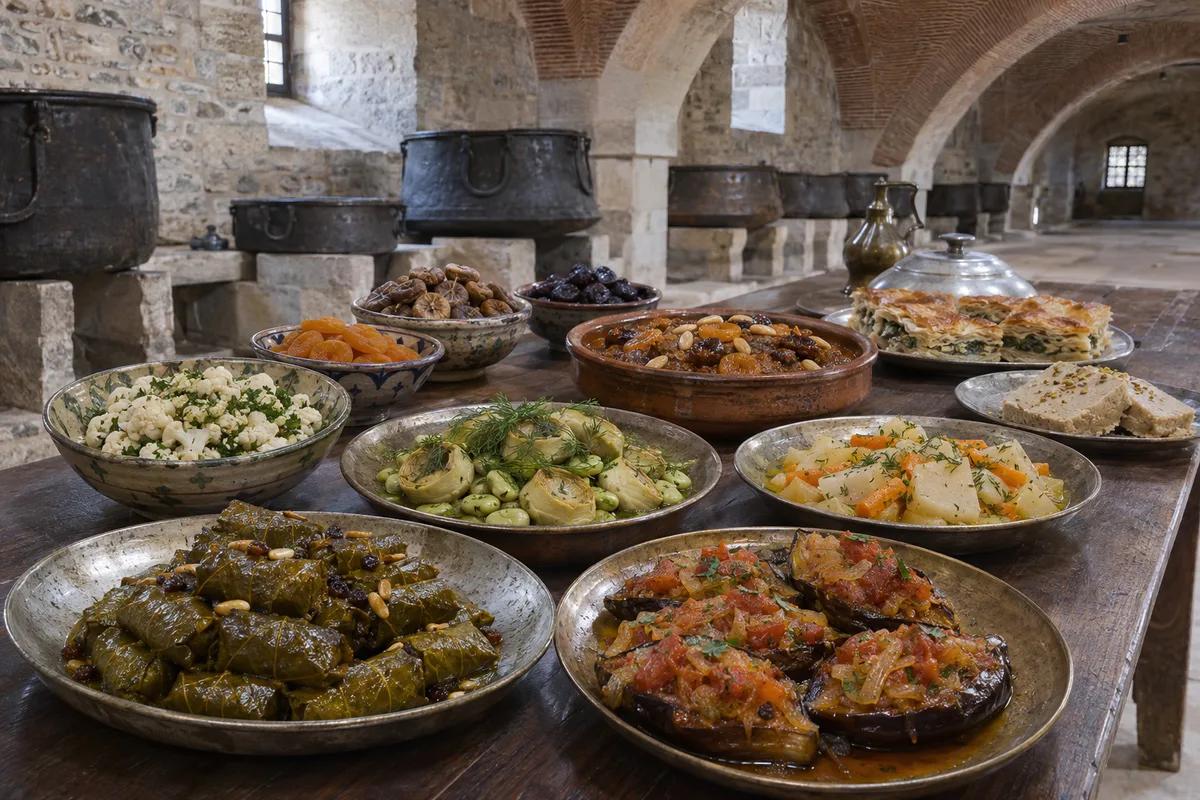
The modern concept of veganism didn’t exist in Ottoman cooking, but there were plenty of plant-based dishes, from vegetables cooked in olive oil to legumes and pilavs with nuts. Ottoman history also includes Sufi communities known as the “Etyemezler,” literally “those who do not eat meat,” who deliberately avoided animal foods. Here are a few examples of Ottoman plant-based dishes and dishes cooked in olive oil.
İmam bayıldı. Eggplants cooked in olive oil and filled with onions, garlic and tomatoes.
Celeriac cooked in olive oil. A classic of palace and home cooking, gently simmered with carrots, onions and raisins.
Stuffed vine leaves and vegetables cooked in olive oil. Vine leaves are wrapped around a filling of rice, currants, pine nuts and spices. The same filling is used to stuff peppers or zucchini.
Artichokes and shelled fava beans cooked in olive oil. Light spring dishes made with olive oil, lemon and fresh herbs.
Cauliflower salad and cibez. Vegetable salads found in classic cookbooks such as 1844-dated Melceü’t-Tabbâhîn and dishes made with tender cabbage or cauliflower shoots, known as cibez, are part of this plant-based cooking tradition.
Dishes cooked in olive oil have long held a prominent place in this culinary tradition. From the second half of the 19th century, vegetable dishes cooked in olive oil also gained an important place in the palace kitchens. Chickpeas, lentils, bulgur, rice, almonds, walnuts and dried fruit still inspire plenty of vegan dishes today.
Sadly, Asitane, the restaurant right next to the Kariye Museum where all these dishes were so beautifully prepared and served, closed in February 2020. It was a place we took pride in. The building was leased to a foundation, and it’s often said that the restaurant won’t reopen.
Michael Douglas arrived in Istanbul with his wife, Catherine Zeta-Jones, and their two children on Jan. 3, 2020. The couple were on a round-the-world trip to celebrate their 20th wedding anniversary and flew in from Tanzania on a private jet, landing at Istanbul Atatürk Airport. The family visited the Grand Bazaar, Balat, the Hagia Sophia Museum and Kuzguncuk, and took a cruise on the Bosphorus. After their stay in Istanbul, they also visited the ancient city of Ephesus. According to a newspaper report, Douglas had arranged for Bebek Balıkçısı to close to other guests for his wife’s birthday dinner.
The next day I went to the Kariye Museum for something else and wanted to eat at Asitane. The staff told me, “We have guests from abroad inside, so we can’t take any other customers.” I decided to wait and see who would come out. I didn’t have to wait long. As you’ve probably guessed by now, out came Michael Douglas, older but still as charismatic as ever, and the striking Catherine Zeta-Jones. When I went inside, I asked the man who ran the restaurant how it had gone. “They left very happy. They tried almost everything,” he told me.
These days, new restaurants in the vein of Asitane have started to open. I’ll visit some of them and bring my impressions to your attention. One example is Deraliye Ottoman Palace Cuisine, which is doing well on Istanbul’s historic peninsula.
Matbah Restaurant, near Sultanahmet, also continues to serve Ottoman dishes to its guests, with both vegan-friendly and vegetarian menus.
I ate at Asitane many times, tried all sorts of dishes and loved them. Now I can’t wait to try the vegan dishes at the restaurants I’ve mentioned. I’ll visit them as soon as I can, along with other places I’ll write about, and share what I think of their vegan dishes and the other food I try.
There are a few similar places in Edirne, too. If you’re curious, I heartily recommend a food tour of Edirne. You may find yourself taken with everything from the breakfasts and main dishes to the halva and cookies.