From Fava to Easter Tables: A Vegan and Vegetarian Guide to Istanbul’s Greek Kitchen
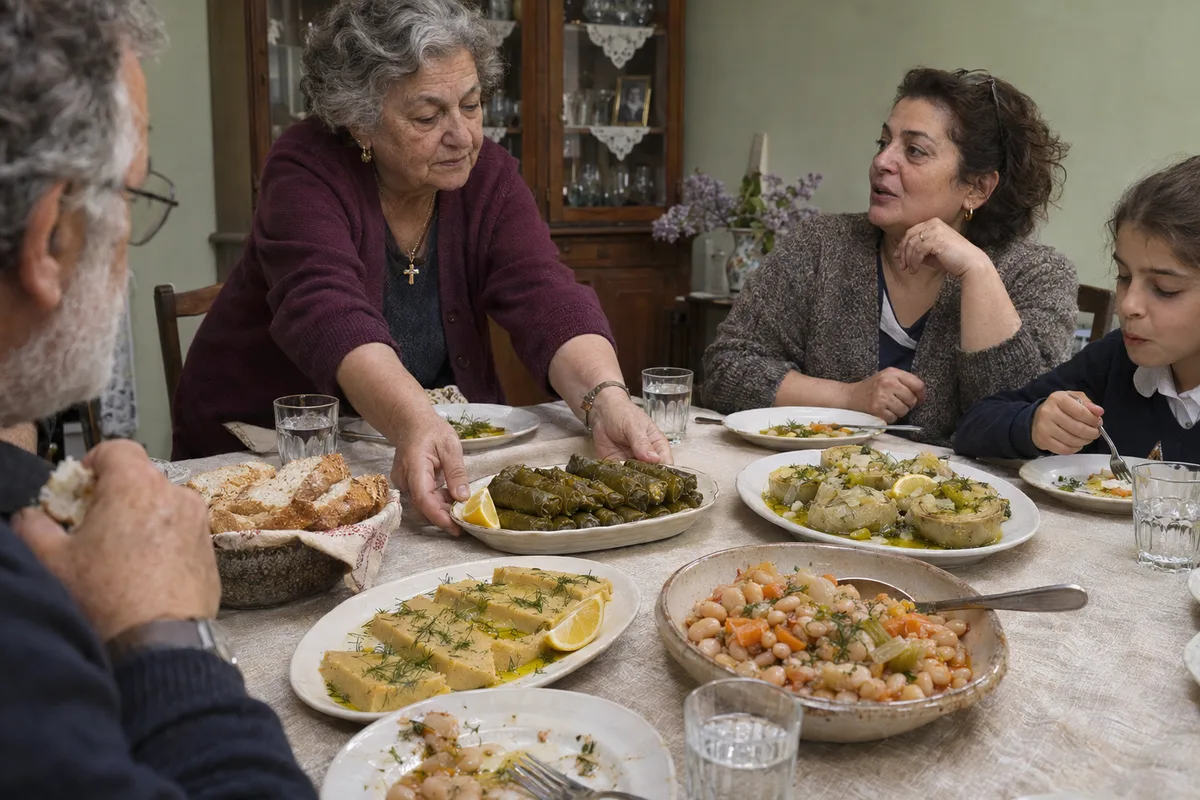
A plate of fava at an Istanbul tavern offers a way into the food of the city’s Greek Orthodox community. Start with the story of a carnival in Kurtuluş, then look for olive oil–braised beans, stuffed vine leaves and other dishes on the Princes’ Islands. Here’s what to order and what to ask before you go.
In Kurtuluş, a neighbourhood inland from the Bosphorus, the old Greek name Tatavla survives in the name of a carnival. In the days before Greek Orthodox Lent, costumed crowds made their way from Pera, now part of Beyoğlu, to Tatavla. The carnival was called Baklahorani, a name associated with the broad beans eaten at the start of the fast. You can still find those beans on Istanbul’s tavern tables today, cooked with olive oil and set into soft slices called fava. Bring on the Beans: Baklahorani -Aylin Oney Tan
In Turkish, Istanbul’s historic Greek Orthodox community is known as the Rum community. Generations of Istanbul Greeks built their lives around neighbourhoods such as Tatavla and islands such as Büyükada. The community shrank sharply in the 20th century, particularly after Turkey and Greece exchanged their nationals in 1920s and 1960s and local communities and many families left their homeland. On Büyükada, restaurateur (Fistik) Ahmet Tanrıverdi recalls that former neighbours who settled in Athens would still book a table at his meyhane when they returned to the island. Minority cuisines of Istanbul -Banu Ozden
The food historian Sula Bozis records a kitchen that changed with the Orthodox calendar. On some fasting days, families ate vegetables and legumes boiled in water. On others, olive oil went into the pot. Come Easter, fresh vine leaves and artichokes appeared on the same table. Some fasting meals also included fish roe or shellfish, so it pays to ask about ingredients. Many of the vegetable dishes are now part of Istanbul’s shared repertoire, served in homes and in meyhanes, the taverns where people linger over small plates called meze. İstanbul Rumlarından Yemek Tarifleri - kitap.ykykultur.com.tr
🌿 Six dishes from Istanbul’s Greek home kitchen
Fava | Broad bean purée 🌱
Dried broad beans simmer with onion and olive oil, then get puréed and chilled until the mixture can be sliced. Lemon and dill brighten the finished plate. The traditional recipe is vegan, and fava is a familiar name to look for on a meyhane menu.
Kuru fasulye pilakisi | White beans braised in olive oil 🌱
Bozis’s recipe cooks white beans with carrot, celery stalk, onion, garlic and olive oil. It’s a more substantial meze than many of the dips on the table. Ask for fasulye pilakisi, the bean version. Pilaki also describes a way of cooking fish and mussels.
Zeytinyağlı lahana sarması | Cabbage rolls with spiced rice 🌱
Soft cabbage leaves are wrapped around rice and onion scented with cinnamon and allspice. Bozis remembers this olive oil version as a holiday dish. Fresh vine leaves made for a spring variation that appeared at Easter. In a restaurant, ask whether the filling contains meat and whether the rolls were cooked with stock.
Taze soğanlı zeytinyağlı enginar | Artichokes with spring onions 🌱
Lemon, olive oil and finely chopped spring onions give this dish its flavor. In Bozis’s account of an Istanbul Greek Easter meal, artichokes sit beside stuffed spring vine leaves. If you’re visiting in spring, ask whether the kitchen has zeytinyağlı enginar.
Zeytinyağlı bakla içi | Fresh broad beans with dill
Where fava is smooth and chilled, this dish keeps the beans whole. They’re cooked with onion, lemon and olive oil and finished with dill. Bozis serves garlic yogurt on the side. Order the beans without yogurt for a vegan plate.
Zeytinli muska böreği | Olive-filled triangular pastries
These crisp triangles of thin pastry hold a filling of olive paste, spring onion, white cheese and egg in Bozis’s recipe. The name mentions olives, so vegan diners should ask what else goes into the filling.
📍 Two stops on the Princes’ Islands
The Princes’ Islands lie in the Sea of Marmara, off Istanbul’s Asian shore. These two sit-down restaurants are listed on veganistanbul.com. Both serve seafood, and their full current vegan offerings could not be confirmed from the published menus. Call ahead if you’re planning a meal around the vegetable dishes. Princess Islands Vegetarian Dinner Guide
Barba Yani Restaurant · Burgazada
The restaurant at Yalı Caddesi 8/A describes its cooking as Greek, with shared meze at the center of the meal. Ask which olive oil dishes are available that day and whether the kitchen has fava or bean pilaki. A second Burgazada restaurant uses the same name, so check the street number when booking. Barba Yani Restaurant
Prinkipo · Büyükada
Ahmet Tanrıverdi built his menu around Aegean meze and recipes of his own. In an interview, he described adding almonds to stuffed vine leaves, with sour cherries in summer and blueberries in winter. Ask whether the sarma is on that day’s menu and how the filling is prepared. The meyhane also serves fish meze, including anchovies. Prinkipo
🗣️ A phrase to keep handy
“Veganım. Bugün hangi mezelerde et, et suyu, balık, deniz ürünü, süt ürünü ya da yumurta yok?”
“I’m vegan. Which meze today are made without meat, meat stock, fish, seafood, dairy or eggs?”
If you eat eggs and dairy, try
“Vejetaryenim. Et, et suyu, balık ve deniz ürünü yemiyorum.” That tells the server you’re vegetarian and don’t eat meat, meat stock, fish or seafood.
There are several other restaurants and meyhanes established or managed by Istanbul Greeks. Koço in Moda, Agora Meyhanesi in Balat and Madam Despina in Kurtuluş are other venues that have Greek dishes or roots.
To contribute to this article, please share your comments with us via hello@veganistanbul.com