Halal, Kosher and Vegan Food in Istanbul: Where They Overlap and What to Check 🌱
Istanbul’s olive-oil vegetables, lentils and bean dishes give vegan visitors plenty of local food to explore. For travellers who also eat halal or kosher, those dishes are useful starting points, but ingredients and preparation still matter
A plate of stuffed vine leaves might suit several people at the same table. A vegetable soup might not. The difference can be something you cannot see: butter, chicken stock or the way the kitchen prepares the food.
For foreign tourists, the first distinction is simple: halal, kosher and vegan describe different requirements. One label cannot replace another.
🏷️ What do the labels actually tell you?
| Label | What it means for a vegan visitor |
|---|---|
| Vegan | Excludes animal ingredients, including meat, fish, dairy, eggs and honey. It does not establish halal or kosher status. |
| Halal | Meets Islamic dietary requirements. Halal food can contain meat, dairy, eggs and other ingredients vegans avoid. |
| Kosher | Meets Jewish dietary requirements covering ingredients and preparation. Kosher food can contain animal products. |
| Pareve / parve | A kosher category containing neither meat nor dairy. It can still include eggs, fish or honey. |
Halal Monitoring Services warns that a vegan label does not automatically exclude alcohol or establish halal compliance. The Kashruth Council of Canada likewise explains that vegan and pareve are separate classifications. HMS Halal Guide
🫒 Istanbul’s advantage: plant-based food already belongs to the cuisine
You do not have to spend your visit eating international vegan substitutes. Turkish cooking has a substantial repertoire built around vegetables, olive oil, grains and pulses.
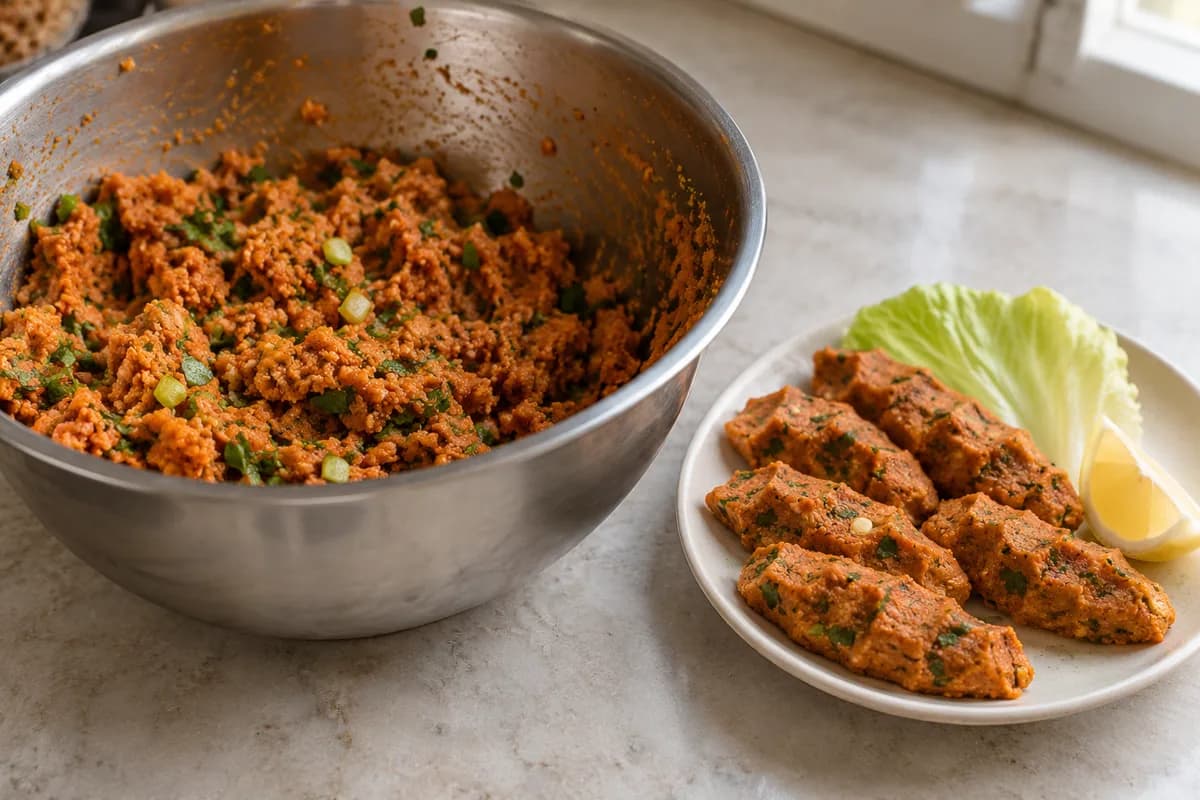
Start with zeytinyağlı dishes, vegetables prepared with olive oil. Look for imam bayıldı, eggplant cooked with onions and tomatoes or barbunya pilaki, a bean dish and rice-filled vine leaves. Mercimek köftesi, lentil-and-bulgur patties, and kısır, a bulgur salad, offer other local starting points. Recipes vary, so confirm ingredients rather than treating the dish name as a guarantee.
Our guide to traditional Turkish food explains the dishes and their ingredient checks.
For travellers combining vegan and religious dietary requirements, these plant-based recipes can simplify the ingredient conversation. They do not, by themselves, establish religious compliance.
☪️ Eating vegan and halal: Check beyond the absence of meat
Choosing a genuinely vegan meal removes questions about animal ingredients and slaughter. However, alcohol can still be an issue in sauces, desserts or other preparations. A vegan restaurant or product should not be described as halal solely because it contains no animal ingredients.
If you require halal certification, ask which organization issued it and whether it covers the food you are ordering. For questions about ingredients or preparation, follow the standards you normally observe.
The reverse distinction matters just as much: “It’s halal” does not answer “Is it vegan?” Butter, yogurt, eggs and meat stock still need separate checks.
✡️ Eating vegan and kosher: Preparation matters too
A fully vegan menu can make ingredient selection easier, but kosher requirements can also concern equipment, grape-derived ingredients, cooking procedures and inspection of produce for insects. Visitors requiring supervised kosher food should check supervision rather than relying on a vegan menu. COR
Pareve products can be useful when looking for dairy-free food, but check for eggs, honey, fish and animal-derived ingredients before buying them as vegan.
For local planning, the Turkish Jewish Community’s official website lists kosher shops and catering contacts in Istanbul. Confirm current service, supervision and whether a fully vegan meal is available before arranging an order. A kosher listing alone does not establish vegan suitability. turkyahudileri.com
🍲 The everyday pitfalls
“No meat” can still mean animal ingredients. Etsiz means meat-free. Lentil soup, bean stew or rice may still contain butter or meat stock.
Vegetable fillings do not settle the pastry question. Potato or spinach börek may contain milk, yogurt, butter or eggs in its pastry or coating.
Toppings can change the meal. Ask about yogurt, cheese and butter before food is plated. With kumpir, the baked potato, request no butter or cheese before the server starts mixing it.
Shared equipment needs a separate conversation. Ask about grills, utensils and cooking equipment if this affects your dietary requirements. These are among the checks covered in our Turkish food guide.
📱 A sentence to keep on your phone
“Veganım. Et, tavuk, balık, süt ürünleri, yumurta ve bal yemiyorum. Bu yemekte tereyağı, et suyu veya tavuk suyu var mı?”
“I’m vegan. I don’t eat meat, chicken, fish, dairy, eggs or honey. Does this dish contain butter, meat stock or chicken stock?”
Add your halal or kosher requirements separately. Explain whether you need certification or supervision.
Istanbul gives vegan visitors the chance to eat local food with its own history and identity. Use that variety, ask specific questions, and choose meals that meet each of your requirements.