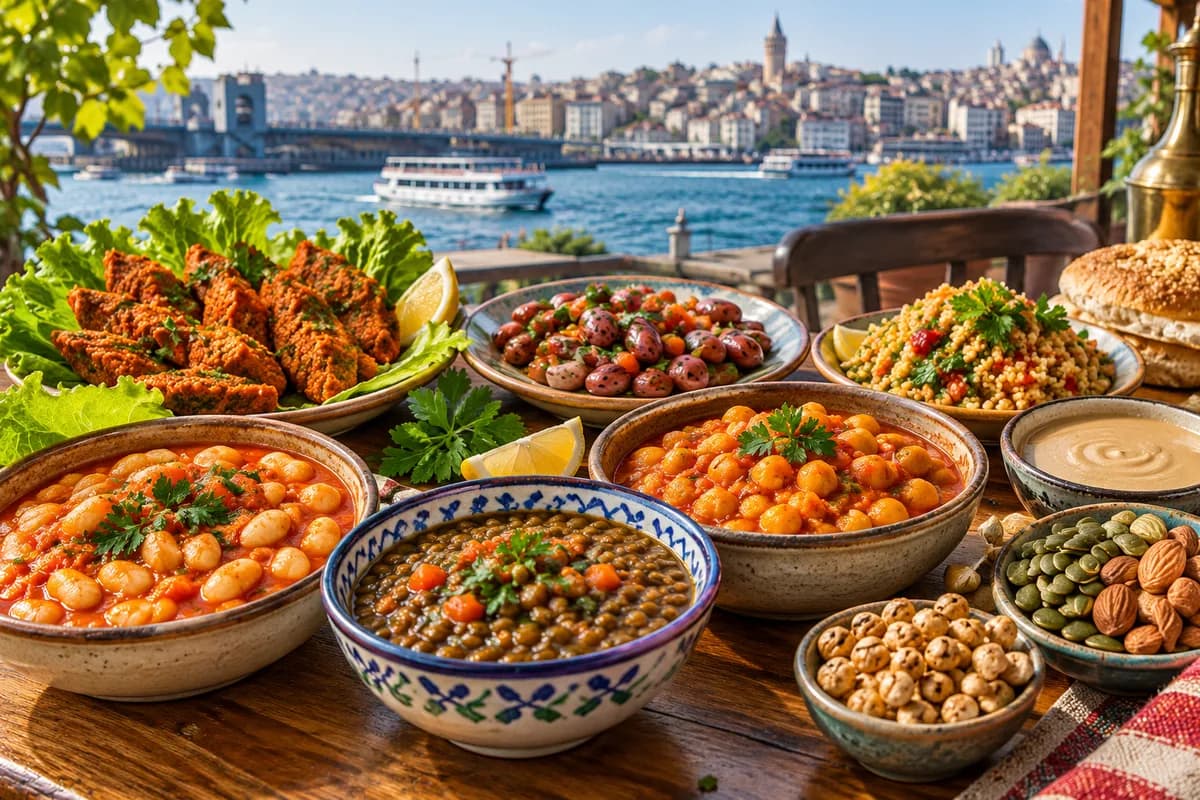
🌱 High-Protein Vegan Food in Istanbul: Discover Turkey's Plant-Based Protein Sources
Forget expensive protein shakes and imported meat substitutes. Istanbul's traditional cuisine offers plenty of plant-based protein, from lentil patties and chickpea stews to white beans, bulgur and tahini
The biggest challenge for vegan visitors in Istanbul is knowing what to order, where to find it and how much protein these dishes actually provide.
Turkey has a long culinary tradition of cooking with legumes, grains, nuts and seeds. Many of these ingredients remain everyday staples in Istanbul's homes and neighbourhood restaurants.
For vegan tourists, this means that finding protein doesn't necessarily require visiting a specialist vegan restaurant. A traditional Turkish meal can provide a substantial amount of plant protein, provided you choose the right dishes.
Here are some of the most practical local options.
🫘 1. Kuru Fasulye [White Beans]: Turkey's Traditional Protein Staple
Protein: Approximately 9 grams per 100 grams of cooked white beans.
Kuru fasulye is one of Turkey's most familiar home-cooked dishes. White beans are simmered with onions, tomato paste and spices, producing a rich, filling stew.
A generous portion containing 200 grams of cooked beans provides approximately 18 grams of protein.
Traditionally served with rice or bulgur pilaf, kuru fasulye is available in many neighbourhood restaurants known as esnaf lokantası, which serve affordable Turkish home cooking.
🌱 Vegan warning: Some restaurants prepare kuru fasulye with beef, pastırma (cured beef), butter or meat stock.
Ask for etsiz kuru fasulye, but also confirm that no animal stock or butter has been used.
🥣 2. Mercimek: Lentils in Almost Every Form
Protein: Approximately 9 grams per 100 grams of cooked lentils.
Lentils are among the most versatile protein sources in Turkish cuisine.
They appear in soups, patties, stews and salads. Two particularly useful choices are:
Mercimek köftesi: Soft patties made with red lentils, fine bulgur, onions, tomato or pepper paste, parsley and spices. Usually served cold with lettuce and lemon.
Yeşil mercimek yemeği: A traditional green lentil stew, sometimes prepared with vegetables or noodles.
A serving containing 200 grams of cooked lentils provides approximately 18 grams of protein before accounting for other ingredients.
Mercimek köftesi is especially convenient for travellers because it can be eaten cold and is often sold in takeaway portions.
🌱 Vegan warning: Lentil soup may contain butter or meat stock. Green lentil stews can also contain meat. Check before ordering.
💡 Local tip: For a protein-focused lunch, choose lentil patties alongside another legume dish rather than relying on a bowl of soup alone.
🫛 3. Nohut: Chickpeas Beyond Hummus
Protein: Approximately 9 grams per 100 grams of cooked chickpeas.
Chickpeas have been part of Anatolian cooking for centuries.
In Istanbul, they are commonly served as nohut yemeği, a warm stew prepared with tomatoes, onions and spices.
A 200-gram portion of cooked chickpeas supplies roughly 18 grams of protein.
Chickpeas also appear in rice dishes, salads and some regional specialties.
What should you order?
Look for etsiz nohut yemeği, ideally served with rice or bulgur pilaf.
🌱 Vegan warning: Some chickpea stews contain lamb, beef or meat stock. Rice pilaf may contain butter or chicken stock.
For tourists who want to experience Turkish home cooking, chickpea stew is a more locally representative choice than imported vegan meat alternatives.
🧆 4. Mercimek Köftesi and Etsiz Çiğ Köfte: Protein on the Move
Two popular Turkish foods can be convenient for travellers who don't have time for a sit-down meal.
Mercimek köftesi combines lentils and bulgur, providing protein from both legumes and grains.
Etsiz çiğ köfte is a spicy mixture generally prepared with fine bulgur, pepper paste, spices and other plant ingredients without meat. It is commonly served in lettuce leaves or wrapped in flatbread.
However, there is an important nutritional difference.
Mercimek köftesi contains lentils as a principal ingredient, while most commercial meatless çiğ köfte is predominantly bulgur-based.
Consequently, mercimek köftesi is generally the more useful protein choice, although the actual amount depends on the recipe and serving size.
🌱 Vegan warning: Check sauces, particularly mayonnaise-based dressings. Also make sure you are ordering etsiz çiğ köfte, not a traditional meat-containing preparation.
🥗 5. Barbunya Pilaki: Protein from the Turkish Meze Counter
Protein: Approximately 8–9 grams per 100 grams of cooked cranberry or similar mature beans.
Barbunya pilaki is a traditional Turkish dish made with beans, olive oil, onions, carrots and tomatoes.
Usually served cold or at room temperature, it appears in restaurants, delicatessens and meze counters.
Unlike many other protein-rich dishes, barbunya pilaki is traditionally prepared without meat or dairy.
A generous serving can provide a useful amount of protein, although the total depends on the proportion of beans to vegetables and sauce.
💡 Local tip: Combine barbunya pilaki with a portion of lentil patties for a more substantial meal.
🌾 6. Bulgur: The Underrated Turkish Grain
Protein: Approximately 3 grams per 100 grams of cooked bulgur.
Bulgur is made from wheat that has been parboiled, dried and cracked.
It is used throughout Turkey in pilaf, salads, stuffed vegetables and lentil patties.
While bulgur contains considerably less protein per cooked serving than lentils or beans, it contributes additional protein when combined with legumes.
Two popular choices are:
🌿 Bulgur pilavı: Cooked bulgur, often prepared with tomatoes, peppers and onions.
🥗 Kısır: A cold salad of fine bulgur, parsley, spring onions, tomato or pepper paste, lemon and olive oil.
Neither should be treated as a high-protein meal on its own.
However, combining bulgur with chickpeas, lentils or beans creates a more protein-rich meal.
🌱 Vegan warning: Bulgur pilaf may be cooked with butter or meat stock. Bulgur also contains gluten and is unsuitable for people with celiac disease.
🥜 7. Tahin and Nuts: Protein-Rich Extras
Turkey also offers several convenient plant-based foods that contribute protein without requiring a restaurant. They are mostly sold in tobacco shops or special Kuruyemiş shops selling varieties of nuts .
Tahin (tahini): Sesame seed paste, commonly eaten at breakfast with grape molasses or used in sauces.
Kabak çekirdeği: Pumpkin seeds, sold in supermarkets, markets and nut shops.
Yer fıstığı: Peanuts, widely available as a snack. Allergic people beware.
Badem: Almonds, sold roasted or raw.
Leblebi: Roasted chickpeas, a traditional Turkish snack available in most nut shops.
Among these, pumpkin seeds, peanuts and roasted chickpeas are particularly practical choices for travellers seeking extra protein.
A small handful of pumpkin seeds or peanuts can contribute roughly 7–9 grams of protein, depending on portion size.
Tahini also contains protein, but its high fat content means it is best regarded as a nutrient-rich addition rather than the main protein source of a meal.
💡 Local tip: Look for shops displaying the word kuruyemiş, meaning nuts, seeds and dried snacks.
Leblebi is particularly convenient because it requires no refrigeration and can be carried during sightseeing.
🍽️ Where Can Vegans Find These Foods in Istanbul?
You don't need to search exclusively for vegan restaurants.
Traditional Turkish eateries often provide some of the most accessible options.
🏠 Esnaf lokantası (neighborhood home-cooking restaurant)
These restaurants usually display several prepared dishes behind a glass counter.
Look for kuru fasulye, chickpea stew, lentils and bulgur pilaf.
Ask about ingredients because vegetable-based dishes are not necessarily vegan.
🥗 Zeytinyağlı and meze counters
These counters serve cold dishes prepared with olive oil.
Barbunya pilaki is particularly relevant for protein-conscious vegans.
Other vegetable dishes may be suitable but are generally less protein-dense.
🌱 Dedicated vegan restaurants
Specialist vegan restaurants may offer tofu, seitan, soy-based dishes and other protein alternatives that are less common in traditional Turkish restaurants.
For additional information, see the veganistanbul.com guide to traditional Turkish vegan dishes.
Travelers staying in apartments can also consult our guide to buying vegan groceries in Istanbul
💪 How Much Protein Can You Get from a Traditional Turkish Vegan Meal?
Consider a lunch consisting of:
🫘 200 grams of cooked white beans: Approximately 18 grams of protein.
🌾 150 grams of cooked bulgur: Approximately 5 grams.
🥗 100 grams of cooked chickpeas: Approximately 9 grams.
Total: Around 32 grams of plant-based protein.
These are estimates based on the cooked ingredients, not laboratory-tested restaurant portions.
The actual amount will depend on serving size and preparation.
For a vegan traveler, however, this combination demonstrates how traditional Turkish ingredients can provide a substantial protein intake without processed meat substitutes.
🗣️ Essential Turkish Phrases for Protein-Conscious Vegans
Save these sentences on your phone before visiting a traditional restaurant.
“Etsiz kuru fasulye var mı?”
Do you have white bean stew without meat?
“Yeşil mercimek yemeğiniz var mı?”
Do you serve green lentil stew?
“Bu yemek et suyu veya tavuk suyu içeriyor mu?”
Does this dish contain meat or chicken stock?
“Tereyağı yerine zeytinyağı kullanılıyor mu?”
Is olive oil used instead of butter?
“İçinde süt, yoğurt veya yumurta var mı?”
Does it contain milk, yogurt or eggs?
Remember that etsiz means meatless, not necessarily vegan.
🌱 The Bottom Line: Local Food Can Meet Your Protein Needs
Istanbul's most practical vegan protein sources are not necessarily the dishes advertised as high-protein or plant-based.
Lentils, chickpeas, white beans, barbunya, bulgur, roasted chickpeas and seeds are familiar ingredients in Turkish everyday cooking.
For travellers, the most effective approach is to build meals around legumes, use grains and vegetables as accompaniments, and keep nuts or roasted chickpeas available between meals.
A bowl of lentil soup or a plate of vegetable meze may be a pleasant introduction to Turkish cuisine, but neither automatically provides enough protein for a substantial meal.
The distinction matters, particularly for physically active travellers and those with higher protein requirements.
You can enjoy local Turkish food and maintain a protein-rich vegan diet. You simply need to know which dishes deserve the largest place on your plate.