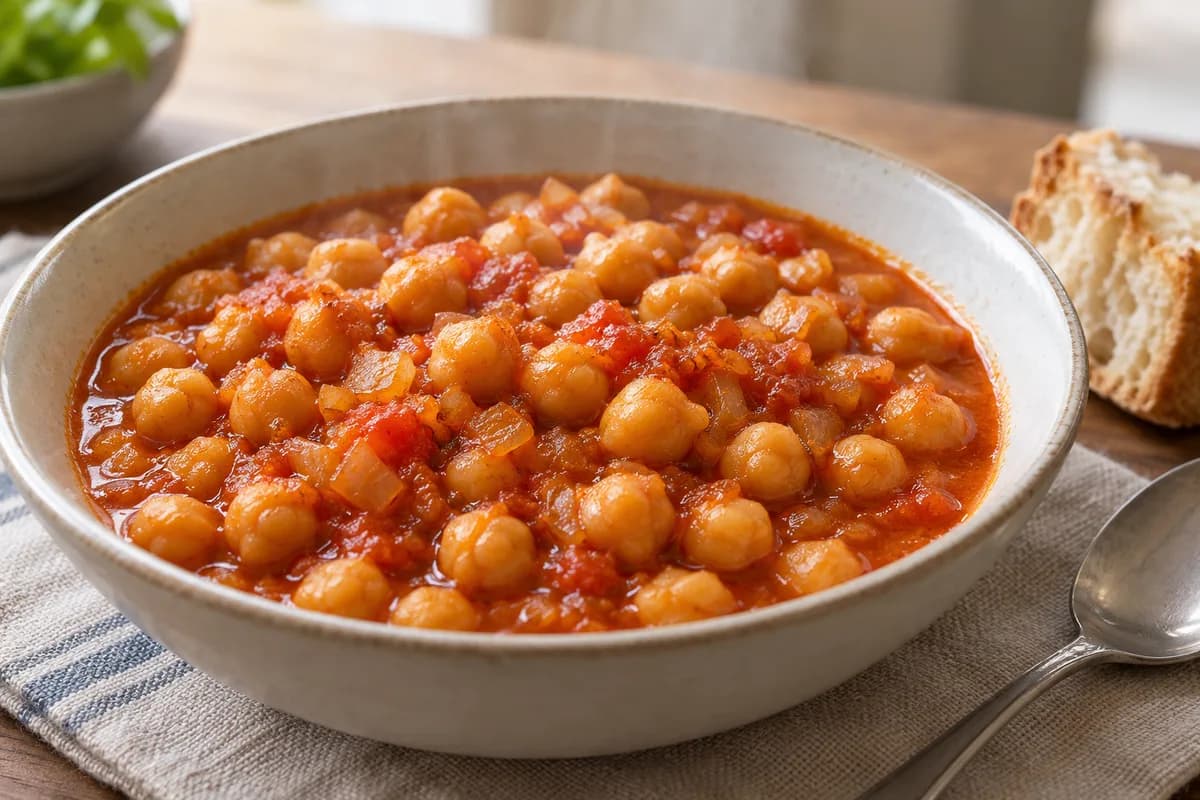
🥣 How to Make Turkish Vegan Nohut Stew: A Step-by-Step Recipe
Tender chickpeas, softened onions and tomato paste come together in nohut yemeği, a Turkish home-style stew. Here is how to make a vegan version, with dried or canned chickpeas and ingredients you can find outside Turkey
Nohut means chickpeas; nohut yemeği is the name to look for on menus. In Istanbul, you may see it at an esnaf lokantası, a casual restaurant serving prepared home-style meals. Restaurant versions need checking for meat, butter and animal stock, as explained in our vegan comfort food guide.
This recipe uses olive oil and water, letting the chickpeas and tomato base provide the flavor.
🛒 Ingredients
Serves: 4
Preparation: 15 minutes, plus 8–12 hours’ soaking for dried chickpeas
Cooking: About 1½–2½ hours with dried chickpeas, or 35–40 minutes with canned
- 250 g dried chickpeas, or 600 g cooked chickpeas, drained
- 3 tablespoons olive oil
- 1 large onion, finely chopped
- 2 tablespoons tomato paste
- 1 teaspoon sweet Turkish red pepper paste, optional
- ½ teaspoon freshly ground black pepper
- ½ teaspoon salt initially, then adjust to taste
- 600 ml hot water, plus more as needed
- Turkish red pepper flakes, called pul biber, optional, to serve
Shopping note: Dried chickpeas are labeled nohut in Turkey. For canned chickpeas, check the drained weight: you will generally need two or three cans, depending on their size. Choose chickpeas canned in water or brine, then drain and rinse.
Turkish tomato paste is domates salçası. Sweet pepper paste is tatlı biber salçası; skip it if unavailable. Both pastes can contain salt, so season gradually.
🫘 Step 1: Soak the dried chickpeas
Put the dried chickpeas in a large bowl and cover with plenty of cold water, allowing room for them to expand. Soak for 8–12 hours in the refrigerator, then drain and rinse.
What to look for: The chickpeas should be noticeably larger but still firm. Soaking does not cook them.
Using canned chickpeas? Skip straight to Step 3.
🍲 Step 2: Cook until tender
Transfer the soaked chickpeas to a saucepan and cover generously with fresh water. Bring to a boil, then reduce the heat and simmer for about 60–90 minutes. Older chickpeas may take longer. Add hot water as needed to keep them submerged.
Test a chickpea after letting it cool slightly.
The clue: It should crush easily with a fork and feel creamy inside, without a hard or chalky center. Cook the chickpeas until tender before adding them to the tomato base.
Drain and set aside.
🧅 Step 3: Soften the onion
Heat the olive oil in a heavy saucepan over medium-low heat. Add the onion and cook for 8–10 minutes, stirring occasionally.
What to look for: Soft, translucent onion with a little golden color around the edges. If it starts browning quickly, lower the heat.
🍅 Step 4: Cook the tomato paste
Add the tomato paste and optional pepper paste. Stir for 1–2 minutes, spreading the paste through the onions and oil.
The cue: The oil should turn reddish and the paste should darken slightly. Keep stirring so it does not burn; add a spoonful of water if it catches.
⏲️ Step 5: Simmer the stew
Add the cooked chickpeas, black pepper, salt and 600 ml hot water. Stir gently. The liquid should just cover the chickpeas; add a little more if necessary.
Bring to a gentle simmer, partially cover and cook for 20–30 minutes. Stir occasionally.
What should the finished dish look like? Whole, tender chickpeas sitting in a reddish, spoonable sauce. There should be enough liquid to scoop up with bread, without the chickpeas floating in a large volume of broth.
If the stew is too watery, simmer uncovered for a few minutes. For a thicker sauce, mash a spoonful of chickpeas against the side of the pot and stir them back in. Add hot water if it becomes too thick.
🍽️ Step 6: Rest, taste and serve
Turn off the heat and leave the stew for 10 minutes. Taste again before adding more salt, then serve in shallow bowls with optional pul biber (dried red pepper).
For a full meal, keep the chickpea stew as the main dish and add:
🍚 Rice pilaf: Prepare with olive oil and water for a vegan accompaniment.
🌾 Bulgur pilaf: Another option, made from cracked wheat.
🥗 Çoban salatası: Chopped tomatoes, cucumber, onion and parsley dressed with lemon and olive oil.
🥒 Turşu: Turkish pickled vegetables, served on the side.
🗣️ Ordering nohut in Istanbul
A meat-free appearance does not establish whether a restaurant’s stew is vegan. Ask about the ingredients already cooked into the pot:
“Nohut yemeğinde et, et suyu, tavuk suyu, tereyağı veya başka hayvansal yağ var mı?”
“Does the chickpea stew contain meat, meat stock, chicken stock, butter or any other animal fat?”
Etsiz means “without meat”; it does not rule out butter or stock. Check the accompanying pilaf separately, too.