🥛 Lactose-Free in Istanbul: A Survival Toolkit for Tourists
Can you enjoy Turkish food without milk, cheese, butter or yogurt? Absolutely. But knowing what to order, what to avoid and what to ask can make a considerable difference
Istanbul has a rich culinary tradition that extends far beyond dairy products. Olive oil dishes, vegetable stews, legumes, grilled vegetables and traditional street foods offer plenty of possibilities for visitors avoiding lactose.
However, dairy ingredients can appear in unexpected places, from seemingly harmless soups to rice pilaf and desserts.
Here's a practical survival guide for navigating Istanbul's restaurants, bakeries, markets and cafés.
🩺 First, Know the Difference: Lactose Intolerance or Milk Allergy?
This distinction is particularly important when ordering food in Turkey.
Lactose intolerance means your body has difficulty digesting lactose, the natural sugar found in milk. Symptoms may include bloating, abdominal pain, gas and diarrhea.
Milk allergy is an immune system reaction to milk proteins. Even small amounts of milk can trigger serious reactions, including anaphylaxis.
Lactose-free does not necessarily mean dairy-free.
Lactose-free milk, for example, still contains milk proteins and is unsuitable for people with milk allergies.
If you have a milk allergy, you must avoid milk and milk-derived ingredients, including lactose-free dairy products. Cross-contact during food preparation is another concern.
This guide covers both groups, but travellers with milk allergies need stricter precautions.
🍽️ 1. Discover Istanbul's Naturally Dairy-Free Food Traditions
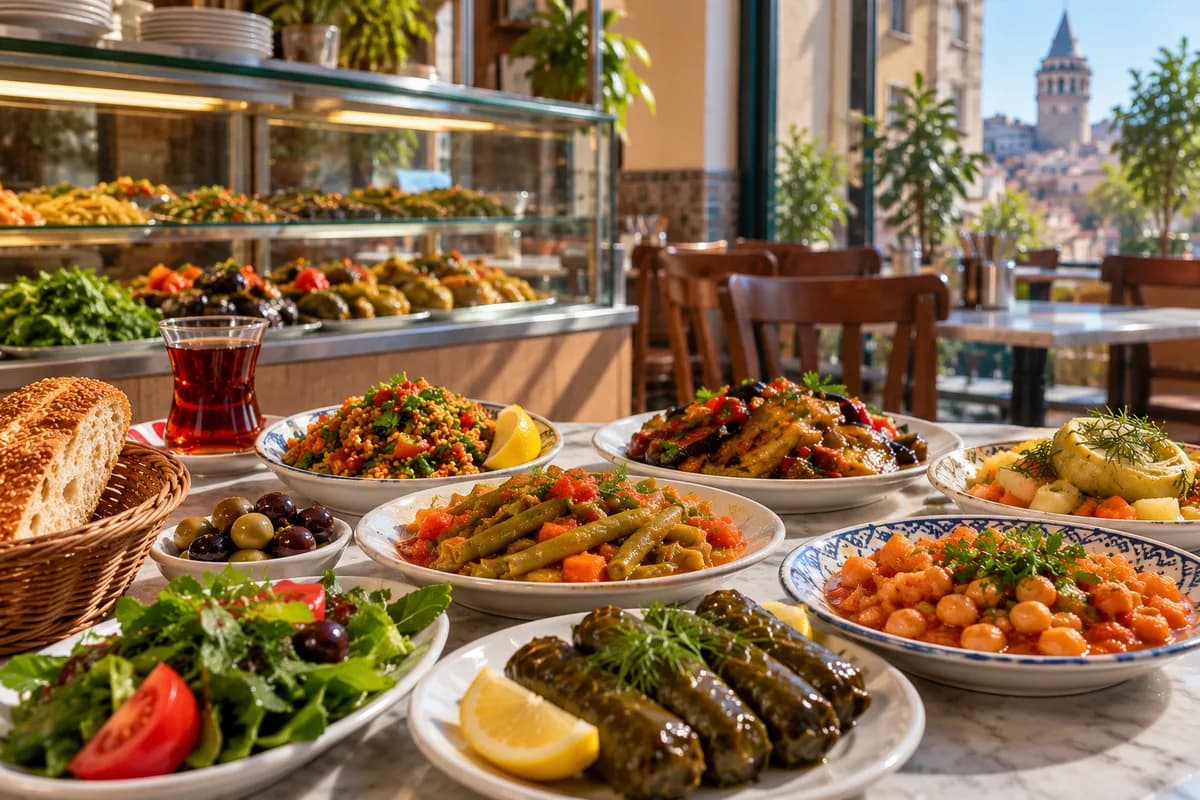
One advantage of eating in Istanbul is the city's extensive tradition of cooking vegetables with olive oil.
Turkish restaurants call these dishes zeytinyağlı, meaning prepared with olive oil.
Many traditional recipes contain no dairy, although restaurant preparations can vary.
🫒 Look for these dishes
- Zeytinyağlı taze fasulye: Green beans cooked with tomatoes, onions and olive oil.
- İmam bayıldı: Eggplant stuffed with onions, tomatoes and garlic.
- Zeytinyağlı enginar: Artichokes prepared with olive oil and vegetables.
- Barbunya pilaki: Borlotti beans cooked with olive oil, carrots and tomatoes.
- Yaprak sarma: Vine leaves stuffed with rice, herbs and spices. Choose the olive oil version without meat.
- Kısır: Bulgur salad with tomatoes, herbs, lemon and pomegranate molasses.
These dishes are often found in esnaf lokantası, traditional restaurants serving ready-made Turkish home-style meals.
⚠️ What to check: The name of a dish does not guarantee its ingredients. Ask whether butter, yogurt, cheese or milk has been added.
🥣 2. Beware of Dairy Hidden in Turkish Soups
Soup is an everyday part of Turkish cuisine, but not every vegetable-based soup is dairy-free.
Mercimek çorbası (lentil soup) is a popular choice. However, some restaurants use butter, milk or cream in their recipes.
Ezogelin çorbası, another lentil-based soup, is often prepared without dairy, but butter may be used.
Other soups require particular attention:
🔴 Yayla çorbası: Traditionally contains yogurt.
🔴 Tarhana çorbası: Many traditional tarhana preparations contain yogurt.
🔴 Kremalı mantar çorbası: Creamy mushroom soup generally contains dairy.
🔴 Sütlü çorbalar: Soups made with milk.
🟢 Vegetable and lentil soups: Potentially suitable when prepared without dairy ingredients.
Useful question:
Bu çorbada süt, tereyağı, krema veya yoğurt var mı?
Does this soup contain milk, butter, cream or yogurt?
Remember to ask about butter used in the final seasoning. Some Turkish soups are served with melted butter and spices poured over the top.
🥯 3. Turkish Street Food: What Can You Eat?
Istanbul's street food culture offers several possibilities for people avoiding lactose.
🥨 Simit
The familiar sesame-covered bread ring sold throughout Istanbul is commonly made without milk or butter.
However, recipes vary, and some bakery products may contain dairy. Especially, simit with fillings may contain cheese.
Check the ingredients before buying, particularly if you have a milk allergy.
🌰 Roasted chestnuts
Kestane kebap, sold by street vendors during colder months, is generally roasted without dairy ingredients.
🌽 Corn on the cob
Street vendors sell boiled or grilled corn, known as mısır.
Rarely some add butter so better to ask for it without butter. In restaurants, where they generally add butter, you should ask for it.
🥔 Kumpir
This oversized baked potato, particularly associated with Ortaköy, usually comes mashed with butter and cheese.
You can request it without either ingredient, but the standard preparation involves dairy, and shared utensils may cause cross-contact.
For milk-allergic visitors, this can be a difficult option to manage safely.
🫓 Gözleme
Traditional Turkish flatbread with fillings such as spinach or potatoes may appear dairy-free.
However, some recipes contain cheese, and butter may be brushed over the bread during cooking.
Ask about the dough, filling and cooking process.
🧈 4. The Hidden Dairy Ingredients You Should Recognise
A dish may look completely dairy-free but contain butter, yogurt or other milk products.
Here are some important Turkish words to recognise:
🥛 Süt: Milk
🧈 Tereyağı: Butter
🧀 Peynir: Cheese
🥣 Yoğurt: Yogurt
🥛 Krema: Cream
🧀 Lor peyniri: Fresh curd cheese
🥛 Süt tozu: Milk powder
🥛 Peynir altı suyu: Whey
🧈 Sadeyağ: Clarified butter or ghee
🥛 Laktoz: Lactose
🥛 Süt proteini: Milk protein
🥛 Kazein: Casein
Important: Butter and clarified butter may contain small amounts of lactose, but neither should be treated as safe for people with milk allergies.
🍚 5. Five Turkish Foods That Deserve Extra Attention
Some of the most familiar Turkish dishes contain dairy even when it isn't immediately visible.
1. Rice pilaf (pirinç pilavı)
Turkish rice is frequently cooked with butter. Ask whether vegetable oil or olive oil was used instead.
2. Mashed potatoes (patates püresi)
Usually prepared with milk, butter or both.
3. Börek
Traditional Turkish pastries often contain cheese. Even versions filled with potatoes or spinach may contain milk, yogurt or butter in the dough or between the pastry layers.
4. Mantı
Turkish dumplings are traditionally served with yogurt and often topped with butter-based sauce. The dough and filling also need checking.
5. Köfte
Turkish meatballs may contain bread crumbs or bread soaked in milk or other dairy ingredients, depending on the recipe.
For milk-allergic travellers, asking about ingredients alone may not be enough. Shared preparation surfaces and utensils can also matter.
🍮 6. Turkish Desserts: Not Everything Contains Milk
Istanbul has a remarkable dessert culture, but many traditional sweets contain dairy.
🔴 Usually unsuitable without modification
- Sütlaç: Turkish rice pudding made with milk.
- Kazandibi: A caramelised milk pudding.
- Tavukgöğsü: A traditional milk pudding.
- Künefe: A hot dessert containing cheese and often butter.
- Dondurma: Traditional Turkish ice cream, generally made with milk.
🟡 Potentially dairy-free choices
Ayva tatlısı: Quince cooked in syrup. Request it without kaymak, the thick dairy cream commonly served alongside it.
Kabak tatlısı: Pumpkin dessert often prepared with sugar and sometimes topped with walnuts or tahini. Check that no cream or other dairy ingredient has been added.
Lokum: Traditional Turkish delight is often made with sugar and starch, but varieties containing chocolate, cream or milk-based fillings are unsuitable.
Aşure: A traditional dessert made with grains, legumes, dried fruits and nuts. Many recipes contain no dairy, although ingredients should still be checked.
⚠️ Baklava warning: Traditional baklava frequently contains butter or clarified butter. It should not be assumed lactose-free or milk-allergy-safe.
☕ 7. Ordering Coffee and Tea Without Dairy
Fortunately, two of Turkey's best-known drinks are traditionally prepared without milk.
Turkish tea (çay) is served black, usually in a small tulip-shaped glass.
Turkish coffee (Türk kahvesi) is traditionally prepared with water and finely ground coffee, without milk.
These are practical choices for visitors avoiding dairy.
For espresso-based drinks, cafés may offer oat, soy, almond or other plant-based alternatives.
Look for:
- Yulaf sütü: Oat milk
- Soya sütü: Soy milk
- Badem sütü: Almond milk
- Bitkisel süt: Plant-based milk
- Laktozsuz süt: Lactose-free milk
Remember that laktozsuz süt is still dairy milk. It is not suitable for milk allergies.
If you have a severe milk allergy, ask about shared steam wands and other equipment used to prepare dairy-based drinks.
🛒 8. Where to Buy Lactose-Free Products in Istanbul
Large supermarkets and some smaller grocery stores sell lactose-free dairy products.
Look for the word LAKTOZSUZ on packaging.
You may find lactose-free milk, yogurt and selected cheeses, although availability varies between stores.
For people with milk allergies, look instead for products explicitly labeled dairy-free or made from plant-based ingredients.
Useful Turkish packaging terms include:
🟢 Laktozsuz: Lactose-free
🟢 Süt içermez: Does not contain milk
🟢 Süt ürünü içermez: Does not contain dairy products
🟢 Vegan: Vegan
🔴 Süt içerir: Contains milk
🟡 Süt içerebilir: May contain milk
🟡 Eser miktarda süt içerebilir: May contain traces of milk
A useful distinction: Vegan-labeled food should not intentionally contain dairy ingredients, but a vegan label alone does not establish that a product is safe from milk-allergen cross-contact.
Travellers with milk allergies should read allergen declarations carefully.
📱 9. Save This Turkish Ordering Card
Language barriers can make restaurant visits difficult, particularly when discussing allergies.
Save the appropriate message below and show it to restaurant staff before ordering.
🟡 FOR LACTOSE INTOLERANCE
Turkish:
Laktoz intoleransım var. Laktoz içeren yiyecek ve içecekleri tüketemiyorum. Yemeğimde süt, krema, yoğurt veya laktoz içeren başka bir malzeme var mı? Lütfen içeriğini kontrol eder misiniz?
English:
I have lactose intolerance. I cannot consume foods or drinks containing lactose. Does my meal contain milk, cream, yogurt or any other ingredient containing lactose? Could you please check the ingredients?
🔴 FOR MILK ALLERGY
Turkish:
Süt alerjim var. Süt, peynir, tereyağı, yoğurt, krema, peynir altı suyu ve diğer süt ürünlerini kesinlikle tüketemiyorum. Çok az miktarda süt bile ciddi alerjik reaksiyona neden olabilir. Yemeğimin hazırlanırken süt ürünleriyle temas etmemesi de gerekiyor. Lütfen mutfakla kontrol eder misiniz?
English:
I have a milk allergy. I must strictly avoid milk, cheese, butter, yogurt, cream, whey and all other dairy products. Even a very small amount of milk may cause a serious allergic reaction. My food must also be prepared without contact with dairy products. Could you please check with the kitchen?
For severe allergies: Do not rely solely on a translated card. Confirm that restaurant staff understand the requirements and can safely prepare the meal. If they cannot, choose another option.
🚨 10. What If You Have an Allergic Reaction in Istanbul?
Travellers with diagnosed milk allergies should follow their physician's emergency action plan.
If you have been prescribed an epinephrine auto-injector, carry it with you and know how to use it.
In Turkey, the emergency telephone number is 112.
If you experience symptoms of anaphylaxis, use prescribed epinephrine promptly and call 112. Do not delay emergency treatment.
Visitors with severe allergies should also consider carrying medical information in Turkish and checking their travel insurance coverage before departure.
🧳 Your Lactose-Free Istanbul Survival Checklist
Before leaving your hotel:
✅ Save the appropriate Turkish ordering card.
✅ Learn the words süt, tereyağı, peynir, yoğurt and krema.
✅ Look for traditional olive oil dishes.
✅ Ask whether soups and rice contain butter.
✅ Check pastries and desserts for hidden dairy.
✅ Distinguish lactose-free milk from plant-based milk.
✅ Read packaged food labels carefully.
✅ If you have a milk allergy, ask about cross-contact and carry prescribed emergency medication.
✅ Save 112 as Turkey's emergency number.
🌿 The Bottom Line: Istanbul Without Dairy
Avoiding lactose or dairy doesn't mean missing out on Istanbul's food culture.
Traditional olive oil dishes, vegetable stews, legumes, roasted chestnuts, Turkish coffee and countless other local foods provide opportunities to explore the city's cuisine.
The key is knowing which ingredients to question.
For visitors with lactose intolerance, checking recipes and choosing suitable alternatives may be sufficient, depending on individual tolerance.
For those with milk allergies, stricter ingredient checks, cross-contact precautions and emergency preparedness are essential.
Do check our recommendation for some of lactose-free venues in Istanbul. More in our database [VeganIstanbul.com][https://www.veganistanbul.com/en]
With a little preparation, you can spend more time discovering Istanbul and less time worrying about your next meal.