🇬🇷🇹🇷 Two Cultures, One Vegan Table: Discover Istanbul’s Turkish and Greek Culinary Heritage
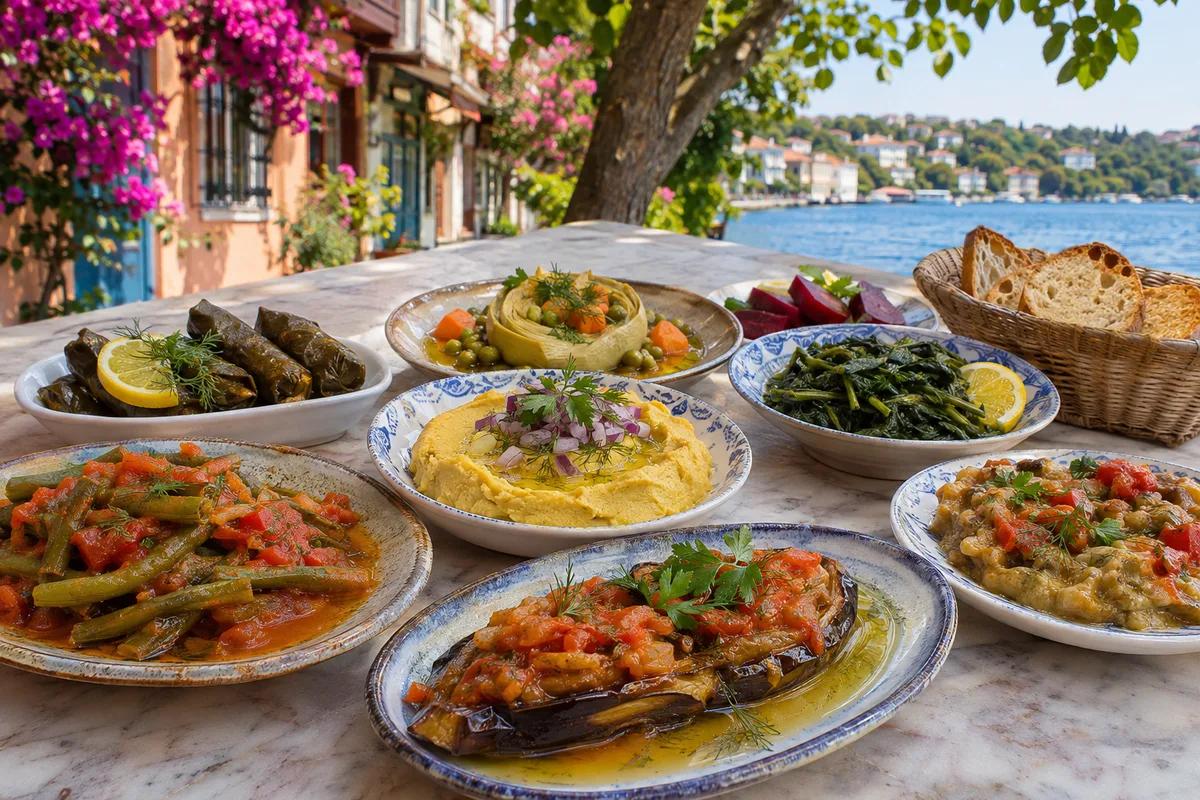
From olive-oil vegetables and stuffed vine leaves to fava and bean stews, Istanbul's Turkish and Greek culinary traditions share a remarkable collection of plant-based dishes.
Discover the flavors that have crossed cultures, kitchens and generations, and learn where to find them today.
🫒 A culinary heritage without borders
You don't need to visit a vegan restaurant to discover Istanbul's plant-based culinary heritage. Sometimes, the best place to start is a traditional meyhane, a neighbourhood restaurant or a counter displaying freshly prepared olive-oil dishes.
Turkish and Greek cuisines share centuries of culinary history. Their connections are particularly visible in Istanbul, where Greek-speaking Orthodox communities, commonly known as Rum, contributed to the city's food culture alongside Turkish, Armenian, Jewish and other communities.
These culinary traditions developed through everyday exchanges in markets, homes, taverns and neighbourhood kitchens.
The result is a collection of vegetable dishes, legumes, stuffed leaves and olive-oil preparations that remain familiar on both sides of the Aegean.
Some dishes even share nearly identical names. Others use similar ingredients but follow different recipes.
For vegan travellers, this heritage provides an opportunity to explore Istanbul through food without depending exclusively on modern plant-based restaurants.
🍆 1. İmam Bayıldı: One eggplant, two culinary traditions
Turkish: İmam bayıldı
Greek: Imam baildi
Few dishes illustrate the connection between Turkish and Greek cooking as clearly as imam bayıldı.
An eggplant is filled with onions, tomatoes and garlic, then slowly cooked in olive oil until tender.
The dish is traditionally served at room temperature, allowing the flavors to develop.
Its name, which roughly translates as "the imam fainted," is associated with several culinary legends. The precise origin of the name remains uncertain.
🌱 Vegan status: Traditionally vegan.
📍 Where to find it: Traditional Turkish restaurants, Aegean restaurants and establishments offering zeytinyağlı dishes.
Ordering tip: Look for zeytinyağlı imam bayıldı. Do not confuse it with karnıyarık, a similar-looking stuffed eggplant dish that usually contains minced meat.
🫘 2. Fava: Same name, different beans
Turkish: Fava
Greek: Fava
Fava is an excellent example of how two culinary traditions can share a dish's name while using different ingredients.
In Istanbul, fava is commonly prepared from dried broad beans, cooked until soft and blended into a smooth purée with olive oil.
It is frequently served with dill, onions and lemon.
In Greece, particularly on islands such as Santorini, fava usually refers to a purée made from yellow split peas rather than broad beans.
Both preparations are traditionally plant-based.
🌱 Vegan status: Usually vegan.
📍 Where to find it: Meyhanes, seafood restaurants and Aegean restaurants.
Ordering tip: Fava is often displayed among the cold meze. You can order it without ordering seafood or other animal products.
🍃 3. Sarma and Dolmades: A shared tradition wrapped in leaves
Turkish: Yaprak sarma
Greek: Dolmades or dolmadakia
Stuffed vine leaves are among the most recognizable foods shared by Turkish and Greek kitchens.
The basic preparation involves wrapping vine leaves around a filling of rice, herbs and seasonings.
Turkish olive-oil versions may contain onions, pine nuts, currants, cinnamon or allspice.
Greek versions often emphasize dill, parsley, mint and lemon.
Recipes vary considerably between families and regions.
The important distinction for vegan visitors is between rice-filled and meat-filled preparations.
🌱 Vegan status: Zeytinyağlı versions are generally vegan, provided no animal stock or other animal ingredients are used.
📍 Where to find it: Traditional restaurants, meyhanes, delicatessens and neighbourhood lokantas.
Ordering tip: Ask for zeytinyağlı yaprak sarma and confirm that it contains no meat or meat stock.
🫛 4. Fasolakia and Taze Fasulye: The comfort of green beans
Turkish: Zeytinyağlı taze fasulye
Greek: Fasolakia ladera
Green beans slowly cooked with tomatoes, onions and olive oil are a familiar home-style dish in both cuisines.
The preparation is simple, but the result depends on slow cooking and the quality of the vegetables.
In Turkey, the dish is often served cold or at room temperature as part of the zeytinyağlı tradition.
Greek fasolakia is frequently served warm, sometimes with potatoes.
🌱 Vegan status: Traditionally vegan when prepared with olive oil and vegetable ingredients.
📍 Where to find it: Esnaf lokantası restaurants, home-style restaurants and establishments specializing in olive-oil dishes.
Ordering tip: Confirm that butter or meat stock has not been added.
🥕 5. Pilaki: The bean dish that connects two shores
Turkish: Barbunya pilaki
Greek: Related dishes include gigantes plaki and other bean preparations.
The words pilaki and plaki reflect a shared culinary vocabulary, although the dishes are not necessarily identical.
In Istanbul, barbunya pilaki usually consists of borlotti beans cooked with onions, carrots, potatoes, tomatoes and olive oil.
It is commonly served cold or at room temperature.
Greek gigantes plaki generally features large beans baked in a tomato-based sauce with herbs and olive oil.
Both demonstrate how beans can become substantial dishes rather than minor accompaniments.
🌱 Vegan status: Usually vegan.
📍 Where to find it: Barbunya pilaki is widely available in Istanbul's traditional restaurants and meyhanes. Gigantes plaki is less common and more likely to appear in specialized Greek-style restaurants.
Ordering tip: Look for barbunya pilaki among the cold dishes displayed behind glass.
🌿 6. Horta and Radika: The overlooked world of wild greens
Turkish: Radika, cibes and assorted green dishes
Greek: Horta or horta vrasta
One of the most interesting aspects of Aegean cooking is its long tradition of preparing edible wild greens.
Rather than relying on elaborate sauces, cooks often boil the greens and serve them with olive oil and lemon.
In Istanbul, you may encounter:
- Radika: Chicory or dandelion-type greens with a slightly bitter flavour.
- Cibes: Tender greens from cabbage-family plants.
- Deniz börülcesi: Salty coastal greens, commonly served with garlic and lemon.
- Semizotu: Purslane, eaten raw in salads or cooked.
- Ebegümeci: Mallow leaves, prepared in various regional vegetable dishes.
In Greek cuisine, horta is a broad term for edible greens rather than one particular plant.
These dishes reveal a culinary tradition built around seasonal ingredients and knowledge of local vegetation.
🌱 Vegan status: Boiled greens dressed with olive oil and lemon are generally vegan.
📍 Where to find them: Aegean restaurants, traditional meyhanes and restaurants with seasonal vegetable menus.
Ordering tip: Purslane is sometimes mixed with yogurt in Turkish restaurants. Ask for an olive-oil and lemon preparation instead.
🍅 7. Briam and Türlü: Different approaches to seasonal vegetables
Turkish: Türlü
Greek: Briam
Both dishes bring seasonal vegetables together in a single preparation.
Turkish türlü commonly combines eggplant, zucchini, potatoes, peppers and tomatoes in a stew.
Greek briam usually features vegetables such as zucchini, eggplant, potatoes and tomatoes roasted in the oven with olive oil.
The ingredients overlap, but the cooking methods and final textures can differ.
Turkish türlü may contain meat or meat stock, particularly in some home-style restaurants.
🌱 Vegan status: Vegetable-only versions can be vegan.
📍 Where to find them: Türlü appears in Turkish home-style restaurants, while briam is more characteristic of Greek cuisine and is less commonly found under that name in Istanbul.
Ordering tip: Ask whether the türlü is prepared without meat, butter or animal stock.
🍆 8. Patlıcan Salatası and Melitzanosalata: The smoky side of the Aegean
Turkish: Patlıcan salatası
Greek: Melitzanosalata
Roasted eggplant is another shared ingredient that connects the two culinary traditions.
The eggplant is charred until its flesh becomes soft and smoky, then mixed with ingredients such as olive oil, lemon juice and garlic.
Some recipes include parsley, peppers or vinegar.
The result is a spread or salad commonly served with bread.
🌱 Vegan status: Olive-oil versions are vegan, but some Turkish preparations contain yogurt or mayonnaise.
📍 Where to find it: Meyhanes, traditional restaurants and meze counters.
Ordering tip: Ask whether the eggplant salad contains yogurt. The similar-looking yoğurtlu patlıcan is not vegan.
🍽️ Where to discover this shared heritage in Istanbul
You do not necessarily need a restaurant advertising Greek cuisine to find these dishes.
In fact, some of the most accessible examples appear in ordinary Turkish restaurants.
🥂 Traditional meyhanes
A meyhane is a traditional tavern where small dishes, known as meze, are served alongside drinks and larger meals.
Historically, Istanbul's meyhane culture developed through contributions from several communities, including the city's Rum population.
Today, many meyhanes offer dishes such as fava, pilaki, roasted eggplant, stuffed vine leaves and seasonal greens.
Where to explore: Beyoğlu, Galata, Kurtuluş, Balat and Kadıköy have established meyhane traditions.
Not every meyhane is vegan-friendly. Some offer a substantial selection of plant-based meze, while others focus primarily on seafood and dairy-based dishes.
🥘 Esnaf lokantası: Everyday Turkish cooking
An esnaf lokantası is a casual restaurant serving prepared home-style dishes, often displayed behind a glass counter.
These restaurants are useful for finding green beans, beans, chickpeas, vegetable stews and other everyday meals.
They generally offer a different experience from meyhanes: faster service, simpler meals and dishes intended for lunch.
Where to explore: Traditional commercial neighbourhoods, including parts of Fatih, Karaköy, Beyoğlu and Kadıköy.
Ask about butter and animal stock before ordering.
🫒 Aegean restaurants
Restaurants specialising in Aegean cuisine are particularly relevant to visitors interested in the Turkish-Greek vegetable tradition.
Their menus may include artichokes, wild greens, olive-oil vegetables, fava and seasonal meze.
Some dishes are prepared according to recipes associated with Turkey's western coast, while others reflect the broader culinary traditions of the Aegean.
Look for the Turkish words Ege mutfağı (Aegean cuisine) and zeytinyağlılar (olive-oil dishes).
⚠️ Shared heritage doesn't always mean vegan
Many Turkish and Greek dishes are naturally plant-based, but others contain animal ingredients despite their vegetable-heavy appearance.
Be particularly careful with:
Mücver and kolokithokeftedes: Zucchini fritters commonly contain eggs and sometimes cheese.
Ispanaklı börek and spanakopita: Spinach pastries may contain cheese, butter or eggs.
Cacık and tzatziki: Both are yogurt-based.
Girit ezmesi: This meze, whose name refers to Crete, generally contains cheese.
Musakka and moussaka: Traditional versions commonly contain meat, while Greek moussaka typically includes bechamel sauce.
Tarama and taramasalata: These spreads contain fish roe.
The safest approach is to ask about ingredients rather than relying on a dish's appearance or name.
🗣️ A useful Turkish question
“Bu yemek tamamen bitkisel mi? İçinde et, et suyu, tereyağı, süt, yoğurt, peynir veya yumurta var mı?”
Is this dish entirely plant-based? Does it contain meat, meat stock, butter, milk, yogurt, cheese or eggs?
You can also ask:
“Zeytinyağıyla mı yapılıyor?”
Is it made with olive oil?
Remember that etsiz means without meat, not necessarily vegan.
🌍 Istanbul's Rum heritage: More than a collection of recipes
The connection between Turkish and Greek food in Istanbul is not simply a matter of two neighbouring countries sharing ingredients.
For centuries, Istanbul was home to a substantial Greek-speaking Orthodox population, whose members were known as Rum.
Their culinary traditions formed part of the city's everyday life, alongside those of other communities.
The exchange was not limited to prestigious restaurants or elaborate meals.
It took place in neighbourhood markets, family kitchens, bakeries, taverns and small eating establishments.
Over time, political upheavals, population movements and the decline of Istanbul's Rum population transformed the city's social and culinary landscape.
Nevertheless, elements of this shared food culture remain visible in contemporary Istanbul.
The presence of fava, pilaki, stuffed vine leaves and olive-oil vegetables on restaurant menus illustrates this continuity.
It would be misleading, however, to assign every shared dish exclusively to one national tradition. Many developed across a wider Ottoman and Eastern Mediterranean culinary world, and their precise origins are not always documented.
There is also an important distinction between the historic Rum cuisine of Istanbul and contemporary Greek cuisine in Greece. They overlap, but they are not interchangeable.
Understanding this distinction makes exploring Istanbul's food culture more interesting.
🌱 A shared table worth discovering
Istanbul's Turkish and Greek culinary connections offer vegan travellers something beyond a list of suitable dishes.
They provide an introduction to a food culture in which vegetables, beans, herbs and olive oil have long played important roles.
You can discover this heritage through a plate of fava in a meyhane, a serving of green beans in a neighbourhood lokanta or a selection of seasonal greens in an Aegean restaurant.
These dishes were not necessarily created for vegans. They emerged from local ingredients, cooking traditions, seasonal availability and the everyday food practices of different communities.
That is precisely what makes them worth exploring.
In Istanbul, some of the most interesting vegan meals are also among the city's oldest culinary traditions.
Explore more practical guides to traditional Turkish food, vegan ordering and Istanbul's restaurant culture at veganistanbul.com.