Vegan Tips for Travellers Visiting Istanbul
Here are the vegan tips every tourist visiting Istanbul should know before and during your trip, compiled from our VeganIstanbul.com website
🌱 1. Don’t Just Say “No Meat”
In Turkish, “etsiz” means “without meat,” but it does not mean vegan. A dish described as etsiz may still contain butter, milk, yogurt, cheese, eggs or meat stock.
Say:
“Veganım. Et, tavuk, balık, süt, yumurta ve tereyağı yemiyorum.”
I’m vegan. I don’t eat meat, chicken, fish, milk, eggs or butter.
🍲 2. Always Ask About the Soup
Mercimek çorbası — red lentil soup — looks like one of the safest vegan choices in Istanbul. Often it is. But recipes vary, and butter or stock can turn up in an otherwise plant-based bowl.
Ask:
“Bu çorbada tereyağı veya et suyu var mı?”
Does this soup contain butter or meat stock?
Don’t judge the soup by appearance alone.
🫒 3. Learn the Magic Word: “Zeytinyağlı”
One of the best words a plant-based traveler can learn in Istanbul is zeytinyağlı.
It refers to the Turkish tradition of vegetables, beans and stuffed vegetables cooked with olive oil and generally served cold or at room temperature. Think barbunya pilaki, stuffed peppers, artichokes and green beans.
Still ask before ordering, but the zeytinyağlı counter is often the best place to start in a traditional lokanta.
🍚 4. Rice Isn’t Automatically Vegan
That innocent-looking bowl of pilav needs a question.
Turkish rice can be prepared with butter or chicken stock, even when nothing on the plate suggests it.
Ask:
“Pilav tereyağlı mı?”
Is the rice made with butter?
And, if necessary:
“İçinde tavuk suyu var mı?”
Does it contain chicken stock?
🥖 5. Bread Is Usually Easy, Pastry Isn’t
Ordinary Turkish bread is often plant-based, but don't extend that assumption to everything from the bakery.
Poğaça, açma, börek and other pastries frequently contain butter, milk, yogurt, cheese or egg.
Simit is generally a much easier option, but recipes and toppings can vary.
Ask:
“İçinde süt, tereyağı veya yumurta var mı?”
Does it contain milk, butter or egg?
🥯 6. Give Simit a Chance
You don't need a fashionable brunch spot every morning.
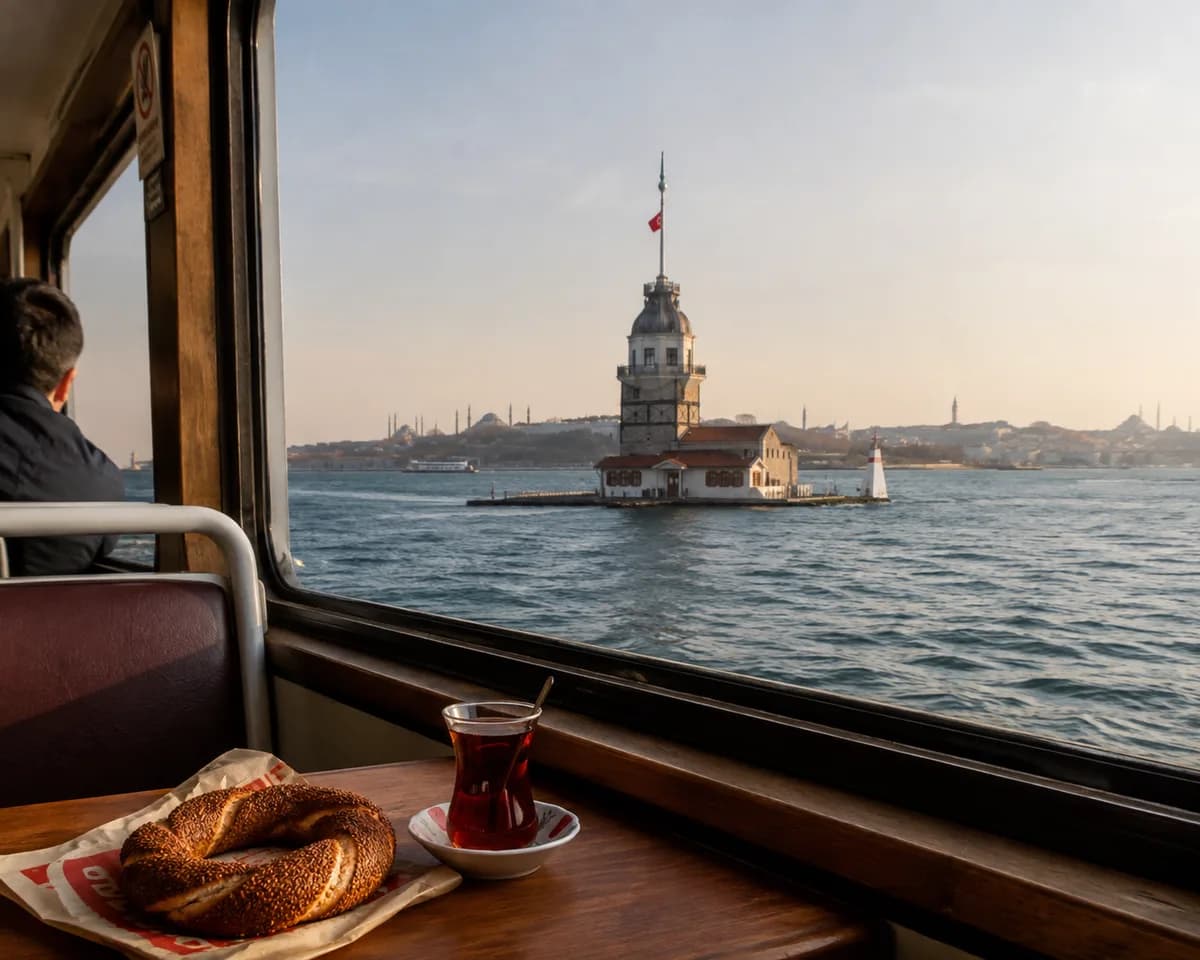
A fresh simit, tomatoes, cucumber, olives and strong Turkish tea can make a wonderfully simple Istanbul breakfast.
Buy your simit from a neighbourhood bakery or street cart, sit somewhere with the city passing in front of you, and you've found one of Istanbul's cheapest local breakfasts.
🍅 7. Turkish Breakfast Has More Vegan Food Than It First Appears
A classic breakfast table may arrive covered in cheese, eggs, butter and honey, but look around them.
Olives, tomatoes, cucumber, herbs, jams, tahin-pekmez, bread, simit and some vegetable spreads can already provide a substantial breakfast. VeganIstanbul's breakfast guide similarly notes that much of the traditional spread is naturally plant-based once the obvious animal products are removed.
Say:
“Peynir, yumurta, bal ve tereyağı olmasın lütfen.”
No cheese, eggs, honey or butter, please.
🥙 8. Çiğ Köfte Is the Vegan Traveler’s Emergency Food
When you're hungry, it's late and you can't find a vegan restaurant, look for a çiğ köfteci.
Commercial etsiz çiğ köfte is widely available around Istanbul and is typically made from bulgur, pepper paste, spices and other plant ingredients. VeganIstanbul also highlights modern meatless çiğ köfte as one of the easiest traditional plant-based foods to find.
Order:
“Bir dürüm, acılı olsun.”
One wrap, make it spicy/hot.
Or:
“Acısız olsun lütfen.”
Not spicy/chilly, please.
🍆 9. Know Your İmam Bayıldı From Your Karnıyarık
They can look remarkably similar.
İmam bayıldı is eggplant stuffed with onions, tomato and garlic and cooked in olive oil. Karnıyarık is its meat-filled relative.
The names matter.
If you're uncertain:
“Bu etsiz mi?”
Is this meatless?
For vegans, follow with:
“Tereyağı da yok, değil mi?”
There’s no butter either, right?
🍃 10. Ask for “Zeytinyağlı Sarma,” Not Just “Sarma”
Stuffed vine leaves are a Turkish classic, but sarma alone doesn't guarantee a plant-based filling.
What you're looking for is usually:
“Zeytinyağlı yaprak sarma.”
That distinguishes the olive-oil-and-rice style from versions prepared with meat. VeganIstanbul's Turkish cuisine guide makes the same distinction between olive-oil and meat-filled dolma.
🔥 11. At an Ocakbaşı, Ask About the Grill
Some traditional kebab restaurants now offer vegan dishes or even vegan kebabs. VeganIstanbul lists several examples.
But there's another question strict vegans may want to ask: is your food being cooked on the same grill as meat?
Say:
“Aynı ızgarada mı pişiyor?”
Is it cooked on the same grill?
This is particularly useful if cross-contact matters to you.
🧆 12. Don’t Ignore the Meze Counter
A restaurant doesn't need the word “vegan” on the door to produce a good plant-based meal.
Look at the meze: hummus, barbunya pilaki, eggplant dishes, beans, vegetable dishes, salads and olive-oil preparations can turn into dinner remarkably quickly.
But yogurt is common in Turkish meze, so don't identify dishes by appearance alone.
“Bunda yoğurt var mı?”
Does this contain yogurt?
🏠 13. Look for the Words “Ev Yemekleri”
Ev yemekleri literally means “home cooking.”
These small restaurants can be particularly useful because the day's dishes are often sitting behind a glass counter. Instead of deciphering a long menu, you can point.
Try:
“Hangileri vegan?”
Which ones are vegan?
If that produces uncertainty:
“Hangilerinde et, süt veya tereyağı yok?”
Which ones don't contain meat, milk or butter?
👆 14. Pointing Is Sometimes Better Than Translating
In a traditional lokanta, you may be standing in front of 15 freshly cooked dishes.
Use that advantage.
“Bu nedir?”
- What is this?
“İçinde ne var?”
- What's in it?
“Bu vegan mı?”
- Is this vegan?
Three tiny sentences can be more useful than trying to translate the entire menu.
🧈 15. Butter Is the Ingredient You Won’t Always See
A vegetable dish can look completely plant-based and still have tereyağı, butter in the cooking fat or finishing sauce.
This matters especially with soups, rice, cooked vegetables and some breakfast dishes.
Memorize one sentence:
“Tereyağı kullanıyor musunuz?”
Do you use butter?
🥛 16. “Lactose-Free” Does Not Mean Dairy-Free
If you avoid dairy entirely, laktozsuz isn't the word you need.
Lactose-free milk is still milk.
Say:
“Süt ürünü tüketmiyorum.”
I don't consume dairy products.
For greater clarity:
“Süt, yoğurt, peynir ve tereyağı olmasın.”
No milk, yogurt, cheese or butter.
🌾 17. Gluten-Free Travelers: Ask About the Fryer
A menu may describe something as gluten-free based on its ingredients, but that doesn't tell you how it was prepared.
For celiac travelers, shared frying oil and preparation surfaces can matter.
Ask:
“Aynı yağda unlu ürünler kızartılıyor mu?”
Are foods containing flour fried in the same oil?
And:
“Çölyak hastalığı için uygun mu?”
Is it suitable for someone with celiac disease?
☕ 18. Drink Tea Like Istanbul Does
Turkish tea isn't an after-dinner ritual. It's an all-day ritual.
You'll encounter those small tulip-shaped glasses at breakfast, after lunch, in shops, on ferries and during long conversations.
Order:
“Bir çay lütfen.”
If you don't want sugar:
“Şekersiz.”
No elaborate coffee order required.
⛴️ 19. Take the Ferry for Lunch
Don't treat the Bosphorus as an obstacle between two halves of your itinerary.
The ferry is part of Istanbul.
VeganIstanbul's breakfast guide specifically suggests crossing to Kadıköy, which has a substantial concentration of vegan-friendly options.
Have breakfast in Europe, take the ferry, eat lunch in Kadıköy and return at sunset. Sometimes transportation is the sightseeing.
🧺 20. Visit a Semt Pazarı
A semt pazarı, which is a neighbourhood street market, shows you another side of Istanbul food culture.
Seasonal fruit, tomatoes, herbs, olives, nuts, dried fruit and vegetables pile up on the stalls. You may discover ingredients you've never seen on a restaurant menu.
One useful sentence:
“Biraz tadabilir miyim?”
May I taste some?
🌰 21. Street Food: Start With the Simple Stuff
Roasted chestnuts, corn and simit are among the easiest Istanbul street foods for plant-based travelers.
But sauces, spreads and prepared fillings introduce more uncertainty.
The simpler the food, the easier the ingredient check.
“Üzerinde tereyağı var mı?”
Is there butter on it?
🍬 22. Don’t Assume Every Turkish Sweet Is Vegan
Lokum and some forms of helva can be plant-based, but Turkish desserts as a category certainly aren't.
Butter, milk, cream and egg appear frequently, particularly in pastries and milk desserts.
Ask:
“Bunda süt veya tereyağı var mı?”
Does this contain milk or butter?
And remember that sütlü tatlı literally means a milk-based dessert, that's your clue to keep looking.
🧿 23. Eat Something You Don’t Recognize
Istanbul isn't only hummus, falafel and vegan burgers.
Ask about barbunya pilaki, enginar, şakşuka, mercimek köftesi, kısır, zeytinyağlı pırasa, börülce, fava and whatever vegetable dish was cooked that morning.
The most interesting vegan food in Istanbul is often simply Turkish food that happened to be plant-based long before anyone called it vegan.
🇹🇷 24. One Turkish Sentence Can Change the Conversation
You don't need to speak Turkish. But making the effort helps.
Start with:
“Merhaba.” Hello.
“Lütfen.” Please.
“Teşekkür ederim.” Thank you.
Then ask your food question.
Even imperfect Turkish can turn ordering from a transaction into a conversation.
🐈 25. Istanbul’s Cats Will Attend Your Dinner
Outdoor table? Expect company.
Istanbul's street cats are part of everyday neighbourhood life, and some are extremely experienced restaurant guests.
Enjoy their company but don't assume every cat wants to be touched, and don't feed them food containing ingredients that may be unsafe for animals.
Consider it the city's unofficial tableside service.
🕰️ 26. Don’t Rush a Turkish Breakfast
A serpme kahvaltı isn't designed as fuel before sightseeing.
It's a table full of small dishes, endless tea and conversation. VeganIstanbul notes that weekend breakfast often stretches into early afternoon and that full spreads are commonly designed for sharing.
If you're doing it properly, don't schedule your museum ticket 35 minutes later.
🧾 27. Ask the Ingredient Question, Not Just the Vegan Question
Sometimes “Bu vegan mı?” gets an uncertain answer.
Try breaking the problem down:
“Et var mı?” — Is there meat?
“Süt var mı?” — Is there milk?
“Yumurta var mı?” — Is there egg?
“Tereyağı var mı?” — Is there butter?
“Et suyu var mı?” — Is there meat stock?
Specific questions often produce better answers than labels.
🗺️ 28. Leave the Tourist Streets for One Meal
Sultanahmet has obvious advantages when you're sightseeing, but don't eat every meal within sight of a monument.
Walk into residential Cihangir, explore the back streets of Beyoğlu, cross to Kadıköy, or wander through a neighbourhood market.
VeganIstanbul currently maps hundreds of vegan, vegetarian and gluten-free-friendly venues across Istanbul, so your food itinerary doesn't have to follow the standard sightseeing map.
❤️ 29. The Most Useful Phrase May Be “Şef, Bir Şey Sorabilir Miyim?”
When you're somewhere traditional and aren't sure what's in the food, try:
“Şef, bir şey sorabilir miyim?” May I ask you something?
Then ask about the dish.
Şef literally means master/craftsman and is commonly used for cooks and food tradespeople. It's a very Istanbul way to start the conversation.
🌿 30. Don’t Search Only for “Vegan Food”
Search for Turkish food that is vegan, too.
The difference matters.
Olive-oil vegetables, legumes, stuffed vine leaves, bean dishes, meze, salads, çiğ köfte and regional Anatolian recipes give you a much stronger sense of Istanbul than eating an imported vegan bowl at every meal.
Your best food memory may come from a dish that never had to be “veganized” in the first place.
📌 Save this for your Istanbul trip. Tag another vegan or vegetarian traveler who needs it.
Last reviewed: August 25, 2026