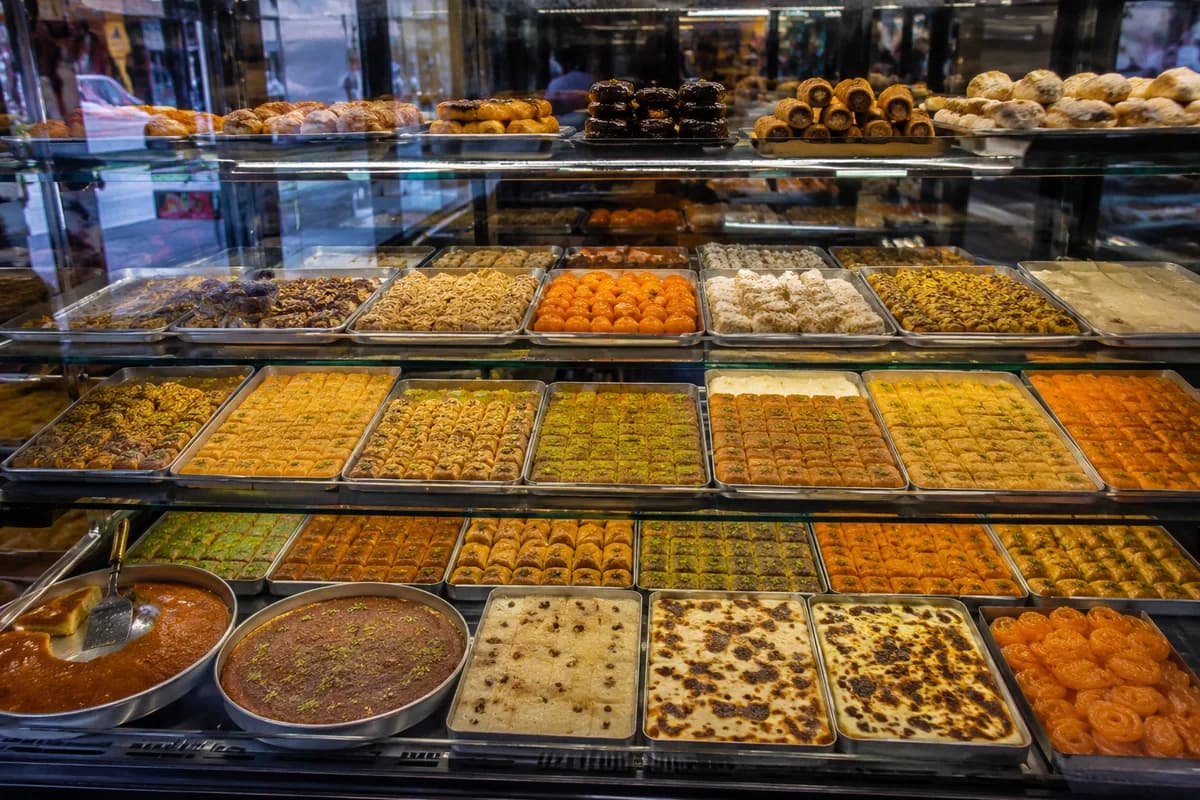
🍮 Vegan & Vegetarian Turkish Desserts to Try in Istanbul
Turkish restaurants serve much more than baklava, and some traditional desserts are surprisingly plant-friendly. Veganistanbul.com editors prepared a list of vegan and vegetarian Turkish desserts to try in Istanbul. Check this guide before ordering or buying vegan desserts in Istanbul
You've finished lunch or dinner in Istanbul and the waiter asks: “Tatlı?”
That means dessert. And this is where things can get tricky if you're vegan.
Turkish restaurants serve much more than baklava, and some traditional desserts are surprisingly plant-friendly. But butter, milk, eggs, yogurt and kaymak or Turkish clotted cream, can turn an innocent-looking dessert into a non-vegan one.
So, what should you actually look for on an Istanbul restaurant menu?
🍽️ Start Here: Desserts You May Find at Restaurants
These are the most useful names to know when you're sitting at a traditional restaurant, lokanta or meyhane.
🎃 Kabak Tatlısı 👉 Pumpkin Dessert
One of the best possibilities for vegans 🌱
This is nothing like pumpkin pie. Turkish kabak tatlısı is pumpkin slowly cooked with sugar until soft, glossy and intensely sweet.
It may be topped with walnuts or, particularly in some versions, tahini.
The catch is kaymak, a thick Turkish clotted cream, that may be added when the dessert is served.
👉 Order it kaymaksız without kaymak, and confirm the recipe is otherwise plant-based.
Say:
🇹🇷 “Kaymaksız olsun. İçinde başka süt ürünü var mı?”
🇬🇧 “Without kaymak, please. Does it contain any other dairy?”
🍎 Ayva Tatlısı 👉 Quince Dessert
Potentially vegan without the topping 🌱
If you're visiting Istanbul during the cooler months, look out for this beautiful deep-red dessert.
Quince is slowly cooked with sugar until tender and is often served with kaymak.
The fruit itself may be completely plant-based, but don't simply remove the cream and assume you're done. Ask how the dessert was prepared.
🇹🇷 👉 “Kaymaksız, lütfen.”
🇬🇧 “Without kaymak, please.”
🌾 Aşure 👉 Noah's Pudding
Usually vegan 🌱
Aşure is one of Türkiye's most distinctive traditional desserts: a thick pudding containing a remarkable mixture of grains, legumes, dried fruits, nuts and sugar.
Think wheat, chickpeas, beans, raisins, apricots, figs, walnuts and pomegranate — sometimes all in the same bowl.
Aşure also has a strong tradition of being cooked in large quantities and shared with neighbours, friends and family.
⚠️ There's one problem for tourists: it isn't an everyday restaurant dessert. You're much more likely to encounter it around the traditional aşure season or at restaurants and cafés that specialise in Turkish home cooking.
If you find it, ask whether milk or honey has been added.
🌼 Zerde 👉 Saffron Rice Dessert
A rare but interesting vegan possibility 🌱
If you spot zerde, take a closer look.
This old rice dessert is traditionally made with water rather than milk and flavoured with saffron or turmeric, sometimes rose water, then decorated with ingredients such as currants, pine nuts or pomegranate.
That makes it very different from sütlaç, the much more common milk-based rice pudding.
Zerde isn't something you'll see on every Istanbul menu. But that's exactly why it's worth knowing.
⚠️ Always confirm the restaurant's recipe.
🍯 İrmik Helvası 👉 Semolina Halva
Very common, but usually not vegan 🥛
This is one you're much more likely to encounter at a traditional restaurant.
Semolina is toasted and cooked into a warm, comforting dessert, sometimes served with pine nuts and occasionally ice cream.
Unfortunately for vegans, butter and/or milk are commonly part of the recipe.
🌱 A vegan restaurant may make its own plant-based version, but don't assume ordinary restaurant irmik helvası is vegan.
🍚 Sütlaç 👉 Turkish Rice Pudding
Vegetarian 🥛 | Not traditionally vegan
This is one of the restaurant desserts every visitor to Türkiye will eventually meet.
And there's a useful clue right in the name:
Süt = milk.
Sütlaç is a rice pudding made with milk, rice and sugar. Fırın sütlaç is the baked version, recognised by its browned top.
Traditional sütlaç is vegetarian but not vegan.
Some vegan restaurants and cafés make plant-milk versions, so look specifically for vegan sütlaç.
🍮 Muhallebi & Keşkül
Vegetarian 🥛 | Not vegan
These belong to Türkiye's long tradition of milk puddings.
Muhallebi is a smooth milk pudding, while keşkül is traditionally an almond-flavoured milk pudding.
Both are worth knowing if you're vegetarian.
Vegans should skip conventional versions unless the restaurant specifically offers a plant-based alternative.
🌙 Güllaç
Vegetarian 🥛 | Not vegan
Visiting Istanbul during Ramadan? You'll probably see güllaç.
Thin starch sheets are soaked in sweetened milk and commonly topped with walnuts, pistachios or pomegranate.
It can look deceptively light and plant-based, but milk is one of its defining ingredients.
Traditional güllaç is vegetarian, not vegan.
🥮 Baklava
Vegetarian, but normally not vegan 🧈
The big one.
Baklava may look like nothing more than thin pastry, pistachios and syrup, but traditional versions normally contain butter or clarified butter. Depending on the recipe, other dairy or egg ingredients may also be involved.
So ordinary baklava should not be treated as vegan. VeganIstanbul.com's existing tourist guidance makes the same distinction.
Dedicated vegan restaurants and bakeries may offer plant-based baklava. If it isn't specifically identified as vegan, ask.
🇹🇷 “Bu baklava tamamen vegan mı? Tereyağı veya süt ürünü var mı?”
🇬🇧 “Is this baklava completely vegan? Does it contain butter or dairy?”
🍰 Revani & Şekerpare
Usually vegetarian, not vegan 🥚🥛
These are classic syrup-soaked Turkish desserts that may appear on restaurant menus.
Revani is a soft semolina cake soaked in syrup, while şekerpare consists of small, tender pastries soaked in syrup.
The syrup isn't necessarily the problem.
The cake or dough is.
Traditional recipes commonly contain ingredients such as egg, butter, yogurt or milk.
🍯 Tulumba & Halka Tatlısı
Don't judge them by the syrup ⚠️
Golden fried dough covered in sugar syrup sounds like it might be vegan.
Not necessarily.
Recipes vary and the dough may contain egg or other animal-derived ingredients.
You are more likely to encounter these at dessert shops and street sweet sellers, although some restaurants serve them too.
Ask:
🇹🇷 “Hamurunda süt, yoğurt veya yumurta var mı?”
🇬🇧 “Does the dough contain milk, yogurt or egg?”
🚨 Vegetarians: Know This Dessert
🐔 Tavuk Göğsü 👉 Chicken Breast Pudding
Yes, you read that correctly.
Tavuk göğsü literally means “chicken breast.”
This historic Ottoman milk pudding traditionally contains extremely finely shredded chicken breast.
It may look like an ordinary white milk pudding, but the traditional version is:
❌ Not vegan ❌ Not vegetarian
And what about Kazandibi?
Kazandibi means roughly “bottom of the cauldron” and refers to the caramelised surface of the pudding.
Many modern kazandibi recipes are meat-free milk puddings and are therefore suitable for lacto-vegetarians. But the dessert has historical links with tavuk göğsü, and versions can vary.
Vegetarians can simply ask:
🇹🇷 “İçinde tavuk eti var mı?”
🇬🇧 “Does this contain chicken?”
🛍️ Now Leave the Restaurant: Turkish Sweets to Look for Around Istanbul
Some of Türkiye's best plant-based sweets aren't really restaurant desserts at all.
You'll find them at lokum shops, traditional confectioners, nut and dried-fruit shops, markets and specialist sweet shops.
Keep these names on your Istanbul shopping list. 👇
🍬 Lokum 👉 Turkish Delight
Usually vegan 🌱
Classic lokum is the soft, chewy confection known internationally as Turkish delight.
Traditional plain and many fruit or nut varieties are based on sugar, starch and water.
But the enormous variety sold in Istanbul means “lokum” alone doesn't guarantee vegan.
Avoid or check kaymaklı (with clotted cream), cream-filled and milk-chocolate varieties. VeganIstanbul.com's current FAQ similarly recommends checking each variety rather than assuming all lokum has the same ingredients.
🥕 Cezerye
Usually vegan 🌱
Originally associated with Mersin in southern Türkiye, cezerye is a chewy confection traditionally made from carrots, sugar and nuts and often covered with coconut.
Pistachio and walnut versions are common.
Look for it in confectionery and nut shops rather than expecting to find it on a restaurant dessert menu.
Check packaged and chocolate-coated versions for dairy.
🍇 Cevizli Sucuk / Köme
Often vegan 🌱
Don't let the word sucuk scare you.
Ordinary sucuk is Turkish meat sausage, but cevizli sucuk is a sweet.
Walnuts are strung together, repeatedly coated in a thickened grape-molasses mixture and dried. The finished sweet is chewy, fruity and nutty.
You'll see it hanging in traditional sweet, nut and dried-fruit shops.
Recipes differ by region, so check before buying.
🍑 Pestil 👉 Turkish Fruit Leather
Often vegan 🌱
Another one to discover away from the restaurant table.
Pestil is a traditional fruit leather, often made from grape or mulberry must and dried in thin sheets.
There are many regional varieties, including versions with nuts or additional ingredients.
Packaged products deserve a label check.
🌰 Badem Ezmesi 👉 Almond Paste
Often vegan 🌱
Badem ezmesi is traditional almond paste, generally based on almonds and sugar.
Look for it at old-fashioned confectioners and specialist sweet shops.
Simple traditional versions may be vegan, but coated, filled and commercially produced varieties need an ingredient check.
🥜 Tahin Helvası 👉 Tahini Halva
Often vegan 🌱
It is a dense, crumbly sweet based primarily on tahini, sesame paste, and sugar.
Plain versions are often vegan.
But remember this rule:
Helva doesn't automatically mean vegan.
Un helvası is flour halva and irmik helvası is semolina halva. Both are frequently made with butter, and semolina halva may also contain milk.
📱 Save This: What to Look for Where
🍽️ At a restaurant
🌱 Best vegan possibilities:
• Kabak tatlısı without kaymak
• Ayva tatlısı without kaymak
• Aşure when available
• Zerde when available
• Tahin helvası
🥛 Usually vegetarian, not vegan:
• Sütlaç
• İrmik helvası
• Muhallebi
• Keşkül
• Güllaç
• Baklava
• Revani
• Şekerpare
⚠️ Ask carefully:
• Tulumba
• Halka tatlısı
• Kazandibi
🚫 Not vegetarian traditionally:
• Tavuk göğsü
🛍️ At sweet shops, markets & confectioners
🌱 Look for:
• Plain or nut-filled lokum
• Cezerye
• Cevizli sucuk/köme
• Pestil
• Badem ezmesi
• Tahin helvası
⚠️ Still check the exact product. Filled, chocolate-coated and modern versions can introduce dairy, honey or other animal-derived ingredients.
🗣️ The One Question Worth Saving
At a restaurant or sweet shop, don't rely only on:
🇹🇷 **“Vegan mı?”
🇬🇧 “Is it vegan?”**
Ask specifically:
🇹🇷 “İçinde süt, tereyağı, kaymak, yoğurt, yumurta veya bal var mı?”
🇬🇧 “Does this contain milk, butter, kaymak, yogurt, egg or honey?”
And remember one particularly useful word:
🇹🇷 🇬🇧 Kaymaksız = without kaymak (clotted cream).
🍮 One Last Istanbul Dessert Tip
Where you are matters.
At a traditional restaurant, look first for seasonal fruit desserts such as kabak tatlısı and ayva tatlısı, and ask what's in the day's dessert selection.
At a pastane, a pastry and dessert shop, expect far more milk puddings, cakes, baklava and syrup desserts.
And when you're exploring Istanbul's traditional confectioners and markets, that's the time to discover lokum, cezerye, pestil, cevizli sucuk and badem ezmesi.
Different counter, different sweets. And for vegans, the same rule everywhere:
Ask before you eat. 🌱
🇹🇷 Afiyet olsun!
🇬🇧 Enjoy your meal!
📌 Save this for your Istanbul trip. Tag another vegan or vegetarian traveller who needs it.
Last reviewed: September 1, 2026