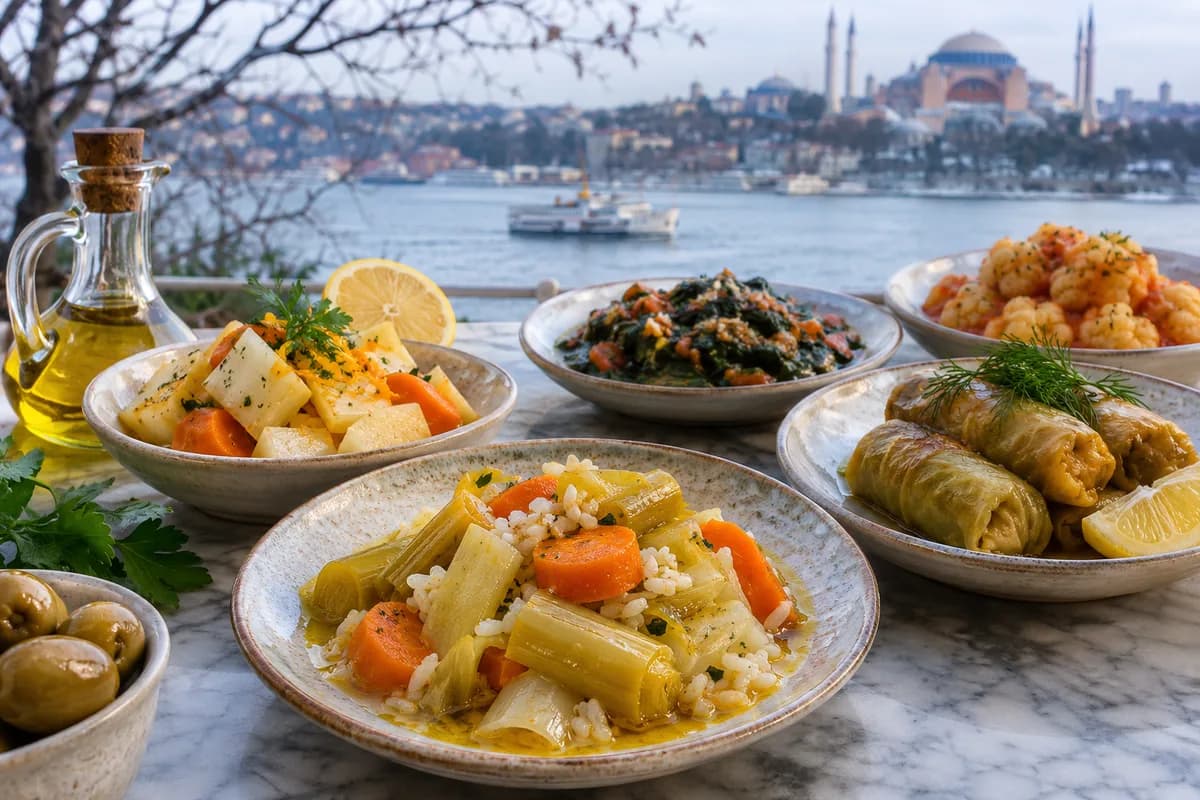
🫒 Vegan Winter Wonders of Istanbul: The Magic of Vegetables Cooked in Olive Oil
From leeks and celery root to spinach and cabbage, Istanbul's winter kitchens offer a remarkable variety of traditional plant-based dishes
Discover the seasonal vegetables that turn into comforting vegan meals with little more than olive oil, onions and a few simple ingredients.
🌿 Winter Is a Season of Vegan Comfort Food
When temperatures drop in Istanbul, restaurant menus and home kitchens begin to change. Summer vegetables gradually give way to leeks, spinach, cauliflower, cabbage, celery root and other seasonal produce.
Many of these vegetables are prepared using one of the most characteristic techniques of Turkish cooking. Zeytinyağlı, meaning cooked with olive oil.
Unlike vegetables fried in oil, traditional zeytinyağlı dishes are usually simmered gently with onions, water and sometimes tomatoes, rice or other vegetables. They are often served at room temperature, although some winter dishes are equally enjoyable warm.
For vegan visitors, these dishes provide an opportunity to explore Istanbul's everyday food culture without relying on specially designed vegan menus.
Here are some winter vegetables worth looking for.
🥬 1. Zeytinyağlı Pırasa: Leeks in Olive Oil
One of the most recognisable winter dishes in Turkish home cooking, zeytinyağlı pırasa combines sliced leeks with carrots, olive oil and sometimes a little rice.
The vegetables are gently simmered until tender. Lemon juice adds acidity, while a small amount of sugar is sometimes used to balance the flavours.
🥄 What to expect: Soft leeks, sweet carrots and a delicate olive oil sauce.
🌱 Vegan status: Traditionally vegan when prepared with vegetable ingredients and olive oil.
📍 Where to find it: Look for pırasa among the vegetable dishes displayed at an esnaf lokantası, a traditional Turkish restaurant serving everyday home-style meals. It is particularly common during the colder months.
🥔 2. Zeytinyağlı Kereviz: Celery Root With Orange and Olive Oil
Celery root, known as kereviz in Turkish, is one of the less familiar winter vegetables for many international visitors.
In Istanbul, it is often cooked with carrots, potatoes and olive oil. Some recipes include freshly squeezed orange juice, giving the dish a slightly sweet, citrus flavour.
The result is quite different from raw celery. Tender, aromatic and mildly earthy.
🥄 What to expect: Soft pieces of celery root and carrots in a light citrus-infused sauce.
🌱 Vegan status: The classic olive oil version is generally vegan.
📍 Where to find it: Traditional home-style restaurants and zeytinyağlı counters, particularly during winter.
💡 Tip: Ask for portakallı kereviz if you want to try the orange-flavoured version.
🥬 3. Ispanak Yemeği: Turkish Spinach Stew
Spinach is a winter staple in Turkish kitchens.
Unlike sauteed spinach commonly found in Western restaurants, Turkish ıspanak yemeği is often prepared as a stew with onions, tomato paste and sometimes rice.
The ingredients are cooked together until the spinach becomes tender and absorbs the flavours of the sauce.
🥄 What to expect: A warm, soft vegetable stew with a mild tomato flavour.
🌱 Vegan status: Many versions are vegan, but some contain minced meat or meat stock. Yogurt will probably be served alongside.
📍 Where to find it: Home-style restaurants, neighbourhood lunch counters and traditional Turkish kitchens.
💡 Tip: Ask for etsiz ıspanak (spinach without meat), and confirm that no meat stock or butter is used. Request it without yogurt if you are vegan.
🥦 4. Zeytinyağlı Karnabahar: Cauliflower in Olive Oil
Cauliflower becomes particularly popular during Istanbul's colder months.
Although fried cauliflower is widely known in Turkish cuisine, another preparation involves simmering cauliflower florets with onions, carrots, tomatoes or tomato paste and olive oil.
The vegetables absorb the cooking liquid, creating a satisfying winter dish.
🥄 What to expect: Tender cauliflower with a lightly seasoned tomato and olive oil sauce.
🌱 Vegan status: The olive oil version can be vegan, provided no meat stock or animal fat is added.
📍 Where to find it: Seasonal vegetable selections at traditional home-style restaurants.
💡 Tip: Ask for zeytinyağlı karnabahar. Avoid assuming that cauliflower served with yogurt sauce is vegan.
🥬 5. Zeytinyağlı Lahana Sarması: Cabbage Rolls
Cabbage rolls are among the comforting dishes associated with Turkish winter cooking.
Large cabbage leaves are briefly softened and wrapped around a filling that may contain rice, onions, herbs, spices and olive oil.
They are then arranged in a pot and simmered until tender.
However, cabbage rolls are also commonly prepared with minced meat, making it important to distinguish between the two versions.
🥄 What to expect: Soft cabbage leaves wrapped around a fragrant rice filling.
🌱 Vegan status: Zeytinyağlı lahana sarması is generally vegan when made without animal ingredients. Etli lahana sarması contains meat.
📍 Where to find it: Traditional restaurants offering stuffed vegetables and seasonal home-style dishes.
💡 Tip: Ask whether the filling contains meat or meat stock. The word sarma alone does not guarantee a vegan dish.
🥕 6. Zeytinyağlı Yer Elması: Jerusalem Artichokes
Despite its English name, the Jerusalem artichoke is neither an artichoke nor associated with Jerusalem.
Known in Turkish as yer elması, this knobbly winter root vegetable has a mildly sweet, nutty flavor.
In Turkish cooking, it is often simmered with carrots, onions, olive oil and lemon juice. Some recipes include rice or orange juice.
🥄 What to expect: Tender root vegetables with a delicate sweetness and citrus notes.
🌱 Vegan status: Traditional olive oil preparations are generally vegan.
📍 Where to find it: Seasonal menus at home-style restaurants and specialist zeytinyağlı counters. It is less consistently available than leeks or spinach.
💡 Tip: If you spot yer elması on a winter menu, consider trying it. It is a distinctly seasonal vegetable that visitors may not encounter during summer.
🥬 7. Pazı Sarması: Swiss Chard Rolls
Swiss chard, called pazı in Turkish, is another leafy vegetable used in traditional cooking.
Its broad leaves are suitable for wrapping around fillings made from rice, onions, herbs and spices.
The olive oil version is typically served warm or at room temperature, sometimes with lemon.
🥄 What to expect: Tender green leaves surrounding a soft, aromatic rice filling.
🌱 Vegan status: Rice-filled versions can be vegan, but meat-filled varieties are also common.
📍 Where to find it: Traditional Turkish restaurants, home-style lunch counters and establishments specialising in stuffed vegetables.
💡 Tip: Ask for zeytinyağlı pazı sarması and confirm that the filling contains no meat.
🥦 8. Zeytinyağlı Brokoli: Broccoli With Lemon and Olive Oil
Broccoli is not among the oldest staples of traditional Istanbul cooking, but it has become a familiar winter vegetable in contemporary Turkish kitchens.
It may be lightly steamed or simmered and served with olive oil, lemon juice and garlic.
Some preparations combine broccoli with carrots or cauliflower.
🥄 What to expect: Tender vegetables with a fresh lemon and olive oil dressing.
🌱 Vegan status: Usually vegan when prepared simply with olive oil and lemon.
📍 Where to find it: Modern home-style restaurants, vegetable counters and contemporary Turkish lunch spots.
🍽️ Where Can Vegan Visitors Find These Winter Dishes?
You do not necessarily need a vegan restaurant to enjoy Istanbul's winter vegetables.
One of the most practical options is an esnaf lokantası, a traditional lunch restaurant where several freshly prepared dishes are displayed behind a glass counter.
These establishments often serve seasonal vegetable stews, rice dishes, soups and stuffed vegetables.
Another option is a restaurant with a dedicated zeytinyağlı section, where vegetables cooked in olive oil are displayed separately.
However, menus vary considerably. Not every restaurant offers all these dishes, and some vegetables appear only on particular days.
🔎 Look for these Turkish words:
- 🫒 Zeytinyağlı: Cooked or prepared with olive oil.
- 🥬 Sebze yemeği: Vegetable dish.
- 🌱 Etsiz: Without meat.
- 🍚 Sarma: Leaves wrapped around a filling.
- 🥘 Ev yemekleri: Home-style cooking.
⚠️ A Word of Caution for Vegans
Although olive oil dishes are among the most promising choices for vegans in Istanbul, the word zeytinyağlı does not automatically guarantee that every ingredient is plant-based.
Recipes vary between restaurants and households. Some vegetable dishes contain meat stock, butter or other animal ingredients.
Before ordering, ask:
🇹🇷 "Bu yemek tamamen vegan mı? İçinde et, et suyu, tavuk suyu, tereyağı, süt veya yoğurt var mı?"
🇬🇧 "Is this dish completely vegan? Does it contain meat, meat stock, chicken stock, butter, milk or yogurt?"
Remember that etsiz means meat-free, not necessarily vegan.
❄️ Why Winter Is a Good Time to Explore Istanbul's Plant-Based Cuisine
Istanbul's vegan food culture extends far beyond contemporary vegan restaurants.
For generations, seasonal vegetables, olive oil, grains and legumes have been central to everyday cooking across the city.
Winter brings its own selection of ingredients, many of which are prepared using recipes that require little modification to suit a vegan diet.
From citrus-flavoured celery root to slowly simmered leeks and rice-filled cabbage rolls, these dishes demonstrate how ordinary seasonal produce can become a complete part of a satisfying meal.
And perhaps the most interesting discovery for visiting vegans is that many of these foods were never created as vegan alternatives.
They are simply part of Istanbul's everyday culinary heritage.
🌿 Explore more traditional plant-based dishes, neighbourhood food guides and practical dining advice at veganistanbul.com.