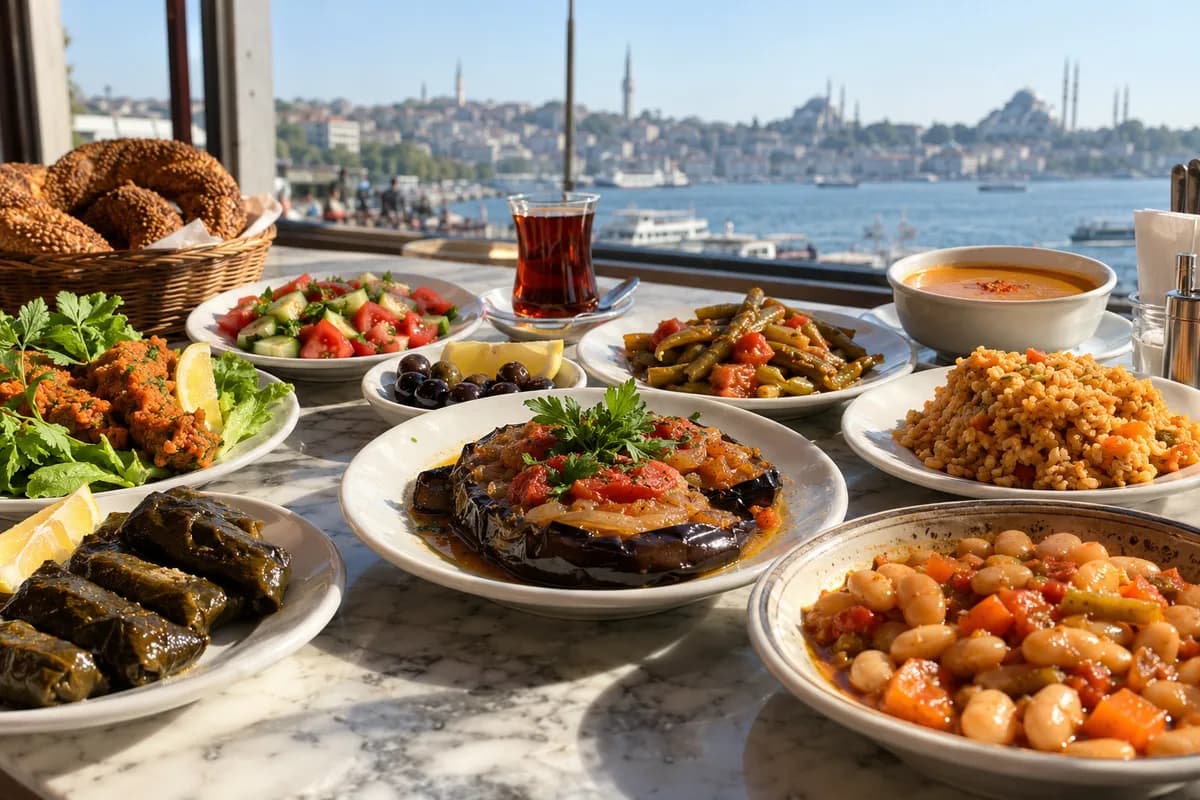
🌱 What Do Istanbul’s Vegans Actually Eat? A Look at Everyday Turkish Life
Forget the expensive vegan bowls and fashionable plant-based restaurants for a moment. What does an ordinary vegan living in Istanbul eat for breakfast, lunch and dinner? The answer is surprisingly traditional, affordable and deeply rooted in Turkish home cooking
When tourists think of Turkish food, kebabs, grilled meat, cheese and yogurt often come to mind. Yet step inside an Istanbul home, visit a neighbourhood market or look at the lunch counter of a traditional restaurant, and you will discover another side of Turkish cuisine.
Beans, lentils, seasonal vegetables, bulgur, olive oil and freshly baked bread have long been staples of everyday cooking.
For many vegans living in Istanbul, eating plant-based food does not necessarily mean buying expensive meat substitutes or visiting specialist restaurants. Much of their daily diet can be built around familiar Turkish dishes, prepared without animal products.
Let's follow an ordinary day.
☀️ 8 a.m. Breakfast: Olives, Bread, Tomatoes and Turkish Tea
A typical weekday breakfast in Istanbul can be remarkably simple.
Unlike the elaborate Turkish breakfast spreads advertised to tourists, many residents start their working day with a few familiar ingredients.
🫒 What might a vegan eat?
- Black or green olives, fresh tomatoes and cucumbers
- Crusty Turkish bread or sesame-covered simit
- Tahin-pekmez, a mixture of sesame paste and grape molasses
- Homemade jam, walnuts or seasonal fruit
- A glass of strong Turkish black tea, traditionally served without milk
Some prefer a sandwich filled with tomatoes, olives and fresh herbs. Others simply grab a simit on their way to work.
What is simit? It is a circular, sesame-covered bread sold by bakeries and street vendors throughout Istanbul. Traditional recipes are often plant-based, although ingredients can vary.
💡 For tourists: You don't need a specialist vegan cafe to enjoy a Turkish-style breakfast. Neighbourhood bakeries, markets and grocery shops provide many of the ingredients.
Read more: Vegan Turkish Breakfast in Istanbul
🍲 1 p.m. Lunch: The Neighbourhood Lokanta
For office workers, shopkeepers and students, lunch is often a practical affair.
One familiar option is an esnaf lokantası, a traditional restaurant originally associated with serving local tradespeople and workers.
These restaurants typically display freshly cooked dishes behind a glass counter. Customers select what they want, often combining a vegetable dish, soup and rice or bulgur.
A vegan lunch might include:
🫘 Kuru fasulye: White beans simmered with onions, tomatoes and peppers. One of Turkey's most familiar comfort foods. Vegan versions exclude meat, butter and meat stock.
🥣 Mercimek çorbası: A smooth red lentil soup, commonly prepared with onions, carrots and spices. Ask whether butter or meat stock has been added.
🥬 Ispanak yemeği: Spinach cooked with onions, tomatoes and sometimes rice.
🍚 Bulgur pilavı: Cracked wheat cooked with tomatoes, onions or peppers. It can be vegan when prepared with vegetable oil and without animal stock.
🫛 Taze fasulye: Green beans slowly cooked with tomatoes and onions, particularly popular during summer.
A plate of beans, bulgur and seasonal vegetables can make a substantial everyday lunch.
But there is an important distinction: A traditional lokanta is not necessarily vegan-friendly. Some vegetable dishes contain meat stock, while rice may be cooked with butter.
Ask about ingredients rather than assuming that everything behind the counter is plant-based.
Read more: Esnaf Lokantası: A Different Way to Eat in Istanbul
🥨 4 p.m. Afternoon Snacks: Everyday Street Food
Istanbul residents frequently snack between meals, particularly during a busy working day.
For vegans, several familiar Turkish foods offer convenient possibilities.
🌰 Kestane: Roasted chestnuts, particularly associated with colder months.
🌽 Mısır: Boiled or roasted corn sold by street vendors. Request it without butter.
🥨 Simit: A common snack with tea, not just a breakfast food.
🍃 Mercimek köftesi: Soft patties made with red lentils, fine bulgur, tomato or pepper paste, herbs and spices. Despite the name köfte, meaning meatball, these versions are traditionally meat-free.
🥗 Kısır: A bulgur salad mixed with parsley, spring onions, tomato paste, lemon and sometimes pomegranate molasses.
Mercimek köftesi and kısır are especially familiar at home gatherings, informal lunches and neighbourhood food shops.
Both are examples of traditional Turkish foods that can be vegan without requiring any modern substitutes.
🏠 7 p.m. Dinner: What Is Cooking at Home?
Perhaps the most interesting part of everyday vegan life in Istanbul happens inside the home.
Turkish home cooking has an extensive repertoire of vegetable and legume dishes, many of which can be prepared entirely with plant-based ingredients.
The concept of tencere yemeği, literally a dish cooked in a pot, is central to this tradition.
Families often prepare enough food for more than one meal, reheating leftovers the following day.
A vegan household's weekly dinner rotation might include:
🍆 Monday: İmam bayıldı
Eggplant stuffed with onions, tomatoes and garlic, slowly cooked in olive oil.
🫘 Tuesday: Nohut yemeği
Chickpeas simmered in tomato sauce, served with rice or bulgur prepared without butter or meat stock.
🥬 Wednesday: Pırasa
Leeks cooked with carrots, rice, lemon and olive oil. Particularly familiar during colder months.
🥔 Thursday: Türlü
A mixed vegetable stew that may contain potatoes, eggplant, zucchini, peppers and tomatoes.
🫑 Friday: Zeytinyağlı biber dolması
Bell peppers filled with rice, onions, herbs and spices, then cooked in olive oil.
🍆 Saturday: Sebze kızartması
Fried eggplant, zucchini, peppers and potatoes, served with tomato sauce instead of the yogurt sauce often used in conventional versions.
🫘 Sunday: Barbunya pilaki
Borlotti beans cooked with carrots, potatoes, onions and olive oil, often served at room temperature.
This is an illustrative menu, not a survey of vegan households. The point is that a varied vegan diet can be assembled from ordinary Turkish recipes.
Many of these dishes are also prepared in non-vegan households. The difference is simply whether animal products are included.
Read more: Traditional Turkish Foods That Can Be Vegan
🛒 Where Do Istanbul's Vegans Buy Their Food?
The answer is often the same places where everyone else shops.
Semt pazarı: Neighborhood street markets
These markets operate on designated days in different districts, selling seasonal vegetables, fruit, herbs, legumes and other household staples.
Manav: Greengrocers
Small neighbourhood shops specialising in fresh fruit and vegetables.
Bakkal: Local grocery shops
Traditional convenience stores where residents buy bread, packaged food and basic ingredients.
Supermarkets
Useful for dried legumes, grains, plant-based milk, tofu and other packaged vegan products, although availability varies by branch.
For a household cooking traditional Turkish vegetable dishes, specialist vegan products are not essential.
Dried lentils, chickpeas, beans, bulgur, seasonal vegetables and olive oil provide the foundations of many meals.
🫒 Why Olive Oil Matters So Much
One of the most distinctive features of Turkish home cooking is the category known as zeytinyağlı yemekler, or olive-oil dishes.
These are vegetables or legumes cooked with olive oil, often served cool or at room temperature.
They are particularly associated with the culinary traditions of western Turkey and the Aegean region, although they are familiar throughout Istanbul.
Common examples include:
🌿 Artichokes with peas, carrots and dill
🥕 Celeriac cooked with orange or lemon
🫛 Green beans with tomatoes
🍃 Vine leaves stuffed with seasoned rice
🫘 Borlotti beans with vegetables
These dishes are not modern vegan inventions. They belong to an established culinary tradition shared by generations of Turkish households.
For a visitor, understanding zeytinyağlı opens up an entire category of Turkish food beyond the familiar kebab and grilled-meat menus.
🍮 What About Dessert?
Everyday Turkish sweets are not limited to baklava and milk-based puddings.
Several traditional desserts can be prepared without animal products.
🎃 Kabak tatlısı: Pumpkin slowly cooked with sugar, sometimes served with walnuts or tahini.
🍐 Ayva tatlısı: Quince poached in syrup, often flavored with cloves or cinnamon.
🍇 Pestil: Thin sheets of dried fruit purée, sometimes containing nuts.
🍬 Lokum: Turkish delight, traditionally made from sugar and starch, although some varieties contain dairy or other animal-derived ingredients.
⚠️ Watch out for kaymak, a thick clotted cream frequently added to pumpkin and quince desserts.
Ordinary baklava generally contains butter and should not be considered vegan unless specifically prepared that way.
🌍 What Can Foreign Visitors Learn From Local Vegans?
The everyday food habits of Istanbul's vegans offer an alternative to experiencing the city exclusively through restaurants advertising vegan menus.
You can eat a breakfast assembled from a neighbourhood bakery and greengrocer, have lunch at a traditional lokanta, buy seasonal fruit from a street market and enjoy a home-style vegetable dinner.
However, traditional Turkish food is not automatically vegan.
Some familiar dishes contain hidden butter, meat stock, yogurt, eggs or other animal ingredients.
Three useful Turkish questions are:
🇹🇷 “İçinde et suyu veya tavuk suyu var mı?”
Does it contain meat or chicken stock?
🇹🇷 “Tereyağı veya süt ürünü kullanıldı mı?”
Was butter or any dairy product used?
🇹🇷 “Bu yemek tamamen vegan mı?”
Is this dish completely vegan?
These questions are particularly useful in ordinary restaurants where vegan dishes may not be identified on the menu.
🌱 The Real Taste of Everyday Vegan Istanbul
A vegan living in Istanbul might occasionally enjoy a plant-based burger, tofu dish or vegan döner. But everyday meals need not depend on expensive alternatives to meat and dairy.
A bowl of lentil soup, a plate of beans, seasonal vegetables, fresh bread and olive oil can be just as representative of the city's plant-based food culture.
For foreign visitors, discovering these ordinary dishes offers something different from a conventional restaurant tour: a glimpse of how people in Istanbul actually cook, shop and eat.
And perhaps the most interesting discovery is that many of these foods were part of Turkish kitchens long before the word vegan became familiar.
🌱 Explore more traditional Turkish dishes and practical food guides at veganistanbul.com.