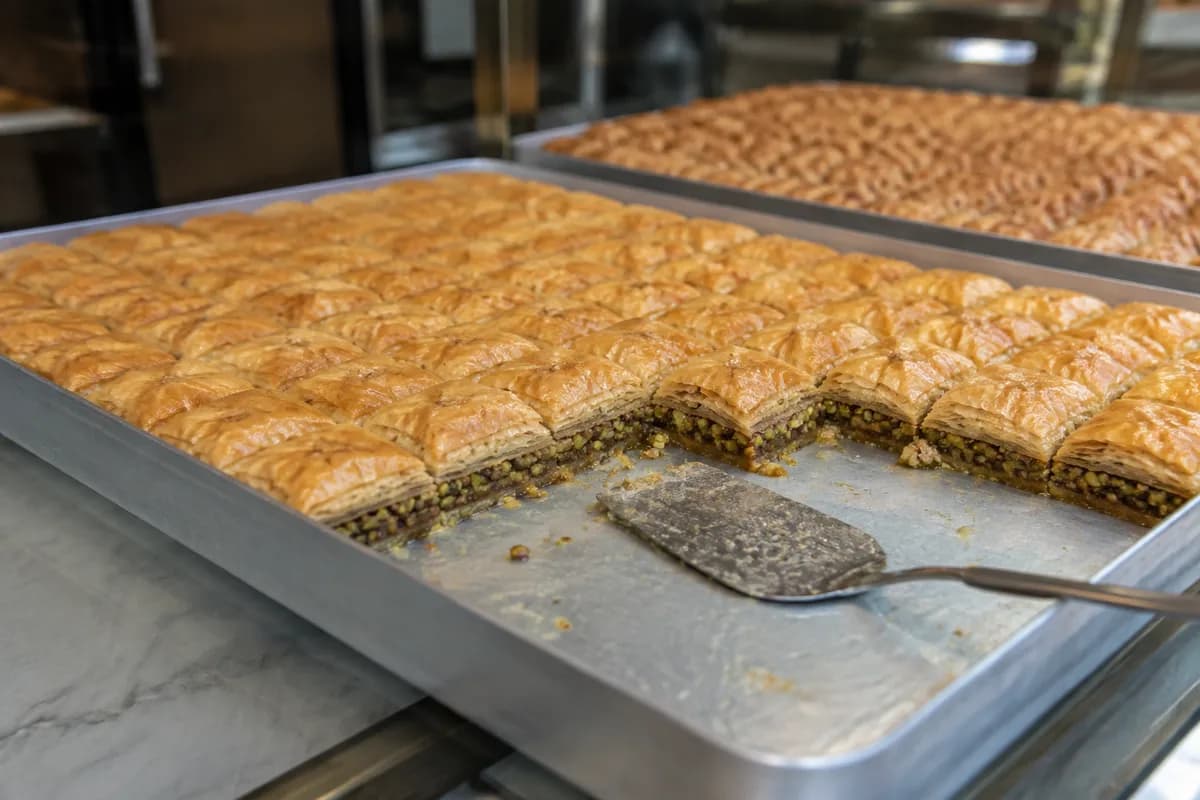
🥮 Is Baklava Vegan?
Baklava is traditionally *not vegan" but in Istanbul you can find vegan alternatives, too. Veganistanbul.com is here to help you taste vegan baklava
Short answer: Usually, no. Because traditional Turkish baklava normally contains butter or clarified butter, and some recipes also include eggs or other dairy ingredients. Vegan versions are possible, but the pastry, fat, filling and syrup all need to be checked.
Classic Turkish baklava, especially the famous Gaziantep style is made with butter (often sade yağ, which is clarified butter and the dough usually contains eggs. So unless it’s clearly labelled vegan, you should assume it isn’t. That said, vegan baklava does exist in Istanbul now, and some of it is genuinely good.
What is in registered Antep/Gaziantep baklava?
The registered specification for Antep Baklavası / Gaziantep Baklavası gives us a documented baseline for traditional Gaziantep-style baklava. It is not a universal recipe for every baklava made in Turkey, but it shows why classic baklava should not be assumed vegan.
According to the specification, the dough is made with durum-wheat flour, wheat starch, eggs and salt. The layers are coated with sade yağ: 99.9% pure butter made from milk. Antep pistachios are used as the filling. Fresh baklava also includes a semolina cream made from milk, while dry baklava omits that cream.
The registered syrup is made with sugar or sweetener, and the specification says honey should not be used. So honey is not the main problem in registered Antep/Gaziantep baklava; butter, eggs and, in fresh varieties, milk-based cream are.
You can read the Turkish geographical indication registration (Turkish PDF) and the EU product specification (English).
Why can other baklava recipes be different?
The geographical indication applies specifically to registered Antep/Gaziantep baklava. Home recipes, regional styles, commercial products and vegan adaptations may use different dough, fat, fillings or syrup.
Choosing walnut instead of pistachio does not solve the problem. Neither filling tells you what was used between the pastry layers. Thin pastry is not automatically vegan either: depending on the recipe, the dough may contain eggs or dairy.
Similarly, a glossy syrup does not prove that honey was used. Many Turkish recipes use sugar syrup, but recipes outside the registered specification can vary. The exact product still needs to be checked.
Vegan baklava checklist
- Dough: Ask whether the pastry contains egg, milk, yoghurt or another dairy ingredient.
- Fat: Ask specifically about butter, clarified butter or sade yağ. The word sade can mean “plain,” but sade yağ is animal-derived. A vegan version needs a clearly identified plant-based fat.
- Filling: Pistachios and walnuts are plant-based, but some varieties contain milk-based semolina cream, kaymak or another dairy filling.
- Syrup: Ask whether the syrup contains honey or another animal-derived ingredient. Sugar syrup alone does not make a butter-based pastry vegan.
A vegan version therefore needs egg- and dairy-free pastry, plant-based fat, a plant-based filling and a suitable syrup. Look for baklava explicitly identified as vegan and confirm the particular product you are buying.
Currently verified vegan baklava in Istanbul
We checked the businesses’ own current product pages on October 3, 2026 rather than relying only on reviews or old menu photos:
- Saytad: Saytad’s official menu currently lists vegan walnut baklava, vegan pistachio burma kadayıf and vegan date-syrup prince baklava. Its vegan walnut baklava product page identifies plant-based oil and date syrup and says the product contains no butter, milk, honey or egg.
- Babazade Baklava – 4. Levent: Babazade’s official vegan collection currently lists pistachio, walnut and prince-style vegan baklava. Its pistachio vegan baklava product page describes a recipe without butter, milk or eggs, made with plant-based fat.
Before you go: Product ranges and stock can change. Confirm the exact vegan baklava with the shop before travelling or ordering. If you have an allergy, ask separately about ingredients and shared equipment; a vegan label is not an allergy guarantee.
Questions to ask in Turkish
“Bu baklava tamamen vegan mı?”
Is this baklava completely vegan?
“Tereyağı, sade yağ, süt ürünü veya yumurta içeriyor mu?”
Does it contain butter, clarified butter, dairy or eggs?
“Şerbetinde bal var mı?”
Is there honey in the syrup?
“İçindekiler listesini görebilir miyim?”
May I see the ingredient list?
For more context on local sweets, see Vegan Istanbul’s guide to Turkish desserts and our visitor FAQ.