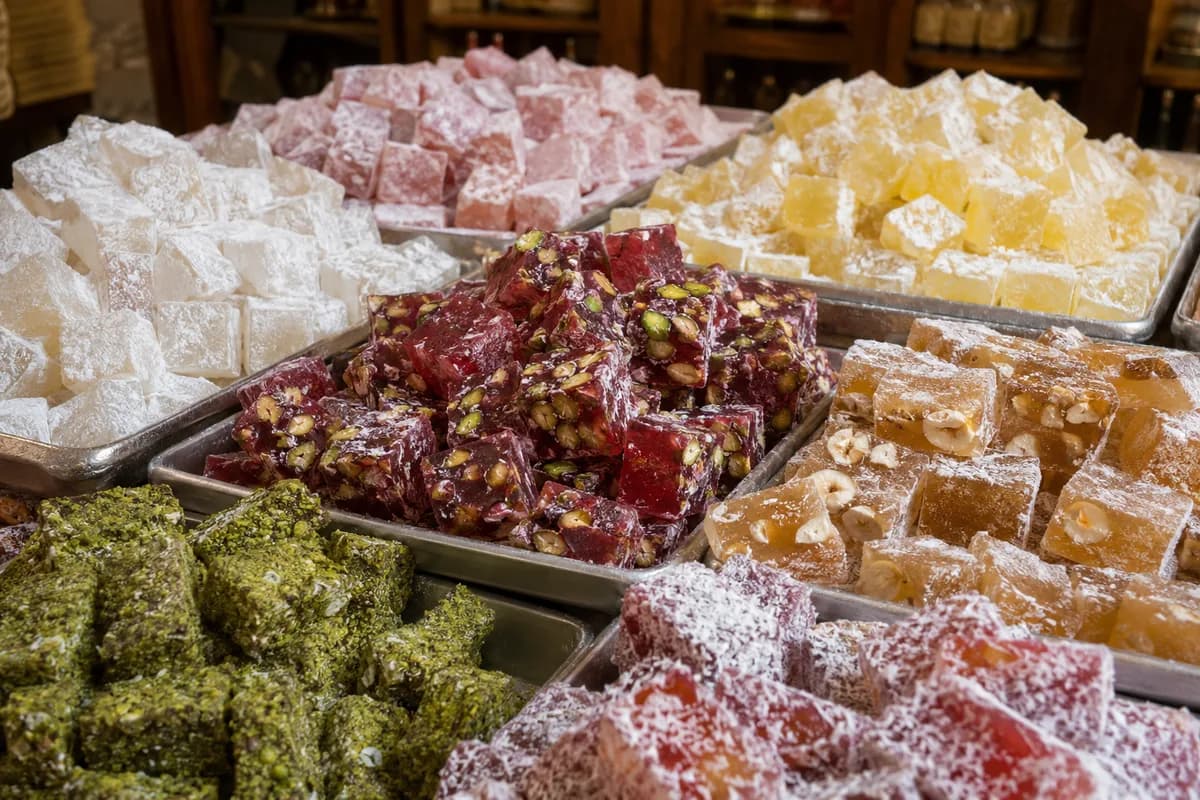
🍬 Is Turkish Delight Vegan?
Often, yes. But you should check the flavoured ones. Here is your veganistanbul.com guide to understand which Lokum is vegan
Often, yes. Turkish delight, called lokum in Turkish, traditionally has a base of sugar, starch and water. Many plain, fruit-flavoured and nut-filled varieties are vegan. But cream fillings, chocolate coatings and other additions mean you should check the exact variety before buying. Our Turkish desserts guide makes the same distinction.
Here’s what to look for when browsing Istanbul’s sweet shops. 👇
🌱 Why Classic Lokum Can Be Vegan
That soft, chewy texture does not require gelatin. Traditional lokum gets its structure from starch.
For a concrete example, Hafız Mustafa’s published ingredients for plain lokum list just sugar, cornstarch, water and citric acid. Its lemon and pomegranate-pistachio varieties also have no animal-derived ingredients explicitly listed, although this is not the same as vegan certification. Producer’s ingredient lists
🛍️ Start With the Simpler Varieties
Plain lokum is a useful starting point. Fruit-flavoured and nut-filled versions can also be suitable, provided their other ingredients check out.
A few Turkish names to recognise:
- 🍬 Sade: plain.
- 🌹 Güllü: rose-flavoured.
- 🍋 Limonlu: lemon-flavoured.
- ❤️ Narlı: pomegranate-flavoured.
- 💚 Antep fıstıklı: with pistachios.
- 🌰 Fındıklı: with hazelnuts.
These names describe flavours or ingredients, not vegan status. Pistachios, for example, can appear in both plant-based lokum and varieties containing dairy.
🥛 Check Fillings and Chocolate Carefully
Kaymaklı means made with clotted cream, a dairy product. Milk-based and cream-filled varieties also need attention, as our vegan and vegetarian FAQ explains.
Even “dark chocolate” is not enough reassurance. Hafız Mustafa’s product named Pomegranate Pistachio W/Dark Chocolate Turkish Delight lists both dark chocolate and milk chocolate, including milk powder. Read the complete ingredients, not just the name on the display.
🍯 Remember Honey and Colourings
Honey is an animal product, so lokum containing it is not vegan. Ballı means “with honey”; ask the seller to clarify the ingredients.
For coloured sweets, check for carmine or cochineal, also labelled E120, an insect-derived colouring unsuitable for vegans. A pink or red colour alone does not tell you which colouring was used.
🗣️ Save These Questions on Your Phone
🇹🇷 “Bu lokum vegan mı? İçinde süt, kaymak, tereyağı, bal veya jelatin var mı?”
🇬🇧 “Is this Turkish delight vegan? Does it contain milk, clotted cream, butter, honey or gelatin?”
🇹🇷 “İçindekiler listesini görebilir miyim?”
🇬🇧 “May I see the ingredients list?”
🇹🇷 “Renklendirici olarak karmin veya E120 kullanılıyor mu?”
🇬🇧 “Is carmine or E120 used as a colouring?”
🎁 Buying a Box to Take Home?
Look for lokum at traditional confectioners, specialist sweet shops and markets, as covered in our Istanbul desserts guide.
For a mixed box, ask staff to check every variety. Keep the ingredient label, especially if you are buying it for someone else. If the ingredients are unclear, choose a product with a clear vegan label or obtain confirmation from the producer.
📌 Recipes and product ranges can change. Check the current ingredients before buying. Vegan suitability does not establish suitability for a food allergy or a gluten-free diet.
📌 Save this for your Istanbul trip. Tag another vegan or vegetarian traveler who needs it.
Last reviewed: September 3, 2026.