Istanbul’s Everyday Vegan Meals: What to Order Beyond Salads and Meze
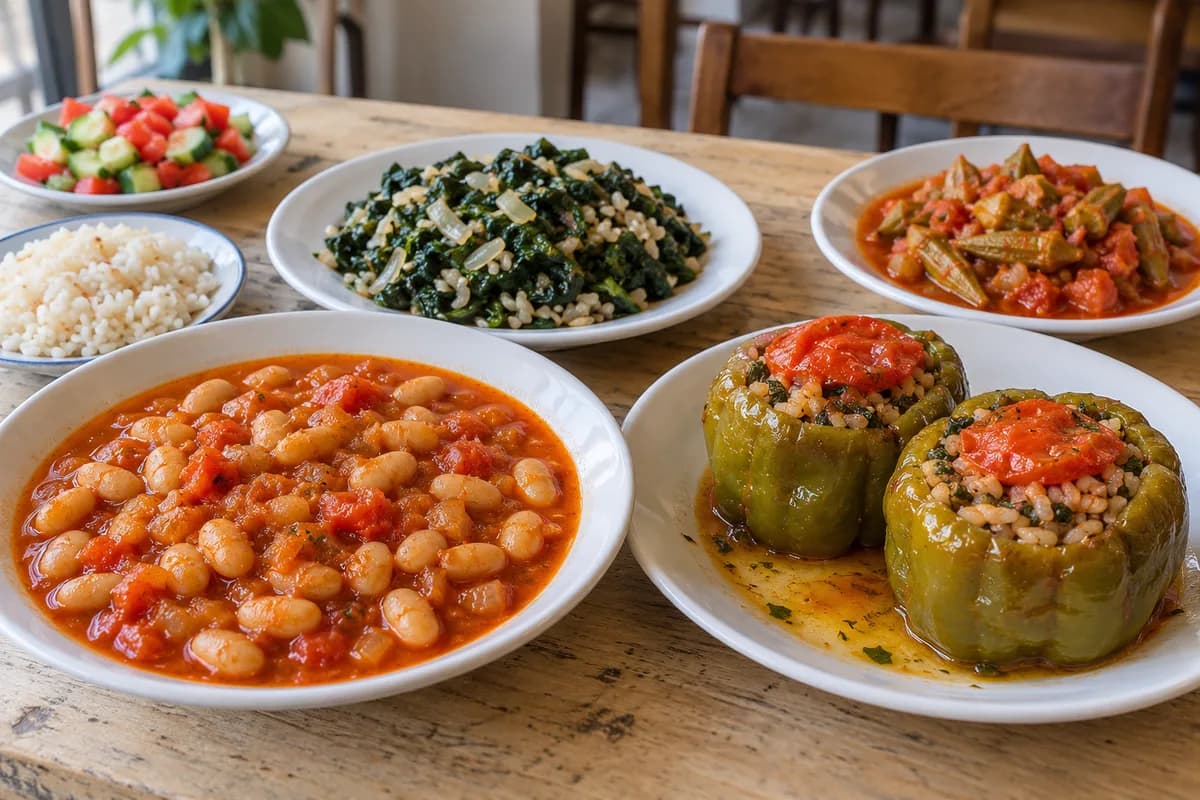
A plate of white bean stew, peppers stuffed with rice, or spinach cooked with onions and tomatoes. Many familiar meals in Istanbul can be entirely plant-based. For visitors, the useful starting point is knowing their Turkish names and asking how that particular kitchen prepares them
Look for ev yemekleri, meaning home-style cooking, or an esnaf lokantası, a traditional restaurant serving everyday cooked meals. Their counters often display vegetable and legume dishes, with the selection changing daily. These are familiar foods rather than a measured popularity ranking, and no single restaurant will serve them all. Our guide to everyday vegan eating explains this style of dining.
🫘 Start with the stews
Kuru fasulye: White bean stew
White beans simmered with onion, tomato or tomato paste, sometimes with peppers. A familiar main course, usually accompanied by rice, bread or pickles. Ask whether it contains butter, animal stock, meat, sucuk or pastırma. A bowl without visible meat is not necessarily vegan.
Nohut yemeği: Chickpea stew
Chickpeas cooked in an onion-and-tomato sauce. This is another substantial main dish to look for at a lokanta. Choose a preparation made with vegetable oil and water or vegetable stock; meat and butter versions also exist. Both bean and chickpea stews feature in veganistanbul.com’s guide to Turkish food.
Yeşil mercimek yemeği: Green lentil stew
A spoonable meal of green lentils, onion, tomato paste and seasoning. Unlike lentil soup, this is served as a main dish. Check for butter and animal stock, and whether meat has been added.
🍆 Vegetable dishes that make a main course
Türlü: Mixed vegetable stew
A combination that can include eggplant, zucchini, potatoes, peppers and tomatoes. The vegetables vary, making this a useful dish to recognise rather than a fixed recipe. Ask for the meat-free version and confirm the cooking fat and stock.
Ispanak yemeği: Cooked spinach
Spinach cooked with onion, tomato or tomato paste, sometimes with rice. Order it without the yogurt commonly served alongside or on top, and check whether the pot contains minced meat or butter.
Zeytinyağlı taze fasulye: Green beans with tomato and olive oil
Green beans slowly cooked with tomatoes and onions. A full plate can be the vegetable main course of a meal, with bread or pilaf alongside. Specify the olive-oil preparation because green beans are also cooked with meat.
Bamya yemeği: Okra stew
Okra cooked with tomatoes and onion, often sharpened with lemon or another sour ingredient. Look for zeytinyağlı bamya, the olive-oil version, and confirm that no meat or animal stock was used. Availability varies with the kitchen and season.
Bezelye yemeği: Pea stew
Peas cooked with vegetables such as potatoes and carrots. The meat-free preparation offers another everyday vegetable main. The same name can also appear in dishes containing meat, so ask which version is being served.
İmam bayıldı: Eggplant filled with onion, tomato and garlic
A whole or split eggplant cooked with an onion-rich filling and olive oil. It may arrive cool or at room temperature. Do not confuse it with karnıyarık, the similar-looking dish normally filled with minced meat.
🫑 Stuffed vegetables and wrapped leaves
Zeytinyağlı biber dolması: Rice-stuffed peppers
Peppers filled with seasoned rice and onion, sometimes with herbs, currants or pine nuts. Order a main-course portion rather than assuming a small appetiser serving will be enough. Etli or kıymalı versions contain meat.
Zeytinyağlı yaprak sarma: Rice-filled vine leaves
Vine leaves wrapped around rice, onion, herbs and seasoning. Sarma can be served as meze, but a substantial portion can also anchor lunch or dinner. Specify the rice-and-olive-oil version, check the stock and request no yogurt.
🫒 Other familiar meals worth checking
Barbunya pilaki: Borlotti beans with vegetables
Beans cooked with onion, carrots, potatoes, tomatoes and olive oil. Although restaurants may offer it among cold dishes, a full serving can form the main part of a meal.
Zeytinyağlı pırasa: Leeks with carrots and rice
Soft-cooked leeks with olive oil, carrots, a little rice and lemon. A useful option on a changing home-style menu.
Zeytinyağlı kereviz: Celeriac with vegetables and citrus
Celeriac cooked with olive oil, often alongside carrots and potatoes, with lemon or orange providing acidity. These are distinct dishes to ask for, rather than simply requesting “something zeytinyağlı.”
🍚 What to order alongside
Rice and bulgur pilaf are accompaniments to these main dishes. Both need checking for butter and meat or chicken stock. Salads, pickles and suitable meze can add variety. Çoban salatası, acılı ezme, kısır or piyaz without egg are possibilities, depending on the recipe.
For a straightforward meal, try one of these combinations, after confirming the ingredients:
- Kuru fasulye + rice pilaf + pickles
- Nohut yemeği + bulgur pilaf + shepherd’s salad
- İmam bayıldı + green lentil stew + bread
- Rice-stuffed peppers + barbunya pilaki
🗣️ One question before ordering
“Bu yemekte et, kıyma, hayvansal yağ, et veya tavuk suyu, tereyağı, süt ürünü ya da yumurta var mı?”
“Does this dish contain meat, minced meat, animal fat, meat or chicken stock, butter, dairy or eggs?”
For spinach, sarma and other dishes that may come with yogurt, add:
“Üzerine yoğurt koymayın, lütfen.”
“Please don’t put yogurt on top.”
Etsiz means meat-free; it does not guarantee vegan. Ask about the food already cooked in the pot, as well as anything added before serving.