🌱 Hungry in Istanbul? A Vegan Tourist’s Guide to a Proper Turkish Lunch
Forget surviving on salads! From hearty bean stews and stuffed vegetables to vegan döner and traditional Turkish home cooking, Istanbul offers plenty of possibilities for a satisfying plant-based lunch. The secret is knowing what to look for and what to ask
Istanbul's lunchtime food scene is much more than kebabs, grilled meat and cheese-filled pastries. Behind the glass counters of neighbourhood restaurants, you'll find steaming pots of beans, vegetables simmered in tomato sauce, stuffed peppers and dishes prepared with olive oil.
Some are naturally vegan. Others need a few questions before ordering.
Whether you're exploring Sultanahmet, shopping around Taksim or wandering through Kadıköy, here's how to enjoy a Turkish-style vegan lunch without limiting yourself to salads.
🍲 1. Discover the Turkish Lokanta: Your Lunchtime Friend
One of the most useful Turkish words for vegan travelers is lokanta.
A traditional esnaf lokantası is a casual restaurant serving freshly prepared home-style meals, often to local workers and neighbourhood residents.
Unlike restaurants with extensive printed menus, many lokantas display their daily dishes behind glass counters.
You can see what is available before ordering.
🌱 What should vegans look for?
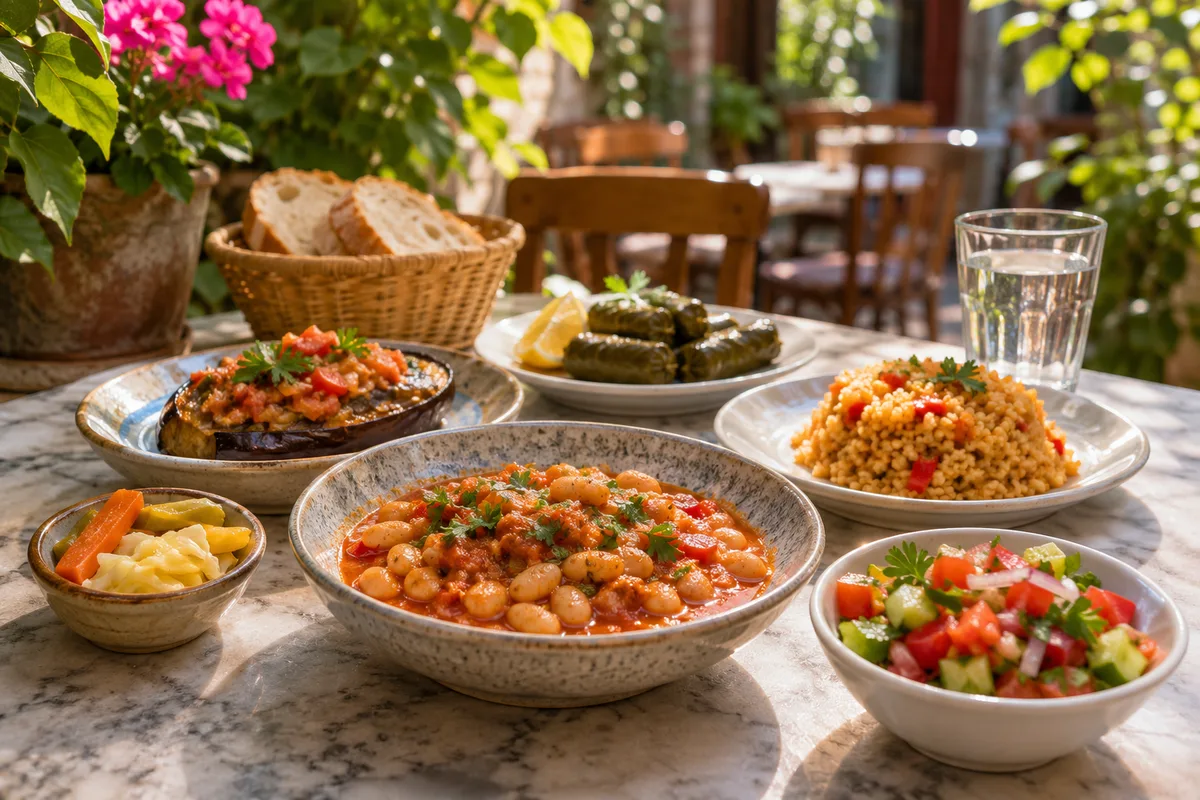
- Kuru fasulye: White beans cooked in a tomato-based sauce.
- Nohut yemeği: Chickpea stew with onions and tomato.
- Yeşil mercimek yemeği: Green lentil stew, sometimes prepared with vegetables.
- Taze fasulye: Green beans cooked with tomatoes, onions and olive oil.
- Ispanak yemeği: Spinach cooked with onions, tomatoes and sometimes rice.
- Türlü: A mixture of seasonal vegetables cooked together.
- Bamya: Okra cooked with tomatoes, often with lemon.
These are traditional Turkish dishes, not necessarily special vegan creations.
⚠️ Important: Some restaurants prepare these meals with meat, minced meat, butter or meat stock. Even when no meat is visible, the cooking liquid may contain animal ingredients.
Ask before ordering.
💡 Tourist tip: Look for signs saying Ev Yemekleri (home-style meals), Günlük Yemekler (daily dishes) or Zeytinyağlılar (olive-oil dishes).
📖 Read more: Esnaf Lokantası: A Different Way to Eat in Istanbul
🫘 2. Build a Proper Turkish Vegan Lunch
A typical Turkish lunch can be assembled from a main dish, a side and something fresh.
You don't need to order everything from the same category.
🍽️ Lunch Idea No. 1: The Traditional Turkish Plate
Main: Kuru fasulye (white bean stew)
Side: Bulgur pilavı (bulgur cooked with vegetables or tomato)
Extra: Pickles or seasonal salad
Drink: Water or a soft drink
This combination provides legumes, grains and vegetables.
Check that the beans and bulgur contain no meat stock, butter or other animal ingredients.
🍽️ Lunch Idea No. 2: The Vegetable Lover's Plate
Main: İmam bayıldı (eggplant stuffed with onions, tomatoes and garlic)
Side: Barbunya pilaki (borlotti beans cooked in olive oil)
Extra: Fresh bread and a green salad
İmam bayıldı is traditionally an olive-oil dish and is often served at room temperature.
Barbunya pilaki is another familiar Turkish preparation, combining beans with vegetables and olive oil.
Together, they can make a substantial lunch.
🍽️ Lunch Idea No. 3: The Comfort Food Lunch
Main: Nohut yemeği (chickpea stew)
Side: Plain rice, if prepared without butter or animal stock
Extra: Çoban salatası (tomatoes, cucumbers, onions and peppers)
A bowl of chickpeas and rice is a familiar combination in Turkish home cooking.
But beware: Turkish rice pilav frequently contains butter or chicken stock.
Ask whether the rice is prepared with vegetable oil and water.
📖 Explore more: Istanbul's Everyday Vegan Meals: What to Order Beyond Salads and Meze
🫒 3. Don't Miss Zeytinyağlı: The Olive-Oil Tradition
One of the most useful categories of Turkish cuisine for vegans is zeytinyağlı, meaning dishes prepared with olive oil.
These vegetable dishes are commonly served cool or at room temperature.
Look for:
🥬 Zeytinyağlı sarma: Vine leaves stuffed with seasoned rice, herbs and sometimes pine nuts or currants.
🫑 Zeytinyağlı biber dolması: Bell peppers stuffed with rice, onions and herbs.
🍆 İmam bayıldı: Eggplant filled with onions, garlic and tomatoes.
🫘 Barbunya pilaki: Borlotti beans simmered with vegetables.
🌿 Zeytinyağlı enginar: Artichokes prepared with olive oil, often accompanied by peas, carrots and potatoes.
🥕 Zeytinyağlı kereviz: Celeriac cooked with vegetables, sometimes with orange juice.
These dishes are especially useful when you want a lighter lunch or prefer several small plates.
Where to find them: Traditional lokantas, home-style restaurants and establishments serving Turkish or Aegean cuisine.
⚠️ Although zeytinyağlı dishes are generally plant-based, confirm the ingredients. The category name alone is not a guarantee that every restaurant follows the same recipe.
For more ideas, explore our guide to what vegan travelers should taste in Istanbul.
🌯 4. Need Something Quick? Try Turkish Street Food
Not every lunch requires sitting down in a restaurant.
Istanbul has several convenient options for travelers exploring the city.
🌶️ Etsiz Çiğ Köfte
Çiğ köfte is a spicy mixture commonly made with fine bulgur, tomato and pepper pastes, herbs and seasonings.
The etsiz version contains no meat and is widely available at specialized takeaway counters.
You can order it wrapped in flatbread with lettuce, parsley and lemon.
⚠️ Confirm the ingredients of the wrap and sauces. Also check whether the product contains any dairy or other animal-derived additives.
🥔 Kumpir: Turkish Stuffed Baked Potato
Kumpir is a large baked potato served with a selection of toppings.
The traditional preparation usually includes butter and cheese mixed into the potato.
For a vegan version, ask for a potato without either ingredient and choose suitable vegetable toppings.
Possible additions include olives, corn, pickles and vegetables.
⚠️ Some prepared salads contain mayonnaise or yogurt. Ask about each topping and whether the potato can be prepared with clean utensils.
🥙 Vegan Döner
Döner is one of Turkey's best-known foods, traditionally made from meat roasted on a vertical spit.
Some vegan restaurants in Istanbul serve plant-based versions using ingredients such as seitan or other meat alternatives.
They may be served in bread, wrapped in flatbread or presented as a plated meal.
Look for dedicated vegan establishments rather than assuming a conventional döner restaurant offers a plant-based alternative.
📖 Where to try it: Where to find vegan doner in Istanbul
🫓 Vegan Lahmacun
Lahmacun is a thin, round flatbread traditionally topped with minced meat, vegetables and spices.
Vegan restaurants may replace the meat with soy protein, vegetables or other plant-based alternatives.
Add parsley, lemon and other fresh vegetables before rolling it up.
This is a practical option for visitors who want to experience a familiar Turkish food in a vegan version.
📖 Where to try it: Vegan Lahmacun in Istanbul: Where to Try It and What to Order
🥣 5. Start Lunch With Soup
Soup is a common part of Turkish lunch, particularly in neighborhood restaurants.
Some familiar choices include:
🟠 Mercimek çorbası: Smooth red lentil soup, usually seasoned with cumin and served with lemon.
🟢 Ezogelin çorbası: A soup made with red lentils, bulgur, rice, tomato and spices.
🍅 Domates çorbası: Tomato soup, which may contain milk, cream or butter.
⚠️ Not every lentil soup is vegan!
Some kitchens use chicken or meat stock. Others add butter during preparation or as a finishing sauce.
Ask whether the soup contains animal stock, dairy or butter.
For a complete lunch, combine a confirmed vegan soup with a substantial vegetable or legume dish rather than relying on soup alone.
🥗 6. What About Meze?
Meze are small dishes commonly served before or alongside a meal.
They can also form part of a vegan lunch.
Some possibilities include:
- Humus: Chickpea and tahini dip.
- Acılı ezme: Spicy tomato and pepper salad.
- Şakşuka: Fried vegetables, commonly eggplant and peppers, served with tomato sauce.
- Kısır: Fine bulgur salad with herbs, tomato paste and lemon.
- Fava: A smooth broad bean purée.
- Deniz börülcesi: Samphire, often dressed with olive oil, lemon and garlic.
These are useful additions to a meal, although recipes vary.
⚠️ Some eggplant, carrot, purslane and zucchini meze contain yogurt. Other dishes may include cheese, mayonnaise or seafood ingredients.
Ask about the preparation rather than relying on the appearance.
📍 7. Where Should Vegans Look for Lunch in Istanbul?
Different neighbourhoods offer different possibilities.
🏛️ Sultanahmet and the Historic Peninsula
If you're visiting Hagia Sophia, Topkapı Palace or the Grand Bazaar, look beyond restaurants advertising kebabs and tourist menus.
Explore side streets with traditional lokantas and home-style cooking.
Search for vegetable stews, olive-oil dishes and rice-stuffed vegetables.
The food selection can vary considerably between establishments.
🚶 Taksim, Cihangir and Galata
This part of Beyoğlu offers a mixture of traditional Turkish restaurants, international kitchens and dedicated vegan establishments.
Cihangir, in particular, is worth exploring for a vegan lunch.
For example, Vegan Dükkan Lokanta serves entirely plant-based food, including vegan interpretations of familiar dishes.
You can also explore neighborhood lokantas for traditional vegetable and legume meals.
📖 Plan your walk: From Taksim to Galata: Breakfast, Vegan Meals and Dessert Breaks
🌿 Kadıköy and Moda
On Istanbul's Asian side, Kadıköy offers a mixture of casual eateries, traditional restaurants and dedicated vegan establishments.
The streets around Kadıköy Market and Moda are useful starting points for exploring lunch options.
Look for vegan interpretations of Turkish dishes, vegetable-based meals and quick takeaway food.
🌱 Explore: Vegan, Vegetarian and Vegan-Friendly Restaurants in Kadıköy
🏙️ Beşiktaş, Levent and Maslak
These districts contain a mixture of traditional lunch restaurants, shopping centers and contemporary dining establishments.
For a weekday lunch, look for restaurants serving daily cooked meals.
In business districts, lunchtime menus can be a convenient option, but confirm ingredients rather than assuming vegetable dishes are vegan.
📖 Explore: Where to Eat Vegan Along Istanbul's Levent–Maslak Business Axis
🗣️ 8. Five Turkish Phrases That Make Lunch Easier
You don't need to speak Turkish fluently to order a vegan meal.
Save these sentences on your phone.
🌱 1. I'm vegan.
Veganım. Et, tavuk, balık, süt ürünleri, yumurta ve bal tüketmiyorum.
I don't eat meat, chicken, fish, dairy products, eggs or honey.
🍲 2. Does this contain meat or chicken stock?
Bunun içinde et suyu veya tavuk suyu var mı?
🧈 3. Is this prepared with butter?
Bu yemek tereyağı ile mi yapılıyor?
🥬 4. Which vegetable dishes are vegan?
Hangi sebze yemekleriniz vegan?
🍚 5. Can you prepare this without butter, milk or yogurt?
Bunu tereyağı, süt ve yoğurt olmadan hazırlayabilir misiniz?
💡 Important: Saying etsiz (without meat) is not enough. A meatless dish may still contain dairy, eggs, butter or animal stock.
⚠️ 9. Five Things Vegans Should Check Before Ordering Lunch
Even familiar vegetable dishes can contain unexpected ingredients.
1. Hidden meat stock: Beans, chickpeas, soups and vegetable stews may be prepared with meat or chicken stock.
2. Butter in rice: Turkish rice pilaf is often cooked with butter, even when served alongside vegetable dishes.
3. Yogurt in meze: Some vegetable dips and salads contain yogurt mixed directly into the dish.
4. Dairy in pastries: Potato or spinach fillings do not guarantee that börek, gözleme or other pastries are vegan.
5. Shared cooking equipment: Grills, frying oil and utensils may be shared with meat, fish, dairy or egg dishes. This is particularly important for travelers with food allergies.
When in doubt, ask staff to explain how the dish is prepared.
🌱 10. The Simplest Vegan Lunch Strategy
If you're hungry and don't know where to start, remember these three approaches.
🍲 For traditional Turkish food: Find an esnaf lokantası and ask about its daily vegetable and legume dishes.
🌯 For a quick meal: Look for confirmed vegan çiğ köfte, a suitable baked potato or a dedicated vegan takeaway restaurant.
🍽️ For a worry-free vegan menu: Choose a fully vegan restaurant where animal ingredients are excluded from the kitchen's food preparation.
And don't overlook seasonal dishes. Istanbul's traditional kitchens change their vegetable offerings throughout the year.
In winter, look for spinach, leeks, cauliflower and celeriac. In warmer months, green beans, eggplant, zucchini and okra become more prominent.
📌 The Bottom Line
You don't need to spend your Istanbul holiday eating salads or searching exclusively for international vegan restaurants.
A traditional Turkish lunch can be built around beans, chickpeas, lentils, stuffed vegetables, olive-oil dishes and freshly prepared seasonal produce.
The key is knowing the Turkish names, recognizing the right restaurants and checking how the food is cooked.
Learn the word lokanta, ask about butter and meat stock, and you'll discover a much wider world of Turkish vegan food.
🌱 Explore more vegan and vegan-friendly restaurants, neighbourhood guides and traditional Turkish dishes at veganistanbul.com.
Editor's note: Ingredients, recipes and menus vary between restaurants. Always confirm the preparation before ordering. Travellers with food allergies or celiac disease should also discuss cross-contact risks directly with restaurant staff.