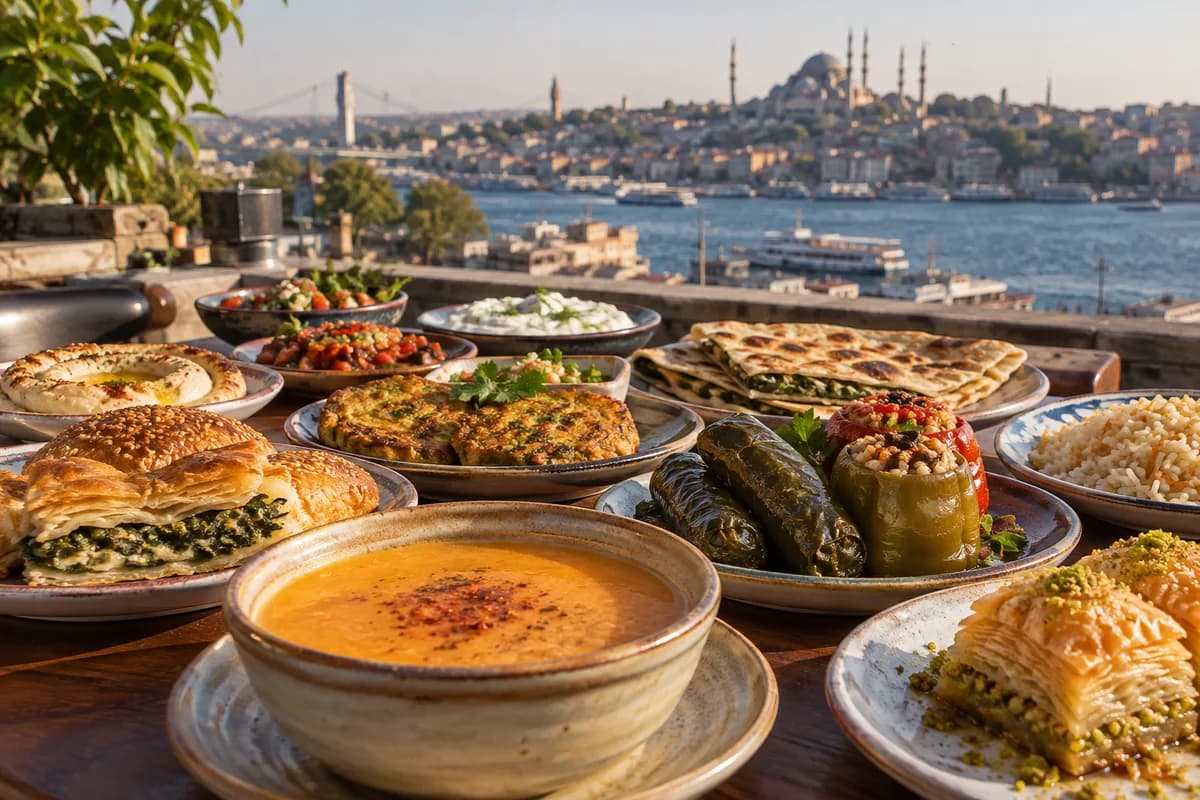
What Vegans Should Avoid in Istanbul: 10 Foods That Aren’t Always What They Seem
Many Turkish dishes may look vegan but can contain butter, dairy, eggs, honey or animal stock. The 10 foods vegans should check in Istanbul, including what to ask restaurant staff about ingredients, cooking fats and meat or chicken stock before ordering
Istanbul is full of dishes that look promising for vegan travellers. Olive-oil vegetables, lentil soups, stuffed vine leaves, meze, pastries and rice dishes are everywhere.
The complication is that what you see on the plate does not always tell you how it was cooked.
Butter can replace vegetable oil, chicken or meat stock can be used in otherwise plant-based dishes, and yogurt or egg sometimes turns up in recipes where a visitor might not expect it.
That doesn't mean avoiding traditional Turkish food. It means knowing what to ask before ordering.
Here are 10 foods worth checking.
🍲 1. Mercimek Çorbası
Lentil soup can look like one of the safest choices on the menu. Often it is.
But recipes vary. Some restaurants use butter, while meat or chicken stock may be used as the base.
Ask: Tereyağı, et suyu veya tavuk suyu var mı?
Does it contain butter, meat stock or chicken stock?
“Read more on soups and other traditional Turkish food” What Can Vegans Eat in Turkey? A Guide to Traditional Turkish Food
🍚 2. Pilav
Plain-looking rice can be deceptive. Turkish rice pilav is frequently prepared with butter, and some kitchens use chicken stock.
Bulgur pilav also needs checking. Tomatoes, peppers and bulgur may be the visible ingredients, but that doesn't necessarily tell you what cooking fat or stock was used.
Ask: Tereyağı veya tavuk suyu kullanılıyor mu?
Is butter or chicken stock used?
“Read more on vegan Istanbul street food” Vegan Street Food in Istanbul
🫔 3. Dolma and Sarma
Stuffed vine leaves, peppers and other vegetables come in very different versions.
Many zeytinyağlı versions are prepared with rice, herbs and olive oil and can be suitable for vegans. Other versions contain minced meat.
One linguistic trap is midye dolma. Despite the word dolma, these are mussels stuffed with seasoned rice, not stuffed vegetables.
Look for: zeytinyağlı yaprak sarma or zeytinyağlı dolma, then confirm the ingredients.
“Read more on FAQ” Vegan & Vegetarian Istanbul: Frequently Asked Questions
🥐 4. Börek and Poğaça
A spinach, potato or olive filling doesn't automatically make a pastry vegan.
The dough may contain milk, yogurt, butter or eggs. Cheese may be mixed into vegetable fillings, and egg can also be brushed over pastries before baking.
Don't rely only on the filling. Ask about the dough too.
“Read our guide to börek →” What Does “Börek” Actually Mean?
🫓 5. Gözleme
Spinach, mushroom or potato gözleme can sound like an easy vegan lunch.
Check before ordering. Cheese can be combined with vegetable fillings, while butter may be added during or after cooking. Recipes for the dough can also vary.
Ask for the ingredients rather than assuming that patatesli (potato) or ıspanaklı (spinach) means vegan.
“Read more about vegan Turkish food” Vegan Turkish Food in Istanbul: What Can You Eat?
🥣 6. Meze
A table covered with colourful meze may offer some of the easiest ways to explore Turkish food, but not every vegetable-based plate is vegan.
Yogurt is common in Turkish meze. Mayonnaise can appear in some preparations, while recipes differ from restaurant to restaurant.
Hummus, acılı ezme, şakşuka, bean dishes and olive-oil vegetables can provide good possibilities, but check the individual dishes rather than treating the whole meze counter as vegan.
“Read more on Turkish mezes” What Does “Meze” Actually Mean?
“Read more on multicultural Anatolian vegan mezes” Istanbul & Anatolia: A Multicultural Vegan Meze Table
🥒 7. Mücver
Courgette is the ingredient you notice first, which can make mücver look like a vegetable fritter suitable for vegans.
Traditional versions usually contain egg, however, and some recipes also include cheese or other dairy ingredients.
Unless a restaurant specifically prepares a vegan version, ask before ordering.
“Read more to discover vegan Istanbul recipes” Vegan & Vegetarian Recipes to Discover in Istanbul Beyond Restaurant Menus
🍆 8. Vegetable Dishes at Esnaf Lokantaları
An esnaf lokantası is worth discovering. These traditional restaurants display trays of ready-cooked dishes, making it easy to point at what you want.
The vegetable section can offer plenty of possibilities, particularly dishes labelled zeytinyağlı.
But appearance alone isn't enough. A bean, aubergine or vegetable dish may have been prepared with butter or stock.
Ask how it was cooked, especially if the staff simply describes it as etsiz, meaning “without meat.”
“Read more” Vegetarian Turkish Food Beyond the Usual: What to Order in Istanbul
🍳 9. Breakfast Foods That Look Plant-Based
A traditional Turkish breakfast can be surprisingly easy to adapt: tomatoes, cucumbers, olives, fruit, bread, jams and tahini-based foods can provide plenty to eat.
But watch the less obvious items.
Menemen is based on tomatoes and peppers but contains eggs. Pastries may contain dairy or eggs. Some spreads can contain dairy, and honey is a standard breakfast item.
The safest approach is to build your breakfast from individual foods whose ingredients you can identify.
“Read more of our breakfast recommendations” Vegan Turkish Breakfast: A Tourist’s Guide
🍰 10. Baklava and Other Desserts
Pistachios, walnuts, flour and syrup can make some Turkish sweets appear plant-based at first glance.
The missing ingredient is often butter.
Traditional baklava commonly contains butter, while other desserts may contain milk, cream, eggs, yogurt, honey or gelatin depending on the recipe.
There are vegan versions available in Istanbul, but don't assume that a dessert is vegan because there is no obvious dairy ingredient on top.
“Read sweet” Is Baklava Vegan? and Vegan & Vegetarian Turkish Desserts to Try in Istanbul.
🌿 A Useful Word: Zeytinyağlı
One Turkish word is particularly useful for vegan travellers:
Zeytinyağlı = prepared with olive oil.
It describes an important family of dishes typically served at room temperature, including beans, artichokes, stuffed vegetables and other vegetable preparations.
They are among the first dishes worth investigating when looking at a traditional Turkish menu.
Still, zeytinyağlı shouldn't replace asking about ingredients when you are uncertain.
🗣️ Don't Just Say “Etsiz”
This is perhaps the most important language lesson.
Etsiz means “without meat.” It does not mean vegan.
A dish described as etsiz can still contain butter, milk, yogurt, cheese, eggs or animal stock.
Instead, you can say:
“Veganım. Et, tavuk, balık, süt, tereyağı, yoğurt, peynir, yumurta ve bal tüketmiyorum. Et suyu veya tavuk suyu da olmamalı.”
I'm vegan. I don't consume meat, chicken, fish, milk, butter, yogurt, cheese, eggs or honey. It shouldn't contain meat or chicken stock either.
If that sounds like a long sentence to remember, save it on your phone and show it to the restaurant staff.
“Read more” First-Time Vegan in Istanbul: What You Need to Know
🌱 Don't Avoid Turkish Food. Ask About It.
The point isn't to make eating in Istanbul complicated.
Quite the opposite. Turkish cuisine includes a wide range of beans, pulses, grains, vegetables, salads, olive-oil dishes and meze that can work well for vegan travellers.
The useful habit is simply not to judge a dish by appearance or by its English menu description.
Ask what went into the pot.
Then explore.
Last reviewed: September 28, 2026. Share this with your vegan friends.